
Colour Blocking vs. Tonal Dressing: Two Approaches to Outfit Colour

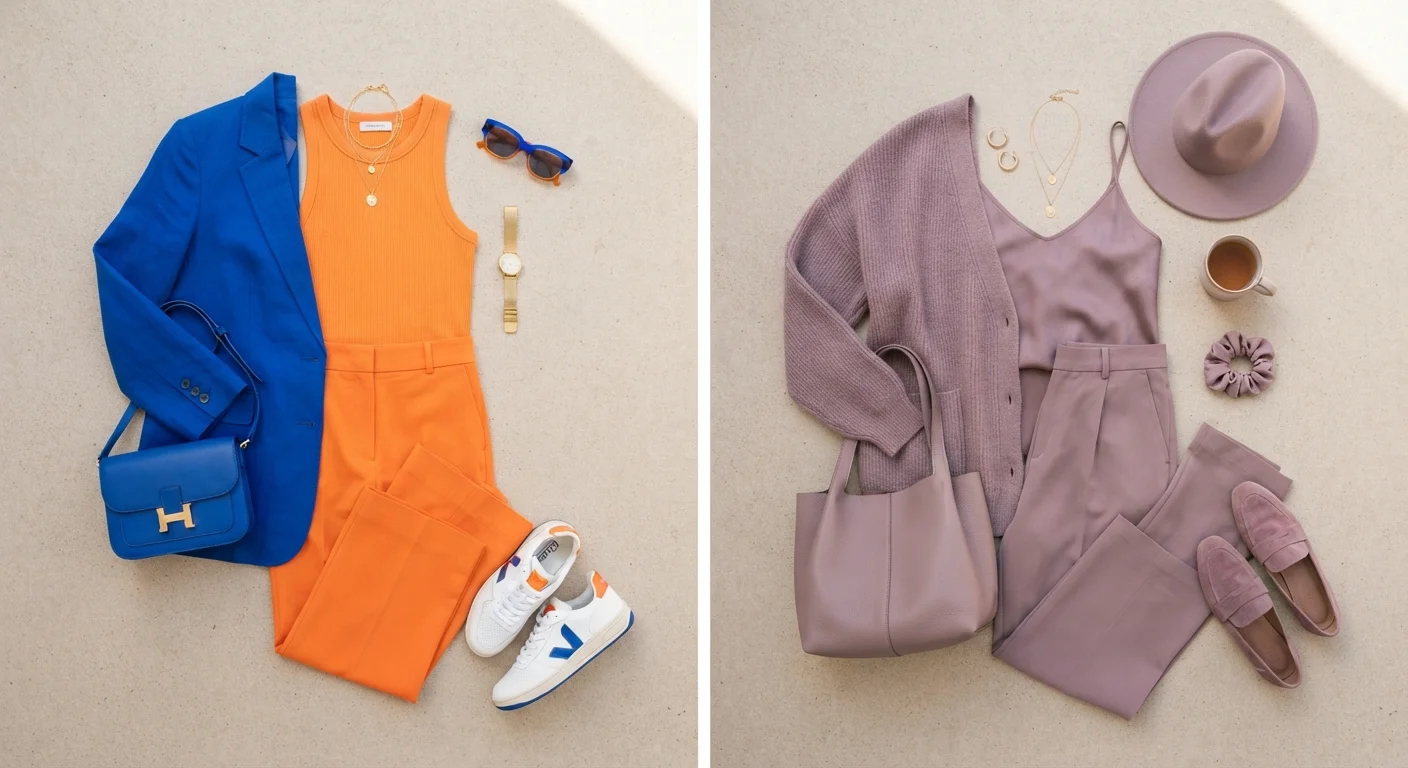
Photo: UnlockTopics.com | Unlocking Trending Content editorial
Key Takeaways
- Colour blocking uses high contrast between two or more distinct hues to create graphic, structured outfits.
- Tonal dressing layers shades within the same colour family for a seamless, elongating effect.
- Both techniques rely on the same colour theory foundations — they simply apply them in opposite directions.
- Colour blocking suits bold dressing occasions; tonal dressing transitions easily from casual to formal settings.
- Neither approach requires a completely new wardrobe — both work with existing wardrobe pieces.
The Core Distinction: Contrast vs. Harmony
Every outfit communicates something through colour before a single seam or silhouette registers. How those colours relate to each other — whether they clash, complement, or echo — is the foundation of both colour blocking and tonal dressing.
Colour blocking is built on contrast. It pairs two or more clearly distinct, high-saturation hues in defined zones — think a cobalt blue top against tangerine trousers, or an emerald green skirt with a bright red blouse. The visual effect is graphic and immediate. When done well, it signals deliberate, fashion-forward thinking. The technique draws from basic colour theory: complementary colours (those opposite each other on the colour wheel) produce the most striking combinations, while split-complementary or analogous pairings create contrast with slightly less tension.
Tonal dressing operates on the opposite principle: harmony over contrast. Rather than pairing distinct hues, it layers different shades, tints, and textures within a single colour family. A look built in tones of sage, olive, and khaki is tonal. So is a head-to-toe camel outfit that shifts from a light biscuit shirt to a deeper caramel coat. The lack of colour break creates a fluid, elongated silhouette. For a deeper look at how neutrals function as the backbone of tonal wardrobes, see The Neutral Colour Palette.
| Criterion | Colour Blocking | Tonal Dressing |
|---|---|---|
| Colour relationship | High contrast between distinct hues | Harmonious shades within one colour family |
| Visual effect | Graphic, bold, attention-drawing | Fluid, elongating, understated |
| Key styling tool | Proportion of colour zones | Texture and tonal variation |
| Occasion fit | Creative, casual, social settings | Professional to casual, highly versatile |
| Wardrobe flexibility | Pieces harder to restyle independently | Pieces easy to mix across outfits |
| Learning curve | Clear rules, structured starting point | Requires attention to undertones and texture |
| Colour theory basis | Complementary or split-complementary colours | Monochromatic palette with value variation |
How Each Technique Works in Practice
Understanding the principle is one thing — applying it to real clothes is another. Both techniques have practical rules that prevent them from looking accidental rather than considered.
Making Colour Blocking Work
Proportion is the key variable. Large, even blocks of colour — where each hue occupies a clearly defined garment zone — tend to read more cleanly than irregular or fragmented patches. Keeping patterns and prints out of the equation when starting out helps the colour relationship stay legible. Proportion is central to how outfits read, and colour blocking makes that especially visible. Choosing a neutral shoe or bag prevents the composition from becoming visually overwhelming.
Making Tonal Dressing Work
Texture is the element that stops tonal looks from reading as flat or unintentional. Mixing a matte linen trouser with a satin top and a brushed-wool coat — all in shades of dusty blush — gives the eye something to move across. Without texture variation, a tonal look can collapse into an outfit that looks like you ran out of options rather than made a deliberate choice. Also worth noting: getting the undertone consistent across pieces is important. Warm and cool versions of the same colour can clash even within a tonal palette, particularly in shades like pink, beige, and grey. For guidance on navigating undertones and seasonal palettes, this overview of seasonal colour and undertones is a useful reference.
Neither Technique Requires New Clothes
When to Reach for Each Approach
Context shapes which technique is more appropriate. Colour blocking's graphic energy suits creative, casual, and social settings — it's an outfit that announces itself. It's less commonly seen in traditional professional environments, though creative industries are an exception. For guidance on how colour confidence fits different occasion types, see Dress Codes Decoded.
Tonal dressing, by contrast, adapts more fluidly across contexts. A tonal outfit in navy or charcoal reads as quietly polished in a professional setting; the same principle applied in terracotta or lilac works just as well at a weekend lunch. It's also one of the easier techniques to incorporate into an existing wardrobe, since many people already own multiple pieces in similar colour families without realising it. If you're interested in how colour organisation can surface those hidden groupings, sorting your wardrobe by colour is a practical starting point.
Both approaches differ from pattern mixing, which introduces a separate layer of visual complexity. If you're curious how colour principles interact with print and pattern choices, the logic behind pattern mixing covers that ground directly. Seasonal trends also influence which approach feels most current — the Trends & Seasons hub tracks how colour directions shift across the year.
1960s
Decade colour blocking became a fashion statement
Colour blocking as a deliberate fashion technique is widely associated with the geometric, Mondrian-influenced designs popularised in 1960s ready-to-wear fashion.
1 colour family
Hues used in a true tonal outfit
Tonal dressing is defined by staying within a single colour family across all garments, with variation coming from shade, tint, and texture rather than hue shifts.
The content on this site is for informational purposes only and is not a substitute for professional advice. Always consult a qualified professional for guidance specific to your situation.