
Dress Codes Decoded: From Business Casual to Black Tie

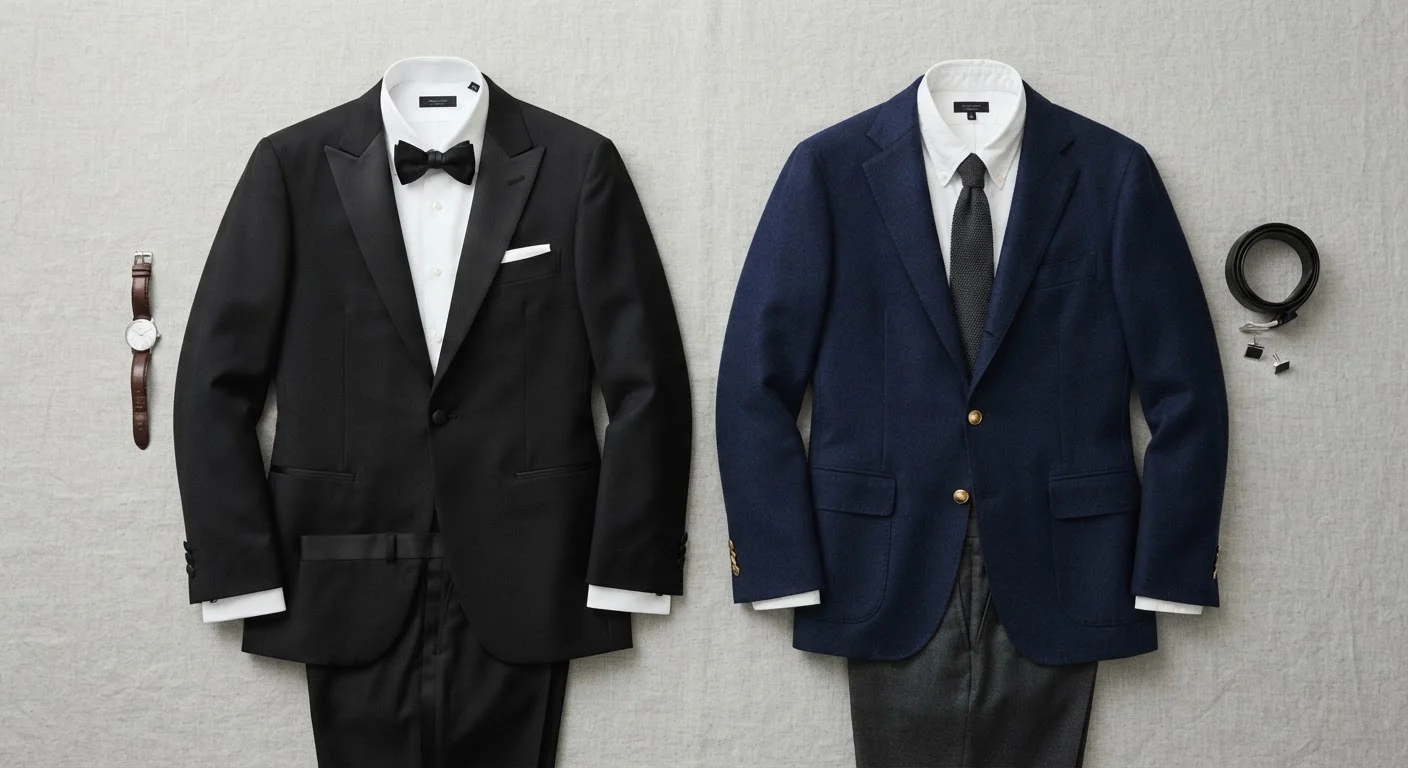
Photo: UnlockTopics.com | Unlocking Trending Content editorial
Why Dress Codes Still Matter
Dress codes exist to communicate a shared standard of formality — they signal respect for the occasion and help attendees feel appropriately prepared. Yet the language around them has grown murkier as workplaces and social events have shifted. Terms like "business casual" and "smart casual" are used interchangeably by some hosts and as strict opposites by others.
This guide cuts through the ambiguity with clear, practical definitions for each major dress code level, from the most relaxed to the most formal. If you want to understand broader style vocabulary beyond occasion dressing, our style trend terminology guide is a useful companion.
| Most common workplace code | Business Casual |
| Most formal standard | White Tie |
| Cocktail attire hem range | Knee to midi length |
| Black tie menswear staple | Tuxedo with bow tie |
| Fabric that signals evening formality | Silk, velvet, charmeuse |
| Universal rule when code is unclear | Err slightly overdressed |
The Five Core Dress Code Levels
Most invitations and workplace policies fall somewhere on a spectrum of five recognized formality levels. Here is what each one actually means:
Casual
The most relaxed tier — clean, neat, and put-together but with no formality required. Well-fitted jeans, t-shirts, and sneakers all belong here. "Casual" does not mean sloppy; clean and intentional still matter.
Smart Casual
A step up from casual without reaching business territory. Think tailored trousers or dark jeans paired with a polished top or knit. Blazers are welcome but optional. Clean footwear — loafers, ankle boots, or leather sneakers — elevates the look.
Business Casual
Common in professional settings and daytime events. Structured separates, blouses, dress trousers, midi skirts, and loafers or heeled shoes all work. This tier avoids athletic wear, distressed denim, and very casual footwear. The key word is structured.
Cocktail / Semi-Formal
An evening or special-event standard that calls for polished dressing without full formality. Knee-to-midi length dresses, tailored suits, and dressy separates fit here. Fabrics like silk, satin, or crepe read appropriately. Avoid anything too casual (cotton sundresses) or too elaborate (floor-length gowns unless stated).
Black Tie
A clearly defined formal standard. Floor-length gowns or elegant jumpsuits for women; tuxedos (dinner jackets with matching trousers, a white dress shirt, and a bow tie) for men. The dress code has a long tradition in formalwear, and deviating significantly tends to stand out. "Black Tie Optional" softens the requirement to a dark formal suit or a formal dress.
Black Tie
A formal evening dress code calling for tuxedos and floor-length gowns. It is the most common truly formal standard in the United States.
White Tie
The most formal Western dress code, reserved for state dinners and grand ceremonial events. Requires tailcoats for men and full-length formal gowns for women.
Smart Casual
A polished but relaxed standard that bridges casual and business dressing. Structured pieces with clean footwear are the hallmark.
Business Casual
A professional tier that allows tailored separates and polished shoes without requiring a full suit or formal dress. Athletic wear and distressed denim are typically excluded.
Cocktail Attire
A semi-formal evening standard appropriate for parties, galas, and weddings. Knee-to-midi dresses, tailored suits, and dressy separates all qualify.
Black Tie Optional
A softened version of the black tie code where a dark formal suit or elegant dress is an accepted alternative to a tuxedo or full-length gown.
White Tie and Beyond
Rarer than black tie, white tie represents the peak of Western formal dress. For men, it requires a tailcoat, white waistcoat, white bow tie, and black patent-leather shoes. For women, full-length formal gowns are standard. This code appears almost exclusively at state dinners, formal galas, and certain European ceremonial events.
A note on theme-based codes (Garden Party, Festive, Resort Casual): these layer an aesthetic mood onto a base formality. "Garden Party," for instance, typically sits at smart casual to cocktail level but with lighter fabrics and often floral or pastel palettes. When in doubt, default to the more polished end of the suggested aesthetic. For perspective on which style rules are genuinely binding versus outdated, see our article on style rules that aren't actually rules.
When the Invitation Contradicts Itself
Colour and Fabric as Formality Signals
Beyond silhouette, fabric and colour choices reinforce — or undercut — a dress code. Heavier matte fabrics (cotton, linen, denim) read as casual; structured weaves (wool, crepe) read as professional; lustrous or delicate materials (silk, velvet, charmeuse) signal evening formality.
Colour follows similar logic. Neutral and muted tones generally read as more formal; very bright or graphic prints skew casual unless the cut is sharp. Monochromatic dressing in a single colour family tends to elevate perceived formality — a principle explored in depth in our piece on colour blocking vs. tonal dressing.
When an invitation is vague or contradictory, err on the side of slightly overdressed. It is far easier to remove a blazer than to wish you had brought one.
The content on this site is for informational purposes only and is not a substitute for professional advice. Always consult a qualified professional for guidance specific to your situation.