
Essential Vitamins and Minerals: A Quick-Reference Nutrition Guide

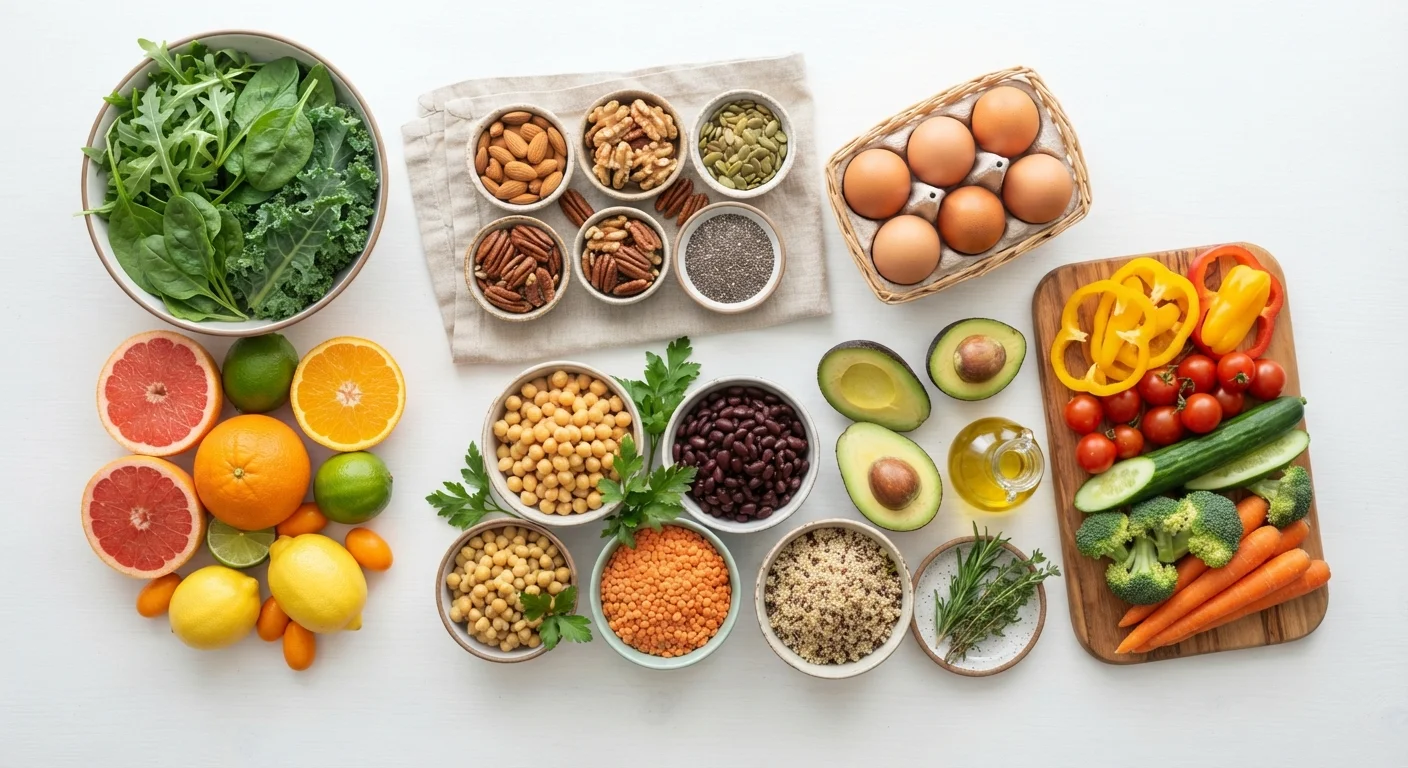
Photo: UnlockTopics.com | Unlocking Trending Content editorial
Why Micronutrients Matter
Vitamins and minerals are collectively called micronutrients - nutrients the body needs in relatively small amounts but cannot function well without. Unlike macronutrients (carbohydrates, protein, and fat), they provide no calories, but they are essential for virtually every biological process: energy metabolism, immune defense, bone maintenance, nerve signaling, and more. To understand how micronutrients fit into the bigger picture, see our primer on macronutrients.
Most people who eat a varied, whole-food diet get adequate amounts of most micronutrients. Gaps tend to emerge with highly restrictive eating patterns, certain medical conditions, or specific life stages such as pregnancy or older adulthood. This guide is a quick-reference resource - not a diagnostic tool. For personal nutritional assessment, consult a registered dietitian or licensed healthcare provider.
Micronutrients
Vitamins and minerals that the body needs in small amounts to support essential biological functions. They do not provide calories but are critical for health.
Fat-soluble vitamins
Vitamins A, D, E, and K, which dissolve in fat and are stored in body tissues. Because they accumulate, very high intakes over time can reach toxic levels.
Water-soluble vitamins
Vitamin C and all B vitamins, which dissolve in water and are not significantly stored by the body. Regular dietary intake is necessary to maintain adequate levels.
Heme iron
A form of dietary iron found in animal-based foods like meat and fish that is more readily absorbed by the body than non-heme iron from plant sources.
Trace minerals
Minerals such as iron, zinc, and iodine that the body requires in very small quantities. Despite the tiny amounts needed, deficiencies can cause significant health problems.
Daily Value (DV)
A reference number established by the FDA representing the recommended daily amount of a nutrient for a typical adult, used on US nutrition labels to show what percentage of that target one serving provides.
Key Vitamins at a Glance
Vitamins are divided into two categories based on how the body stores them:
- Fat-soluble vitamins (A, D, E, K) are stored in body fat and the liver, meaning they can accumulate if consumed in very high amounts over time.
- Water-soluble vitamins (C and the B vitamins) are not stored in significant amounts; excess is typically excreted in urine, so regular dietary intake matters more.
| Total essential vitamins | 13 (4 fat-soluble, 9 water-soluble) (National Institutes of Health, Office of Dietary Supplements) |
| Essential dietary minerals | At least 16 recognized as essential (Institute of Medicine, Dietary Reference Intakes) |
| Most common US deficiency | Vitamin D, followed by iron (CDC National Health and Nutrition Examination Survey (NHANES)) |
| Vitamin B12 absorption risk | Vegans and adults over 50 are at elevated risk of inadequacy (NIH Office of Dietary Supplements) |
| Vitamin C and iron absorption | Pairing plant-based iron with vitamin C can significantly enhance absorption (American Journal of Clinical Nutrition) |
| Folate in pregnancy | Adequate folate before and during early pregnancy reduces neural tube defect risk (CDC, Folic Acid Recommendations) |
Fat-Soluble Vitamins
- Vitamin A
- Supports vision (especially in low light), immune function, and cell growth. Found in liver, dairy, eggs, and as beta-carotene in orange and dark-green vegetables such as carrots and spinach.
- Vitamin D
- Crucial for calcium absorption, bone health, and immune regulation. Synthesized by the skin on sun exposure; dietary sources include fatty fish, egg yolks, and fortified foods. Deficiency is common in populations with limited sun exposure.
- Vitamin E
- Acts as an antioxidant protecting cells from oxidative damage. Found in nuts, seeds, vegetable oils, and wheat germ.
- Vitamin K
- Essential for blood clotting and bone metabolism. Leafy greens (kale, broccoli, spinach) are the richest dietary sources.
Selected Water-Soluble Vitamins
- Vitamin C
- Supports collagen synthesis, wound healing, and immune function; enhances iron absorption from plant foods. Citrus fruits, bell peppers, strawberries, and broccoli are excellent sources.
- B vitamins (B1, B2, B3, B5, B6, B7, B9, B12)
- This group powers energy metabolism, red blood cell production, and nervous system function. Folate (B9) is critical in early pregnancy for neural tube development. B12 is found almost exclusively in animal products, making supplementation or fortified foods important for those following a vegan diet.
Essential Minerals: Functions and Food Sources
Minerals are inorganic elements absorbed from food and water. Macrominerals (such as calcium and magnesium) are needed in larger amounts; trace minerals (such as iron and zinc) are needed in much smaller quantities but are equally critical.
- Calcium
- The most abundant mineral in the body, essential for bone and tooth structure, muscle contraction, and nerve transmission. Dairy products, fortified plant milks, canned fish with bones, and leafy greens provide meaningful amounts.
- Iron
- Central to hemoglobin, the protein that carries oxygen in red blood cells. Heme iron from meat is more readily absorbed than non-heme iron from plant sources; pairing plant-based iron with vitamin C improves absorption.
- Magnesium
- Involved in more than 300 enzymatic reactions, including energy production, muscle and nerve function, and blood sugar regulation. Whole grains, nuts, seeds, and dark chocolate are good sources.
- Zinc
- Supports immune function, wound healing, and DNA synthesis. Found in shellfish, meat, legumes, seeds, and whole grains.
- Potassium
- Regulates fluid balance, muscle contractions, and blood pressure. Bananas, potatoes, beans, and avocados are well-known sources, but many vegetables also contribute significantly.
- Iodine
- Required for thyroid hormone production, which governs metabolism and growth. Iodized salt and seafood are primary sources in the US diet.
Learning to read food labels helps you track these nutrients day to day. Our guide on reading a nutrition label explains how to interpret percent daily values for vitamins and minerals at a glance.
Putting It Into Practice
No single food delivers every micronutrient. Dietary variety is the most evidence-supported strategy for meeting your needs without relying heavily on supplements. Building a balanced plate is a practical starting point: filling half your plate with colorful vegetables and fruit, one quarter with whole grains, and the remainder with a quality protein source covers a broad spectrum of vitamins and minerals without requiring precise tracking.
Supplements can address documented deficiencies but are not a substitute for dietary quality. High-dose supplementation of fat-soluble vitamins in particular carries risk, since they accumulate in tissue. Before starting any supplement regimen, discuss your specific situation with a healthcare provider who can review your diet, health history, and any relevant lab values.
For a broader look at how the information environment can complicate nutrition decisions, see our article on navigating nutrition advice online.
This article is for general informational and educational purposes only and is not a substitute for personalized medical or nutritional advice. Consult a qualified healthcare professional or registered dietitian for guidance specific to your health needs.
The content on this site is for informational purposes only and is not a substitute for professional advice. Always consult a qualified professional for guidance specific to your situation.