
Building a Balanced Plate: A Framework Anyone Can Use

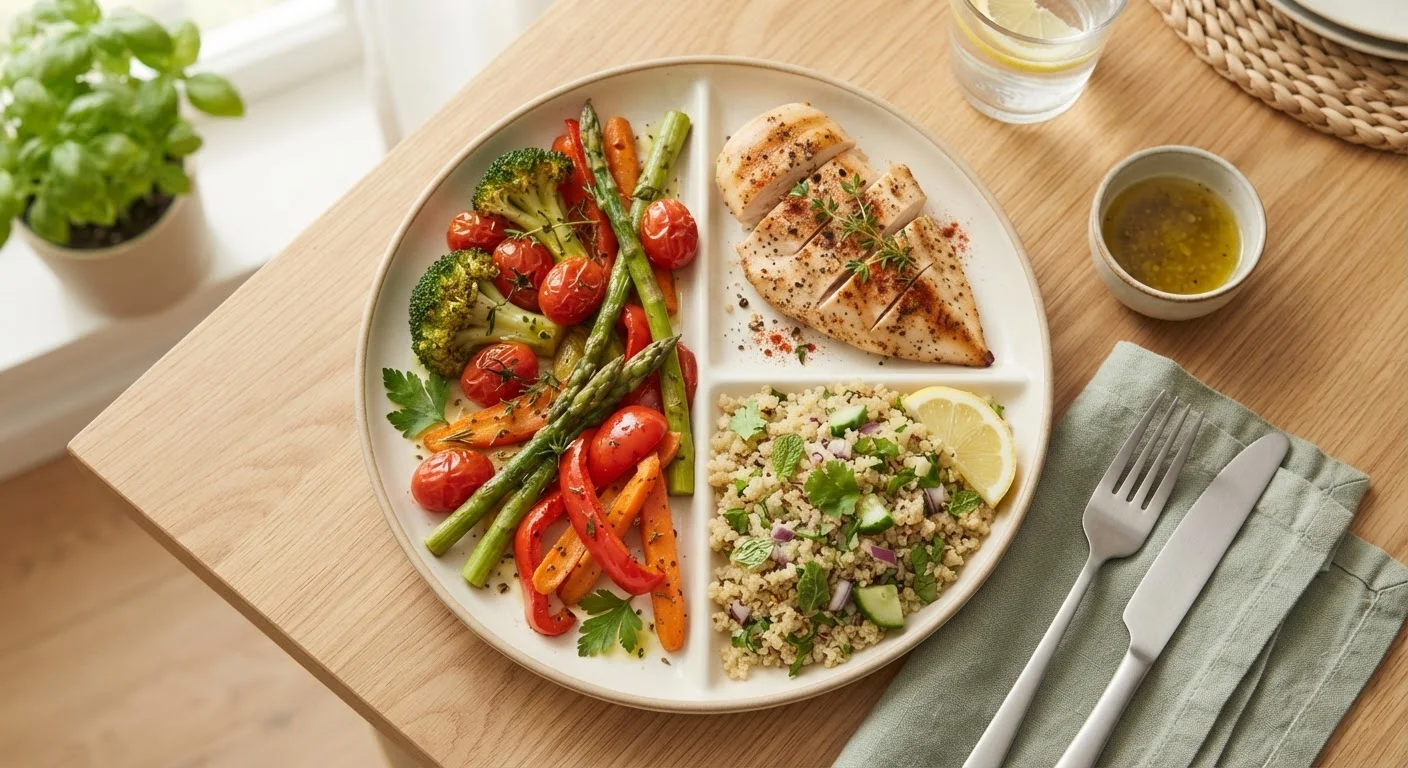
Photo: UnlockTopics.com | Unlocking Trending Content editorial
Key Takeaways
- The plate method divides your dish into proportional zones for vegetables, protein, and grains - no calorie counting needed.
- Half your plate filled with non-starchy vegetables is a reliable foundation supported by mainstream nutritional guidance.
- Choosing whole, minimally processed foods within each zone amplifies the nutritional quality of any meal.
- This framework adapts to most dietary patterns, including plant-based and culturally varied cuisines.
- Consistency across meals matters more than perfection at any single one.
Why a Plate Framework Works
Counting calories, tracking macros, and calculating percentages can be effective for some people - but the cognitive load makes these approaches unsustainable for most. Research in behavioral nutrition consistently shows that simpler, visual strategies lead to better long-term adherence. The plate method, popularized in part by resources like the USDA's MyPlate guidelines, translates nutritional science into a spatial concept anyone can apply at any meal, with any cuisine.
The core idea: use the proportions of your plate as a guide rather than a measuring tool. You don't need a food scale, an app, or a degree in dietetics. What you need is a general understanding of which food categories belong in which zones - and why.
If you want to go deeper on the micronutrient side of what goes on your plate, the Essential Vitamins and Minerals guide is a useful companion resource.
What you will need
How to Build Your Balanced Plate
Follow these steps at your next meal. The framework applies equally to home-cooked dinners, assembled lunches, or meals you're customizing at a restaurant.
Fill half your plate with non-starchy vegetables
This is the most impactful zone. Non-starchy vegetables - think leafy greens, broccoli, bell peppers, zucchini, tomatoes, carrots, and cucumbers - provide fiber, micronutrients, and volume with relatively low energy density. Filling half your plate here creates a natural foundation that supports satiety and nutritional variety.
Aim for color variety within this zone across the week: dark leafy greens provide folate and iron; orange and red vegetables supply beta-carotene; cruciferous varieties like cabbage and cauliflower offer compounds associated with anti-inflammatory effects in current research.
Reserve one quarter for quality protein
Protein supports muscle maintenance, satiety, and countless metabolic functions. Fill roughly one quarter of your plate with a protein source: lean poultry, fish, eggs, tofu, tempeh, legumes, or low-fat dairy products. Fatty fish like salmon or sardines add the benefit of omega-3 fatty acids, which are associated with cardiovascular health in observational research.
If you eat meat, minimizing heavily processed options (such as deli meats or sausages) in favor of whole-food sources is a broadly supported nutritional principle. Plant proteins like beans and lentils count here and do double duty by also contributing fiber.
Fill the remaining quarter with whole grains or starchy vegetables
The final quarter of the plate accommodates carbohydrates - the body's preferred energy source. Prioritize whole grains such as brown rice, quinoa, farro, whole wheat pasta, or oats, which retain their fiber and micronutrient content. Starchy vegetables like sweet potatoes, corn, and peas are equally valid here.
Whole grains are associated with better glycemic response compared to refined grains, meaning they produce a slower rise in blood glucose - a relevant consideration for most people, not just those managing blood sugar.
Add a small amount of healthy fat
Fats are essential for absorbing fat-soluble vitamins (A, D, E, and K) and supporting cell function. A modest addition to your meal - a drizzle of olive oil, a few slices of avocado, a small handful of nuts or seeds - rounds out the plate nutritionally without dominating it. Unsaturated fats from plant sources and fatty fish are the most consistently supported by current cardiovascular research.
Choose water or low-calorie beverages alongside your meal
Beverages are often an overlooked part of the eating occasion. Water is the most evidence-backed default. Unsweetened tea and coffee are also broadly well-tolerated. Sugary drinks - including sodas, juices, and sweetened coffees - contribute significant added sugar without the satiety of solid food, and regular consumption is linked to adverse metabolic outcomes in large-scale studies.
If you use a nutrition label to evaluate packaged components of your meal, our guide to reading nutrition labels explains how to interpret the information accurately.
Adapting the Framework to Your Eating Style
One of the plate method's greatest strengths is its flexibility. Whether you follow a plant-based pattern, eat a traditional cultural diet, or are simply trying to eat more vegetables, the proportional logic holds. Beans and lentils, for example, can anchor the protein zone while also contributing fiber typically associated with the vegetable zone - a nutritional win that works across many dietary approaches. See our plant-based eating overview for guidance specific to those dietary patterns.
Meal timing is a separate but related question. If you're curious about how the number of meals per day affects your nutrition strategy, the comparison of intermittent fasting and three meals a day lays out what the evidence actually says.
Progress Over Perfection
This article is for general educational purposes and does not constitute personalized medical or nutritional advice. Consult a registered dietitian or qualified healthcare provider before making significant changes to your diet, particularly if you have a medical condition or specific health goal.
The content on this site is for informational purposes only and is not a substitute for professional advice. Always consult a qualified professional for guidance specific to your situation.