
Wardrobe Organizing Approaches Compared: Colour, Category, and Frequency

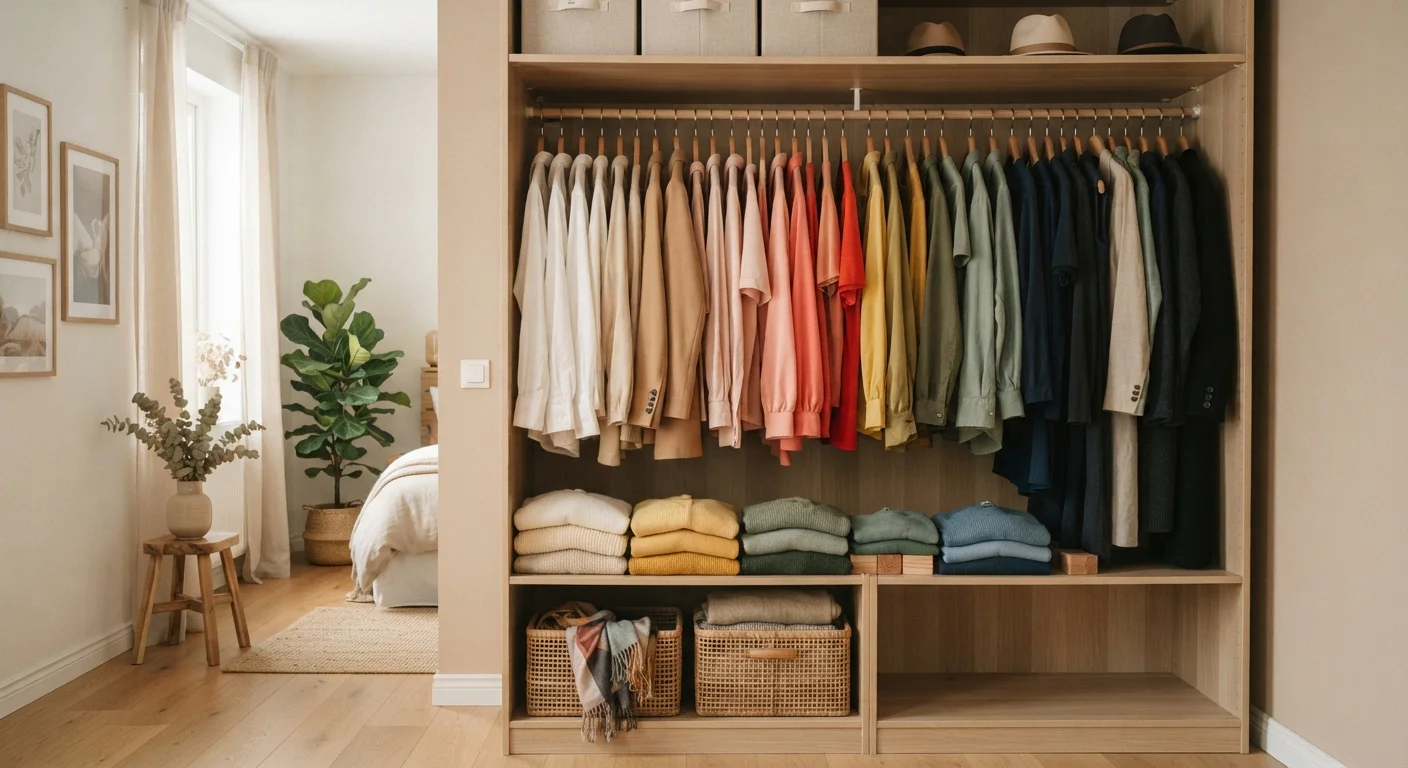
Photo: UnlockTopics.com | Unlocking Trending Content editorial
Key Takeaways
- Colour-sorting creates visual calm but can scatter similar garment types across your wardrobe.
- Category-based organizing groups clothes by function, making it easier to find what you need fast.
- Frequency sorting surfaces your most-worn items and reveals pieces you rarely reach for.
- Most effective wardrobes combine two methods - typically category first, then a secondary sort within each group.
- No single method works for every person; your wardrobe size and daily routine should guide the choice.
Why the Method You Choose Actually Matters
Most wardrobe frustration comes not from owning too many clothes, but from not being able to find what you need when you need it. The organizing system you choose determines how intuitive your wardrobe becomes over time - and whether order holds or collapses within weeks.
Before committing to any approach, it helps to do a full wardrobe audit so you're organizing what you actually own and wear, not inherited clutter. With a clear picture of your inventory, you can match the right method to your real habits.
The three most commonly used systems - colour, category, and frequency - each have genuine strengths and real trade-offs. Understanding those distinctions helps you choose deliberately rather than defaulting to whatever feels easiest in the moment.
Sorting by Colour: Visual Order With Hidden Costs
Colour sorting arranges clothes in a spectrum - typically light to dark, or following the order of a colour wheel - across your entire hanging rail. The result is visually striking and feels immediately calmer than a jumbled rail.
The appeal is real: your eye can scan the wardrobe quickly, and the overall impression of tidiness is strong. If you think in terms of what colour am I reaching for today, this system can genuinely speed up morning decisions.
The trade-off is that garment type gets scattered. A navy blazer, a navy T-shirt, and a navy pair of wide-leg trousers may sit together, which makes finding a specific item type - say, all your work tops - slower. Colour sorting also works best on hanging items; folded shelves are harder to colour-code without significant effort.
| Colour Sorting | Category Sorting | Frequency Sorting | |
|---|---|---|---|
| Visual appeal | High - spectrum effect is striking | Moderate - functional, not decorative | Low - order shifts constantly |
| Morning speed | Moderate - good if colour-led | High - direct navigation by type | High for regulars, slower for rest |
| Decluttering insight | Low - usage not visible | Low - usage not visible | High - unworn items become obvious |
| Works for folded items | Difficult to maintain | Works well | Works well |
| Scales with wardrobe size | Moderate - can become complex | Excellent - add subcategories | Moderate - can lose structure |
| Best used as | Primary or secondary sort | Primary structure | Secondary layer or audit tool |
For those exploring how colour itself functions in a wardrobe context, the principles behind colour blocking and tonal dressing can inform which hues you cluster together.
Sorting by Category: Function-First and Fast
Category organizing groups all like items together: all trousers in one zone, all shirts in another, all knitwear together, and so on. This is how most retail stores and professional stylists organize clothing, and for good reason - it maps directly onto how most people think when getting dressed.
When you know you need a pair of trousers for a meeting, you go straight to the trouser section. There's no scanning; no cross-referencing. For people with active, varied wardrobes, this tends to reduce decision fatigue more reliably than other methods.
Category organizing also scales well. A wardrobe holding 30 items and one holding 150 items can both use the same framework - you simply add sub-groups within each category as your collection grows. Subcategories might include separating casual tops from work tops, or everyday trousers from occasion wear.
Start With Categories, Then Refine
If you're working toward a more intentional wardrobe overall, pairing category organizing with a seasonal rotation strategy - as outlined in this guide to capsule dressing by season - keeps each category tight and usable year-round.
Sorting by Frequency: The Honesty System
Frequency sorting places the clothes you reach for most often at the front or center of your wardrobe, and pushes rarely worn items to the edges or back. Unlike the other two methods, this system changes over time - it's a living map of your actual habits rather than a fixed taxonomy.
The immediate practical benefit is that your most-used pieces are always at hand. But the more significant effect is what frequency sorting reveals: pieces pushed to the back that haven't moved in months become visible evidence of unworn clothing. This makes decluttering decisions easier and more grounded.
The limitation is that frequency sorting doesn't organize within itself - two frequently worn items of very different types may end up side by side with no clear logic beyond usage. It works better as a secondary layer within a category or colour system rather than as the sole organizing principle.
If you're using frequency awareness as a trigger to edit your wardrobe before the next season, a structured seasonal wardrobe audit gives that process a practical framework.
Combining Methods: What Works in Practice
Most real wardrobes benefit from a hybrid approach. The most functional combination for everyday use is category as the primary structure, with frequency or colour applied within each group. For example: all tops together, arranged front-to-back by how often you wear them; all trousers together, arranged light to dark.
This preserves the navigational speed of category organizing while adding a secondary layer of logic that suits your personal preferences. It also makes the system resilient - if you add new items, you know exactly where they belong.
For those also thinking through the broader decision of whether to reorganize all at once or tackle one section at a time, the all-at-once versus zone-by-zone decluttering comparison offers useful perspective on how to approach the process itself. Whichever method you choose, the goal is a wardrobe that requires less mental effort each morning - not one that looks impressive only when the doors are open.
The content on this site is for informational purposes only and is not a substitute for professional advice. Always consult a qualified professional for guidance specific to your situation.