
DIY Checks vs Mechanic Visits: Knowing Where the Line Should Be

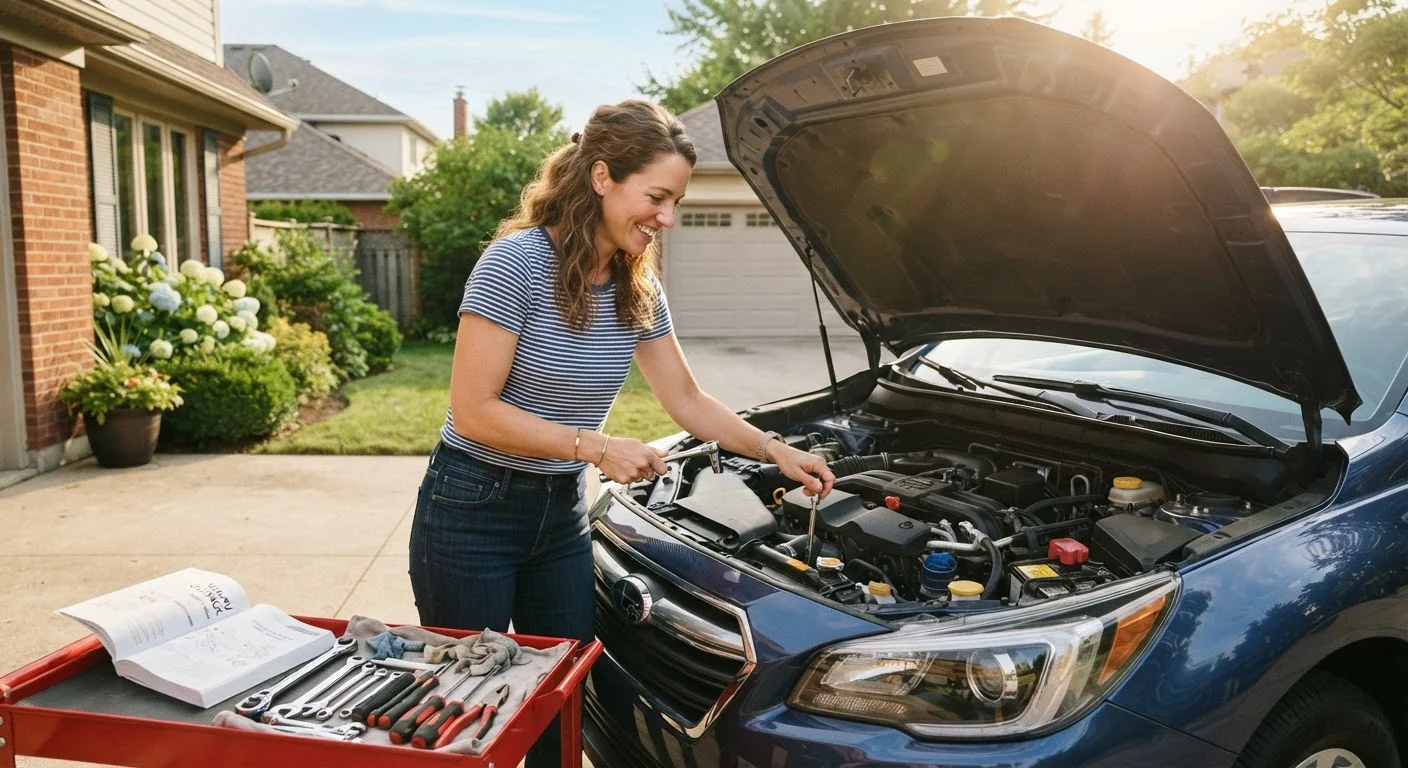
Photo: UnlockTopics.com | Unlocking Trending Content editorial
Key Takeaways
- Many routine checks - fluids, tire pressure, lights - are safe and straightforward for any driver to do at home.
- Brake system work, suspension repairs, and complex electrical diagnostics carry real risk if done incorrectly and should go to a qualified mechanic.
- Your owner's manual is the single most reliable guide to what your specific vehicle needs and when.
- A good rule of thumb: if the task requires lifting the vehicle, specialized tools, or affects primary safety systems, consult a professional.
- Tracking what you check and when helps mechanics diagnose problems faster and preserves resale value.
Why the DIY vs. Mechanic Question Matters
Car ownership comes with a steady stream of maintenance decisions. Some are genuinely simple - checking tire pressure takes two minutes and requires only a gauge. Others look approachable but carry serious consequences if done incorrectly. Getting this judgment wrong in either direction costs you: unnecessary mechanic visits add up, but an improperly bled brake line or a mishandled airbag sensor is a safety hazard.
The goal isn't to become a backyard mechanic. It's to know confidently which tasks fall within a careful driver's reach, and which belong to someone with professional training and proper equipment. For a broader picture of what happens during routine service and why intervals exist, see the logic behind a car service schedule.
Tasks Most Drivers Can Handle Safely
A broad category of checks require only observation, basic tools, and your owner's manual. These are low-consequence tasks - if you make a small error, it's usually obvious and easily corrected before it creates a problem.
- Tire pressure and visual inspection: Check monthly with a quality gauge. Look for uneven wear, cracks, or embedded objects. Your door jamb sticker lists the correct PSI.
- Fluid level checks: Engine oil, coolant, windshield washer fluid, and brake fluid reservoirs are all visible under the hood. Identifying each fluid and what low levels signal is a practical skill every driver should have.
- Wiper blade replacement: Blades typically clip on and off with no tools. Most auto parts stores stock universal sizes.
- Exterior light checks: Walk around the car periodically to confirm all lights - headlights, taillights, turn signals, brake lights - are functional.
- Air filter inspection: The engine air filter is usually accessible without tools. A visibly clogged filter warrants replacement; consult your manual for the interval.
Start With Your Owner's Manual
If you're a newer driver building these habits from scratch, a structured approach to maintenance basics provides a solid starting point before tackling any of the above independently.
Where DIY Stops and Professional Work Begins
The dividing line is primarily about safety consequence and technical complexity. These systems require specialized tools, calibration, or an understanding of failure modes that goes beyond what a general guide can safely convey.
Never Guess With Safety-Critical Systems
- Brake system repairs: Replacing brake pads appears straightforward, but correct caliper compression, rotor inspection, and brake line integrity checks require experience. An error here directly affects stopping distance.
- Suspension and steering components: Worn ball joints, tie rods, or shocks affect vehicle stability. Replacing these incorrectly - or missing a related worn component - can compromise handling in ways that aren't immediately obvious.
- Airbag system and SRS sensors: Never attempt to work on or around airbag components without proper training. Accidental deployment is a serious injury risk.
- Complex electrical and diagnostic work: A dashboard warning light (check engine, ABS, traction control) requires an OBD-II scan and interpretation. The code points toward a system, not a single fix - misreading it leads to replacing the wrong part.
- Transmission service: Fluid changes and filter replacements in automatic transmissions involve specific procedures and torque specs. Mistakes can be expensive to undo.
If a task requires lifting the vehicle on jack stands, involves hydraulic lines, or affects a primary safety system, the professional threshold applies regardless of how many tutorial videos exist online.
How to Compare the Two Approaches
The table below summarizes where each approach makes sense across common vehicle tasks.
| Task | DIY-Appropriate | Mechanic Required | |
|---|---|---|---|
| Tire pressure check | Yes - monthly with a gauge | Not needed routinely | |
| Fluid level checks | Yes - visual checks are straightforward | Needed only if a leak is suspected | |
| Wiper blade replacement | Yes - no tools needed | Not needed | |
| Brake pad replacement | Not recommended without experience | Yes - safety-critical system | |
| Dashboard warning lights | Check owner's manual first | Yes - diagnostic scan required | |
| Suspension components | No - affects handling stability | Yes - specialized tools needed | |
| Engine air filter | Yes - usually tool-free access | Optional if unfamiliar | |
| Transmission service | Not recommended | Yes - precise procedure required |
Keep in mind that vehicle age, condition, and your own mechanical familiarity all influence where your personal line sits. What's routine for someone who has serviced their own vehicles for years may not be appropriate for a first-time car owner.
Making the Most of Both Approaches
DIY checks and mechanic visits aren't competing strategies - they work best together. Staying on top of fluid levels and tire condition means your mechanic spends less time on basics and more time catching problems you can't see. Before a long drive, a quick self-check covers the obvious issues; a pre-trip inspection routine can make the process systematic.
Logging what you check and when also pays dividends. A clear record of oil changes, fluid top-offs, and observed issues gives a mechanic real diagnostic context. Keeping a maintenance log costs nothing but a few minutes and directly supports faster, more accurate professional service.
Finally, be honest about what you observe. If a noise, smell, or behavior is unfamiliar - even if nothing looks obviously wrong - that's a reasonable prompt for a professional inspection. Catching a developing problem early almost always costs less than addressing a failure after the fact, as explored in habits that quietly shorten a car's lifespan.
The content on this site is for informational purposes only and is not a substitute for professional advice. Always consult a qualified professional for guidance specific to your situation.