
Keeping a Maintenance Log: Why the Paper Trail Pays Off

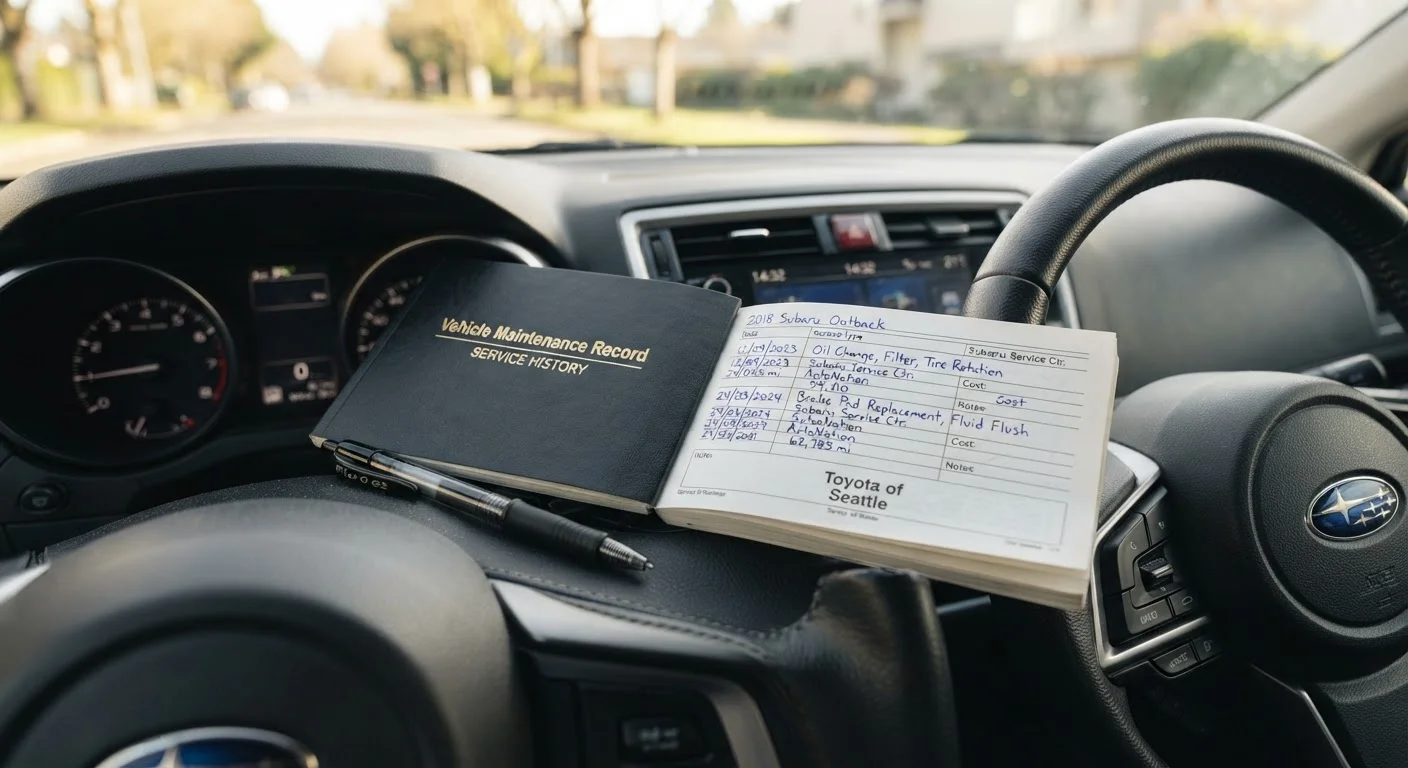
Photo: UnlockTopics.com | Unlocking Trending Content editorial
Key Takeaways
- A maintenance log creates a verifiable service history that protects both reliability and resale value.
- Mechanics can diagnose problems faster when they have a clear record of past repairs and part replacements.
- Keeping a log requires consistent effort - even a simple notebook works if entries are made promptly.
- A documented service history is often scrutinized by used-car buyers and can influence sale price.
Faster, more accurate mechanic diagnostics
When a technician can see that brake pads were replaced 18 months ago or that a transmission fluid flush is overdue, they spend less time guessing and more time solving. This often translates to lower labor costs.
Prevents duplicate or missed services
Without a log, owners frequently pay for services already performed - or skip ones that are due. A written record eliminates both scenarios by making the timeline unambiguous.
Strengthens resale value and buyer trust
A documented service history is one of the most persuasive assets in a private vehicle sale. It signals responsible ownership and reduces the uncertainty that drives buyers to negotiate prices down.
Helps identify recurring problems
If the same component keeps failing, a log makes the pattern visible. That data is valuable both for escalating warranty claims and for deciding when repair costs outweigh the vehicle's value.
Supports warranty and recall documentation
Manufacturer warranties and extended service contracts often require proof that maintenance was performed on schedule. A log provides that proof if a dispute arises.
Requires consistent, timely record-keeping
A log that isn't updated promptly loses accuracy. Owners who intend to catch up later often find details fade - exact dates, mileage figures, and part numbers are easy to forget within days.
Only as reliable as the person completing it
Entries depend on self-reported or shop-reported information. A dishonest seller or a careless shop could record inaccurate information, giving a log false credibility.
May not transfer benefit if the vehicle is sold quickly
Drivers who change vehicles frequently - every two or three years - may see less financial return from meticulous record-keeping, since the log's value compounds with ownership length.
Physical logs can be lost or damaged
A paper log stored in a glove compartment can be destroyed in a vehicle fire, flood, or simple misplacement. Without a backup, years of records disappear instantly.
What a Maintenance Log Actually Contains
A vehicle maintenance log is a running record of every service, repair, inspection, and part replacement performed on a car. At minimum, a useful log captures the date of service, the odometer reading, what was done, which parts were used, and who performed the work - whether a dealership, independent shop, or the owner.
Logs can be kept in a simple spiral notebook stored in the glove compartment, a dedicated service booklet provided by the manufacturer, or a digital app. Format matters less than consistency. The goal is an unbroken chain of documented events that tells the story of how the vehicle has been treated over time.
Understanding how a log fits into a broader routine is easier with context. The manufacturer service schedule sets the intervals; the log proves those intervals were actually followed.
The Case for Keeping One
The advantages of a maintenance log go well beyond personal organization.
Faster, more accurate mechanic diagnostics
When a technician can see that brake pads were replaced 18 months ago or that a transmission fluid flush is overdue, they spend less time guessing and more time solving. This often translates to lower labor costs.
Prevents duplicate or missed services
Without a log, owners frequently pay for services already performed - or skip ones that are due. A written record eliminates both scenarios by making the timeline unambiguous.
Strengthens resale value and buyer trust
A documented service history is one of the most persuasive assets in a private vehicle sale. It signals responsible ownership and reduces the uncertainty that drives buyers to negotiate prices down.
Helps identify recurring problems
If the same component keeps failing, a log makes the pattern visible. That data is valuable both for escalating warranty claims and for deciding when repair costs outweigh the vehicle's value.
Supports warranty and recall documentation
Manufacturer warranties and extended service contracts often require proof that maintenance was performed on schedule. A log provides that proof if a dispute arises.
~$1,200
Estimated average annual vehicle repair cost per US driver
Industry estimates from AAA suggest US drivers pay roughly this amount annually in unplanned vehicle repairs - many of which are linked to deferred or undocumented maintenance.
Up to 10%
Potential resale value impact of documented service history
Automotive appraisers and consumer research consistently indicate that a complete service record can meaningfully influence a used vehicle's perceived and negotiated value.
For new drivers especially, starting a log from the day of purchase builds a disciplined foundation. The habits formed early tend to stick - and a log reinforces accountability for every interval that comes due.
Where a Maintenance Log Falls Short
No tool is without limits, and a maintenance log is no exception.
Requires consistent, timely record-keeping
A log that isn't updated promptly loses accuracy. Owners who intend to catch up later often find details fade - exact dates, mileage figures, and part numbers are easy to forget within days.
Only as reliable as the person completing it
Entries depend on self-reported or shop-reported information. A dishonest seller or a careless shop could record inaccurate information, giving a log false credibility.
May not transfer benefit if the vehicle is sold quickly
Drivers who change vehicles frequently - every two or three years - may see less financial return from meticulous record-keeping, since the log's value compounds with ownership length.
Physical logs can be lost or damaged
A paper log stored in a glove compartment can be destroyed in a vehicle fire, flood, or simple misplacement. Without a backup, years of records disappear instantly.
It's also worth being clear: a log records what was supposed to happen, not always what was actually done correctly. A shop might record an oil change that used the wrong viscosity, or a DIY entry might omit a step. The log is a paper trail - it doesn't independently verify quality. For guidance on knowing which tasks are genuinely safe to handle yourself, see DIY checks vs. mechanic visits.
How It Affects Resale Value and Buyer Confidence
Used-car buyers increasingly ask for a documented service history - and with good reason. A log provides evidence of consistent care that a simple visual inspection cannot. Gaps in service records raise questions about how the vehicle was maintained during those periods.
Digital Logs and App-Based Records
A complete log doesn't guarantee a higher sale price, but it removes a common point of negotiation leverage for buyers. Sellers without records often find buyers discount their offer to account for the unknown. Conversely, a clean, well-organized log signals ownership pride and reduces perceived risk - which matters particularly for higher-mileage vehicles.
Some buyers and dealers also cross-reference logs with third-party vehicle history reports, using both together to build a fuller picture of a car's past. Consistency between the two strengthens credibility.
The content on this site is for informational purposes only and is not a substitute for professional advice. Always consult a qualified professional for guidance specific to your situation.