
Autumn Textures vs Spring Fabrics: Dressing for the Transition Months

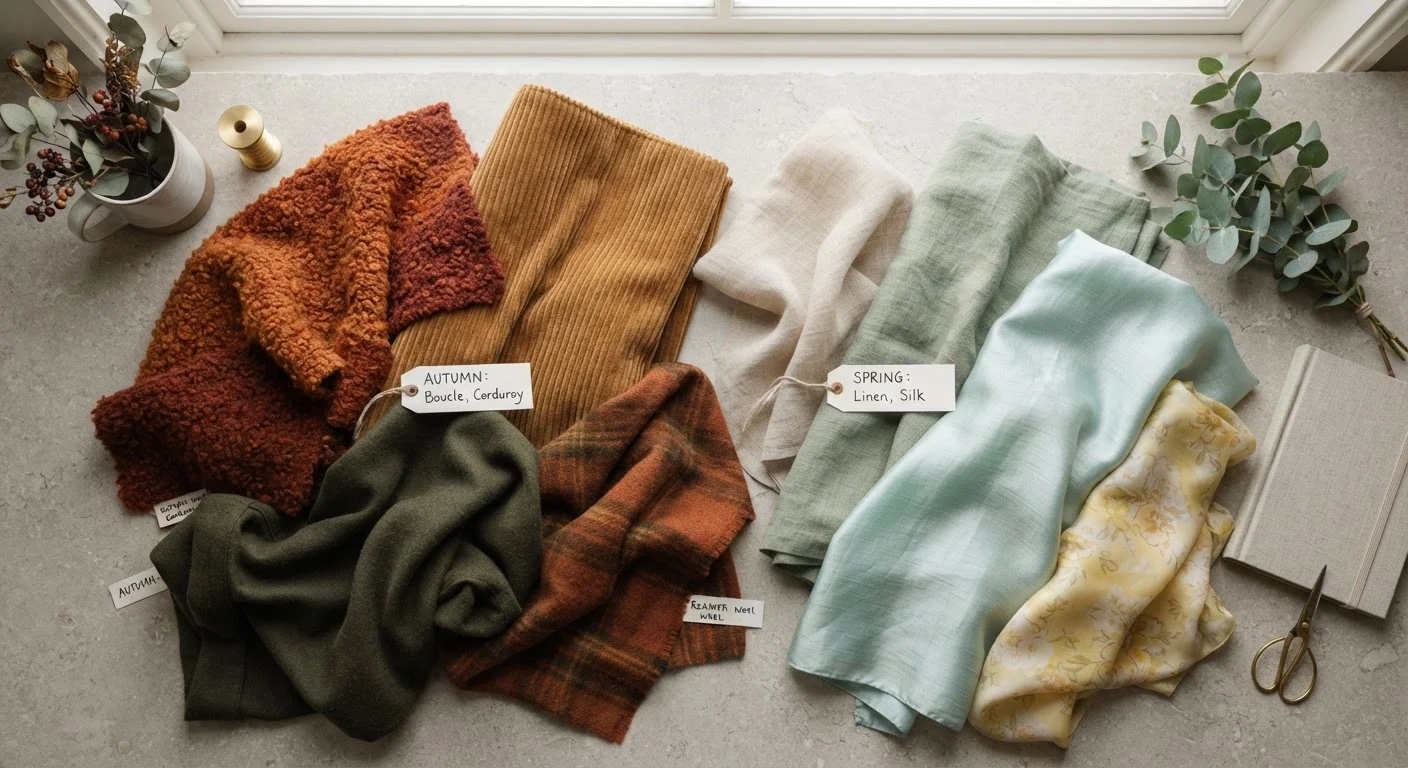
Photo: UnlockTopics.com | Unlocking Trending Content editorial
Key Takeaways
- Autumn fabrics like boucle, corduroy, and wool blend structure and warmth into each garment.
- Spring fabrics — linen, silk, and cotton voile — prioritize breathability and movement over insulation.
- Transition months call for layering lighter spring fabrics under or over autumn-weight pieces.
- Fabric weight, not just color palette, is the most reliable guide to seasonal dressing.
- Silk and fine knits can bridge both seasons depending on how they are styled and layered.
What Makes Autumn and Spring Fabrics Fundamentally Different
At the core, seasonal fabric design is an engineering choice. Autumn textiles are built to trap heat, add structure, and withstand layering pressure. Spring fabrics do the opposite — they release heat, drape loosely, and breathe. Understanding this distinction makes it easier to dress well on days when the weather refuses to cooperate.
Autumn's signature textures include boucle (a looped, nubby yarn weave), corduroy (ribbed cotton with a cut-pile surface), heavy wool and wool-blend knits, velvet, and tweed. Each of these creates small pockets of trapped air, which is exactly what keeps you warm. The visual effect is depth and weight — these fabrics look substantial because they are.
Spring fabrics lean on open weaves and fine fibers. Linen, woven from flax, is inherently breathable and becomes softer with wear. Silk, whether charmeuse or habotai, regulates body temperature more responsively than synthetic alternatives. Cotton voile and lawn are sheer, lightweight variations that allow airflow. The common thread is surface simplicity — spring weaves tend to be flat, fine, and smooth.
For a deeper look at how each of these textiles behaves day-to-day, our fabric glossary covers the practicalities in plain language.
| Criterion | Autumn Textures | Spring Fabrics |
|---|---|---|
| Key fabrics | Boucle, corduroy, tweed, velvet, wool knit | Linen, silk, cotton voile, lawn, chambray |
| Primary function | Insulation and structure | Breathability and movement |
| Surface texture | Dimensional, nubby, or ribbed | Flat, fine, or loosely woven |
| Layering role | Outer or mid-layer | Base or standalone layer |
| Temperature range | Best below 60°F | Best above 60°F |
| Cross-season versatility | Moderate — heavy pieces anchor in cold | High — fine weights layer into cooler months |
| Care complexity | Dry-clean or gentle cold wash often required | Linen and cotton wash easily; silk needs care |
Navigating the In-Between: October and April Dressing
October and April are the trickiest months in the wardrobe calendar. Temperatures swing widely within a single day — a 50°F morning can become a 70°F afternoon — and neither a full autumn wardrobe nor a spring capsule is quite right on its own.
The most practical approach is to treat fabric weight as a dial rather than a switch. Instead of committing entirely to one season's palette, mix weights deliberately. A linen blouse worn under a boucle blazer covers both ends of the thermal spectrum: remove the outer layer as the day warms, and the breathable underlayer keeps you comfortable. This is the logic at the heart of transitional layering as a year-round strategy.
20°F+
Typical daily temperature swing in transition months
Meteorological data consistently shows October and April produce the widest intra-day temperature variance of any month in temperate US climates.
~30%
More breathable than synthetic weaves
Textile research generally finds natural-fiber fabrics like linen and cotton allow significantly greater air circulation compared to tightly woven synthetics.
In spring, the direction reverses. A silk midi skirt paired with a fine merino knit works for a cool April evening; slip off the knit and the silk reads as purely warm-weather dressing. Silk is particularly useful here because it sits at the edge of both seasonal identities — light enough for spring, refined enough to anchor an autumn look when styled thoughtfully. The quiet luxury aesthetic leaned heavily on this dual-season quality of fine knits and silk.
One practical rule: when in doubt, anchor with a spring fabric and add autumn texture on top. It is far easier to remove a corduroy overshirt than to cool down in a boucle dress with nothing lighter underneath.
Building a Transition Wardrobe That Works Both Ways
Rather than treating autumn and spring as separate wardrobes, a smarter approach is to identify the pieces that genuinely function across both. A structured seasonal capsule prioritizes exactly these crossover pieces.
A Note on Fabric Weight vs. Warmth
Key crossover candidates include:
- Lightweight wool trousers — warm enough for October, refined enough for April when paired with a linen shirt
- Silk blouses — layer under autumn knitwear in fall; wear standalone or with cotton trousers in spring
- Medium-weight denim — not a seasonal fabric strictly, but it pairs equally well with boucle blazers and linen jackets
- Fine merino knits — thin enough to tuck under outerwear in autumn, light enough to wear alone on a cool spring evening
Before committing to new seasonal pieces, a wardrobe audit helps identify what crossover items you already own. Most people have more transition-ready pieces than they realize.
Color also plays a supporting role: autumn textures often arrive in ochre, rust, and forest tones, while spring fabrics skew toward dusty rose, sage, and ivory. Choosing transition-friendly neutrals — camel, stone, off-white — means a piece can move between seasonal palettes without clashing. For those interested in how prints interact with seasonal fabric choices, our guide on mixing seasonal prints offers useful visual logic.
The content on this site is for informational purposes only and is not a substitute for professional advice. Always consult a qualified professional for guidance specific to your situation.