
Fabric Glossary: Common Textiles and What They're Actually Like to Wear

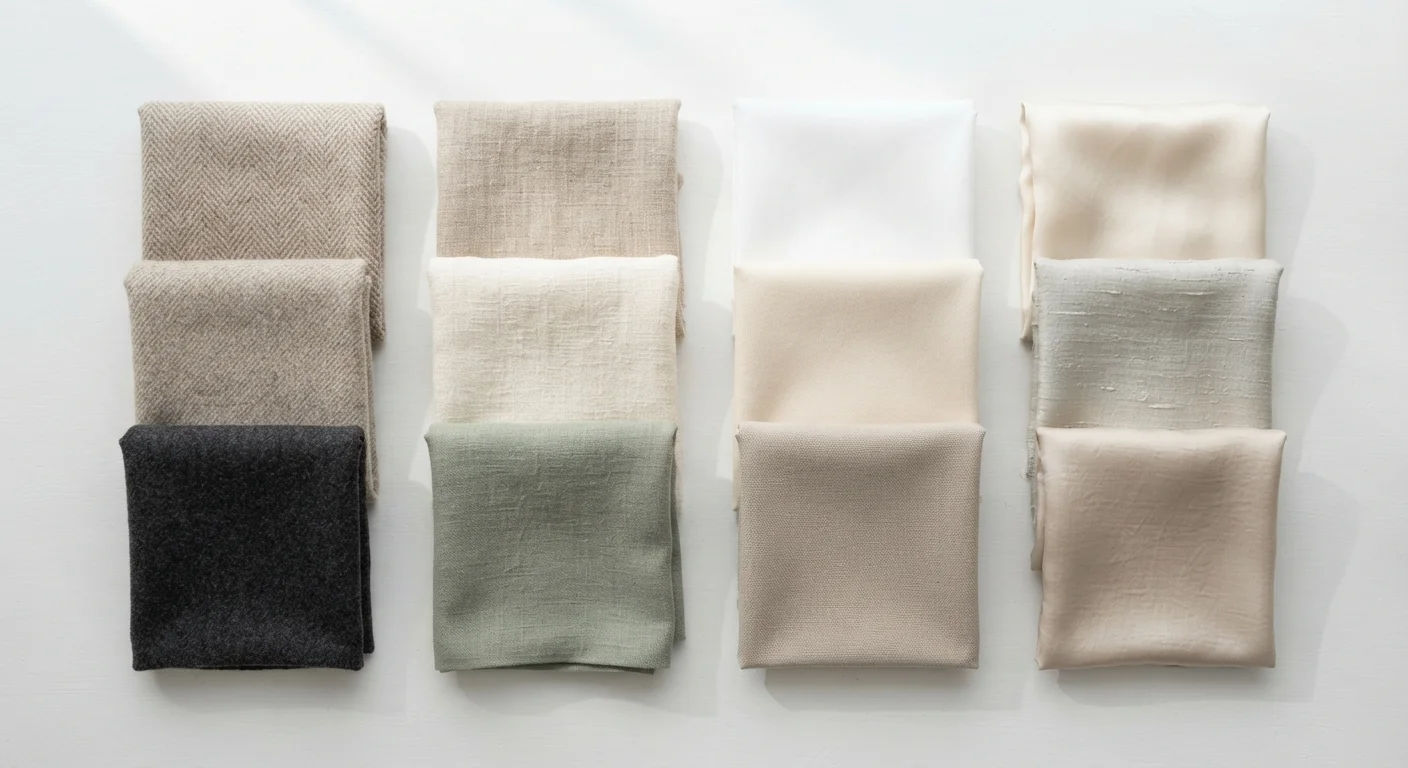
Photo: UnlockTopics.com | Unlocking Trending Content editorial
Why Fabric Knowledge Actually Matters
Most people choose clothes by silhouette, color, or price — and only realize a garment doesn't work for them after it's washed, worn, or worn in the wrong season. Understanding what a fabric is and how it behaves cuts through that guesswork. It also makes care labels far easier to decode. For a deeper dive into those symbols, see our guide to reading clothing labels.
The fabric landscape divides into three broad families: natural fibers (grown or raised, like cotton and wool), manufactured cellulosic fibers (plant-derived but processed, like viscose), and synthetic fibers (petroleum-based, like polyester and nylon). Blends combine two or more fiber types to balance performance and cost. Each category has trade-offs worth knowing before you buy.
| Most common fabric globally | Cotton (Textile Exchange Preferred Fiber & Materials Report) |
| Most widely used synthetic fiber | Polyester (Textile Exchange Preferred Fiber & Materials Report) |
| Fiber families | Natural, manufactured cellulosic, synthetic |
| Label reading tip | First fiber listed = dominant fiber by weight (U.S. Federal Trade Commission textile labeling rules) |
| Wool's key property | Temperature regulation — warm in cold, breathable when active |
| Viscose alternative terms | Rayon, art silk (marketing term) |
Natural Fibers: Cotton, Linen, Wool, and Silk
Cotton is the workhorse of everyday dressing. It's soft, breathable, and generally easy to care for. It absorbs moisture rather than wicking it away, which means it can feel heavy when wet and takes longer to dry than synthetics. It also wrinkles readily and can shrink in hot water — hence the cold-wash instructions on many cotton items.
Linen, woven from flax fibers, is even more breathable than cotton and has a distinctive textured hand. It's a go-to for warm climates precisely because it releases heat efficiently. The trade-off is creasing: linen wrinkles almost immediately and that's largely unavoidable. Many linen wearers consider the relaxed crumple part of its appeal.
Wool is a natural insulator with the unusual ability to regulate body temperature — trapping warmth in cold air while releasing moisture vapor in warmer conditions. Merino wool, a finer grade, is soft enough for direct skin contact and is used widely in base layers and knitwear. Standard wool can feel scratchy against sensitive skin. Most wool garments require hand washing or dry cleaning to prevent felting and shrinkage.
Silk is a protein fiber produced by silkworms and is prized for its smooth drape and natural sheen. It's lightweight and temperature-regulating, though it's also delicate — vulnerable to perspiration staining, sunlight yellowing, and abrasion. Most silk garments benefit from hand washing in cool water with a gentle detergent, though many labels call for dry cleaning as a precaution.
Natural fiber
A textile fiber derived directly from plants or animals — such as cotton (seed hair), linen (flax stem), wool (sheep fleece), or silk (silkworm cocoon). Natural fibers are generally breathable and biodegradable but often require more careful laundering.
Synthetic fiber
A man-made fiber produced from petroleum-based chemicals, such as polyester, nylon, or acrylic. Synthetics are typically durable, wrinkle-resistant, and quick-drying, but tend to be less breathable than natural fibers.
Viscose (Rayon)
A manufactured cellulosic fiber made by chemically dissolving and extruding plant cellulose. It drapes softly and resembles silk in appearance, but is weaker when wet and prone to shrinkage without careful handling.
Lyocell (Tencel)
A manufactured fiber similar to viscose but produced in a closed-loop process that recycles most of its solvents. It is softer, more durable, and more resistant to wrinkles than standard viscose.
Moisture wicking
The ability of a fabric to pull sweat away from the skin and move it to the outer surface where it can evaporate. Engineered synthetics are typically designed with this property; most natural fibers absorb rather than wick moisture.
Felting
An irreversible matting and shrinking process that occurs in wool when it is exposed to heat, agitation, and moisture together. Felted wool cannot be restored to its original texture, which is why wool garments require gentle, cool-water washing.
Hand (fabric hand)
The tactile quality of a fabric — how it feels when touched or worn. Terms like 'soft hand,' 'crisp hand,' or 'silky hand' describe texture and drape rather than appearance.
Pilling
Small fiber balls that form on a fabric's surface through friction and wear. Pilling is common in acrylic, low-quality wool, and blended knits, and is a sign of fiber breakage rather than dirt.
Manufactured and Synthetic Fibers: Viscose, Polyester, Nylon, and More
Viscose (also sold as rayon) is made by chemically processing cellulose — typically from wood pulp. The result is a fabric that drapes beautifully, feels soft against skin, and has a subtle sheen similar to silk, but at a much lower price point. The catch: viscose is weak when wet, wrinkles easily, and often requires careful hand washing or dry cleaning. It can also shrink dramatically if handled incorrectly.
Modal and lyocell (Tencel) are close relatives of viscose but processed differently, producing fibers that are generally more durable, less prone to shrinking, and considered more environmentally responsible in production. Modal is particularly soft and holds color well; lyocell has a slightly crisper hand and resists wrinkles better than standard viscose.
Polyester is the most widely used synthetic fabric globally. It's strong, wrinkle-resistant, quick-drying, and holds its shape well — which is why it's found everywhere from activewear to suiting blends. Its main limitation is breathability: polyester doesn't absorb moisture and can trap heat, making it uncomfortable in warm conditions or during physical activity unless specifically engineered for moisture management.
Nylon shares many of polyester's performance traits — durable, quick-drying, resistant to abrasion — and is commonly used in hosiery, activewear, and outerwear linings. Acrylic mimics wool at a lower cost and is machine washable, but tends to pill over time and lacks wool's natural temperature-regulation properties.
Understanding how these fibers perform also helps when reading trend coverage. Knowing that a draped fabric is likely viscose or a structured suiting uses polyester blends makes runway reports more readable — see what runway collections actually mean for real wardrobes for context on how those looks translate to everyday dressing.
~54%
Share of global fiber production that is synthetic
According to Textile Exchange's Preferred Fiber & Materials Market Report, synthetic fibers — led by polyester — account for the majority of fiber produced worldwide.
~24%
Share of global fiber production from cotton
Cotton remains the dominant natural fiber by production volume, per Textile Exchange industry data.
3–5%
Shrinkage risk for untreated cotton in hot wash
Textile industry guidelines note that untreated cotton can shrink measurably in high-temperature washing cycles, making cold-water washing the standard care recommendation.
Blends and What to Expect from Them
Blended fabrics combine fibers to maximize strengths and minimize weaknesses. A cotton-polyester blend, for example, adds wrinkle resistance and durability to cotton while keeping it more breathable than pure polyester. Wool-nylon blends in socks and knitwear improve durability without sacrificing much warmth. Linen-cotton blends are softer and slightly less prone to creasing than pure linen.
When reading a label, the fiber listed first is dominant by weight. A garment listed as 60% cotton / 40% polyester will behave more like cotton but with added resilience. Generally speaking, the higher the natural fiber content, the more care the garment requires — but also the more comfortable it tends to feel against skin. For a full primer on interpreting what's on every tag, our clothing label guide walks through both fiber content and care symbols in plain language.
A Note on 'Sustainable' Fiber Claims
The content on this site is for informational purposes only and is not a substitute for professional advice. Always consult a qualified professional for guidance specific to your situation.