
Fast Fashion vs. Slow Fashion: Understanding the Difference

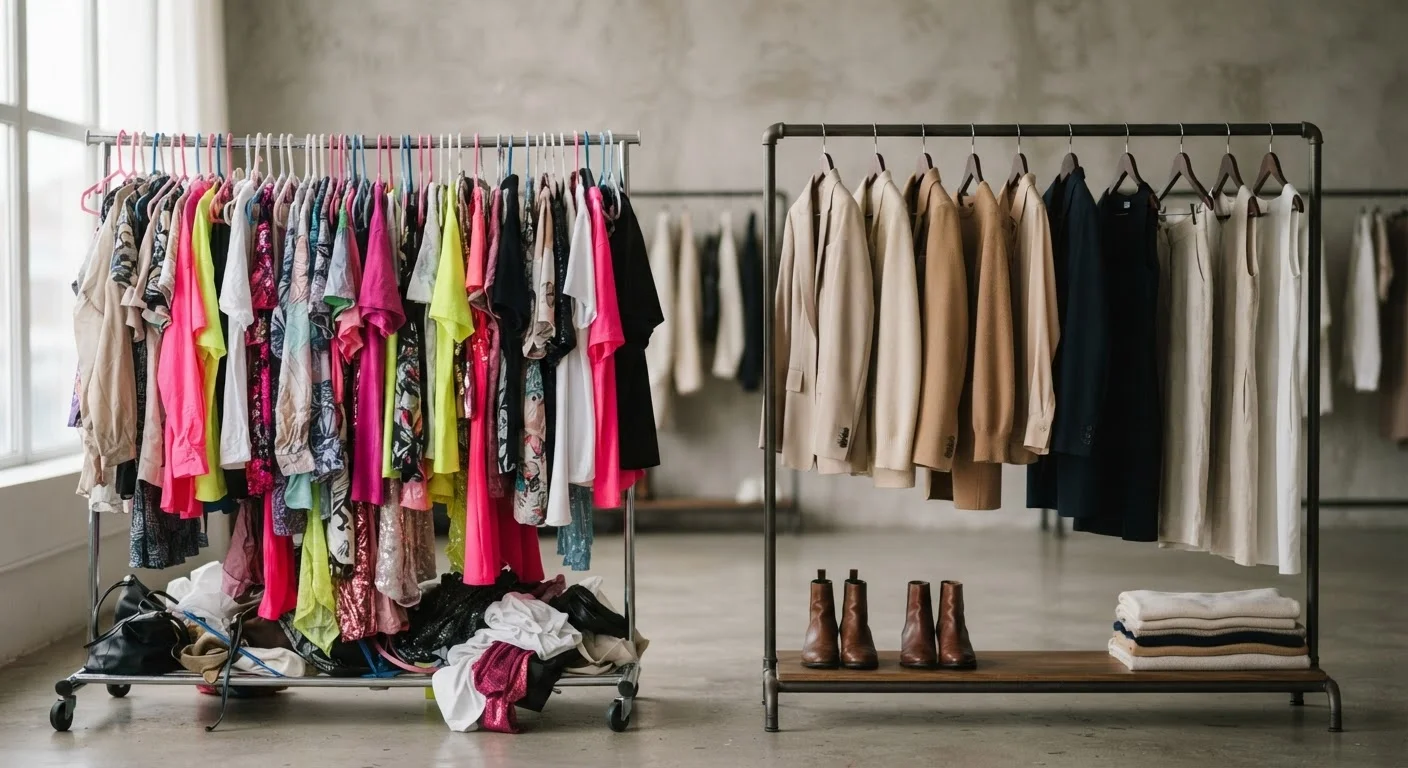
Photo: UnlockTopics.com | Unlocking Trending Content editorial
Key Takeaways
- Fast fashion prioritizes speed and volume; slow fashion prioritizes quality and longevity.
- Fast fashion's low price point often reflects lower material quality and labor standards.
- Slow fashion typically costs more upfront but is designed to last significantly longer.
- Neither model is a single brand — they describe production philosophies and consumer behaviors.
- Understanding both helps you make more deliberate choices about how you build a wardrobe.
Two Models, One Industry
Fashion has always moved in cycles, but the speed at which it moves — and the values embedded in that speed — vary enormously depending on the production philosophy behind the clothes. Fast fashion and slow fashion are not just aesthetic preferences; they represent fundamentally different approaches to how clothing is designed, manufactured, priced, and consumed.
To understand where these terms come from, it helps to look at the broader trends and seasons landscape that shapes what reaches store floors in the first place. As social media compressed the fashion trend cycle, fast fashion accelerated to match — sometimes launching dozens of micro-collections per year rather than the traditional two seasons.
| Criterion | Fast Fashion | Slow Fashion |
|---|---|---|
| Production speed | Weeks from concept to shelf | Months; considered design process |
| Typical material quality | Lower-grade, often synthetic | Higher-grade, often natural or durable |
| Expected garment lifespan | Short — seasons or less | Long — multiple years |
| Price per item | Lower upfront cost | Higher upfront cost |
| Trend alignment | Closely follows micro-trends | Favors enduring, classic styles |
| Supply chain transparency | Often limited | Generally more transparent |
| Environmental footprint | Higher due to volume and waste | Generally lower per garment |
What Fast Fashion Actually Means
Fast fashion describes a production model built around rapidly translating runway and trend signals into affordable garments at massive scale. The defining characteristics are speed to market, high volume, and low per-unit cost. Fabrics are typically synthetic or low-grade natural fibers chosen for price, not durability. Garments are often constructed to be worn a handful of times before wearing out or being discarded.
The appeal is straightforward: consumers get access to trend-aligned clothing without significant financial commitment per item. But the tradeoffs are real. Lower upfront costs frequently reflect compressed labor wages, shorter material lifespans, and significant textile waste as items cycle out of use quickly. Micro-trends vs. macro-trends is a useful framework here — fast fashion is particularly adept at capitalizing on micro-trends that peak and fade within weeks, which can lead consumers to buy more frequently than they otherwise would.
92M tons
Textile waste generated globally per year
The United Nations Environment Programme has cited textile and apparel waste as one of the leading contributors to global solid waste streams.
~3,000L
Water to produce one cotton T-shirt
The World Wildlife Fund has estimated that producing a single conventional cotton T-shirt requires approximately 2,700 liters of water.
What Slow Fashion Actually Means
Slow fashion is the deliberate counterpoint: a philosophy centered on fewer, better-made garments produced under more considered conditions. The term encompasses attention to material quality, transparency in supply chains, fair labor practices, and design intended to transcend seasonal trend churn. Slow fashion pieces are typically constructed to last years, not months.
Importantly, slow fashion is not synonymous with any single price bracket or aesthetic. It describes an approach — to production, to purchasing, to use. A well-constructed garment bought secondhand can reflect slow fashion values as readily as a newly made one. Understanding how runway trends filter into real wardrobes is useful context here: slow fashion often draws on enduring silhouettes and foundational pieces rather than chasing seasonal directionality.
Slow Fashion Doesn't Require a High Budget
Making Sense of the Trade-offs
Neither model is monolithic, and most consumers operate somewhere on the spectrum between the two. A practical approach is to consider the cost per wear — the total cost of a garment divided by the number of times it's worn. A $200 coat worn 150 times over five years has a lower cost per wear than a $30 jacket discarded after a single season.
Building familiarity with key style terminology can also sharpen your eye for what's worth investing in versus what's designed to be temporary. Understanding terms like 'hero piece,' 'capsule wardrobe,' and 'directional' helps frame which purchases are likely to hold long-term wardrobe relevance. Ultimately, understanding the fast-slow spectrum gives any shopper — regardless of budget — a clearer lens through which to evaluate what they're buying and why.
The content on this site is for informational purposes only and is not a substitute for professional advice. Always consult a qualified professional for guidance specific to your situation.