
How Social Media Compressed the Fashion Trend Cycle — and What That Means for Getting Dressed

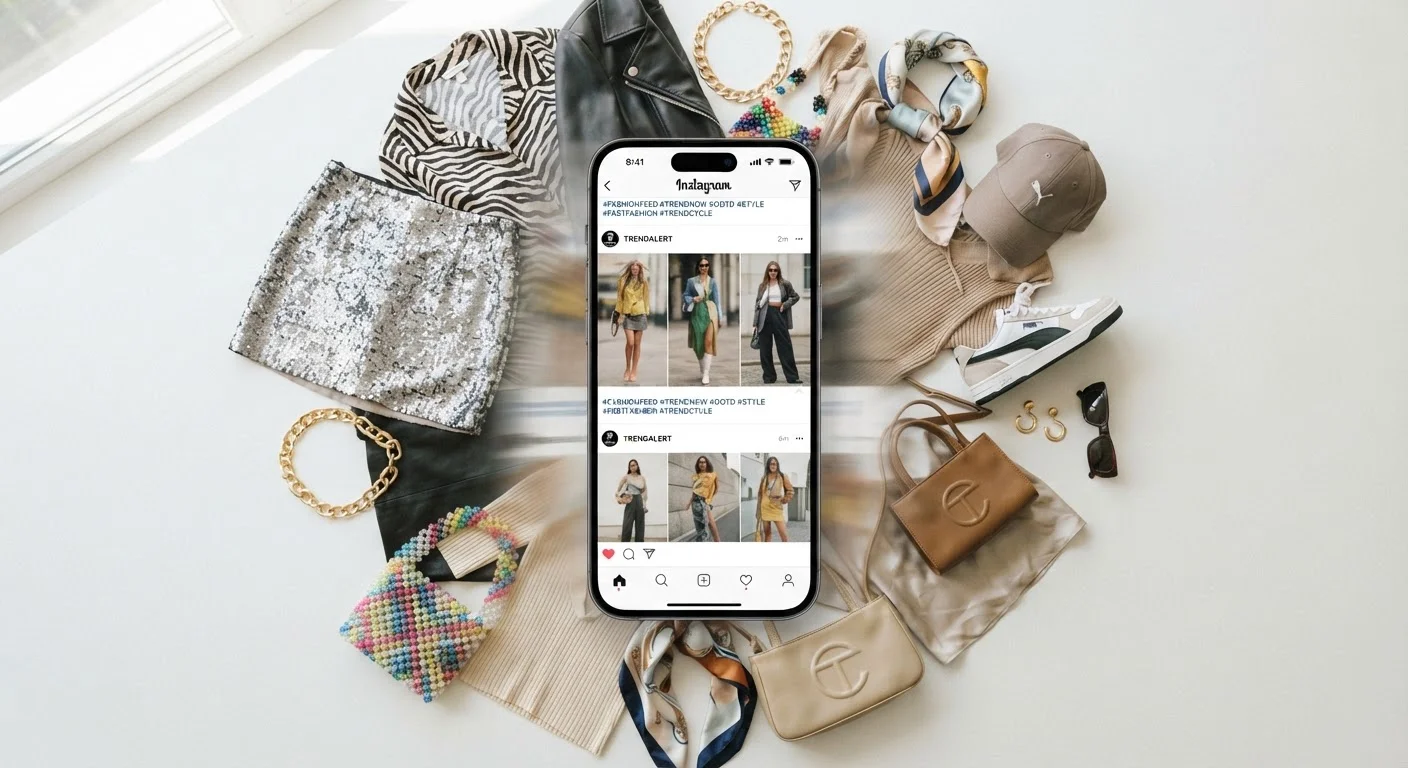
Photo: UnlockTopics.com | Unlocking Trending Content editorial
Key Takeaways
- Social media compressed the fashion trend cycle from years to weeks or months.
- Runway shows once set the calendar; algorithm-driven platforms now do.
- Micro-trends rise and saturate quickly, making impulse purchases costly.
- Building a wardrobe around classic foundations offers more lasting value than chasing viral looks.
- Understanding the difference between a trend and a passing moment helps you spend smarter.
How the Traditional Trend Cycle Used to Work
For most of the twentieth century, fashion operated on a two-season calendar — spring/summer and fall/winter — with luxury houses setting the aesthetic agenda months in advance. A silhouette debuted on a Paris or Milan runway in February, filtered through fashion magazines over several months, landed in department stores by late spring, and eventually reached mass-market retailers the following year. The entire journey from concept to consumer could take 18–24 months.
This lag wasn't a flaw — it was the system. Editors, buyers, and stylists served as deliberate gatekeepers, deciding which looks were worth amplifying and which would fade quietly. The pace gave consumers time to absorb new directions gradually, and it gave designers the breathing room to build coherent seasonal narratives. For a plain-language guide to the vocabulary behind all of this, see our style trend terminology glossary.
What Social Media Changed — and How Fast
The shift began in earnest with the rise of Instagram around 2012 and accelerated sharply when short-form video platforms became dominant in the early 2020s. These platforms bypassed traditional gatekeepers entirely. A single viral video of someone wearing an unconventional silhouette or color combination could generate millions of impressions before any editor had weighed in.
~2 weeks
Some retailers' runway-to-shelf turnaround
Industry observers and supply chain analysts have noted that certain fast-fashion operations can translate a trending look into a shippable product in as little as two weeks.
2–4 seasons
Traditional trend diffusion timeline
Fashion historians and retail analysts have documented that major trends in the pre-social media era typically took 18–24 months to move from runway to mainstream consumer adoption.
6–12 weeks
Typical micro-trend peak-to-saturation window
Fashion trend analysts and industry commentators generally estimate that socially amplified micro-trends reach peak saturation within six to twelve weeks of going viral.
Fast-fashion supply chains adapted to match this speed. Some retailers can move from a trending social post to a finished garment on their website in as little as two to three weeks. The result is a feedback loop: a look goes viral, it gets mass-produced rapidly, it becomes ubiquitous, and then it feels oversaturated — all before a traditional seasonal runway collection would have even been shown to press.
This is where the distinction between micro-trends and macro-trends becomes practically useful. Micro-trends — "ballet flats are back," "this exact shade of brown" — live and die on social media timelines. Macro-trends, like a broad cultural shift toward relaxed tailoring, move on a longer arc and are worth paying more attention to when building a wardrobe.
“The internet didn't just speed up fashion — it changed who gets to decide what's fashionable. The gatekeepers haven't disappeared, but there are now millions of them.”
— A fashion industry analyst, Trend forecasting and retail strategy consultant
What This Means for Getting Dressed Every Day
For most people, the compressed cycle creates a specific kind of pressure: the feeling that your wardrobe is always slightly behind. That feeling is worth examining, because it's largely manufactured by the same platforms that profit from sustained engagement with fashion content.
Pause Before Purchasing a Trend Piece
A more durable approach is to distinguish between two different relationships with trends. The first is participatory — engaging with a trend for the fun and self-expression of it, usually with lower-cost pieces or accessories that don't require major investment. The second is foundational — building the core of your wardrobe around pieces with longer style lifespans, regardless of what's trending this month.
Certain aesthetic movements prove resilient precisely because they aren't dependent on trend velocity. Our piece on why quiet luxury outlasted louder trends explores what makes some style directions genuinely durable versus simply well-marketed. For a broader framework on building a versatile wardrobe, the Fashion Basics hub is a useful starting point.
The compressed cycle isn't going away. But understanding its mechanics — and recognizing that the urgency it creates is largely artificial — puts you back in control of your own style decisions.
Frequently Asked Questions
The content on this site is for informational purposes only and is not a substitute for professional advice. Always consult a qualified professional for guidance specific to your situation.