
Style Trend Terminology Every Casually Interested Reader Should Know

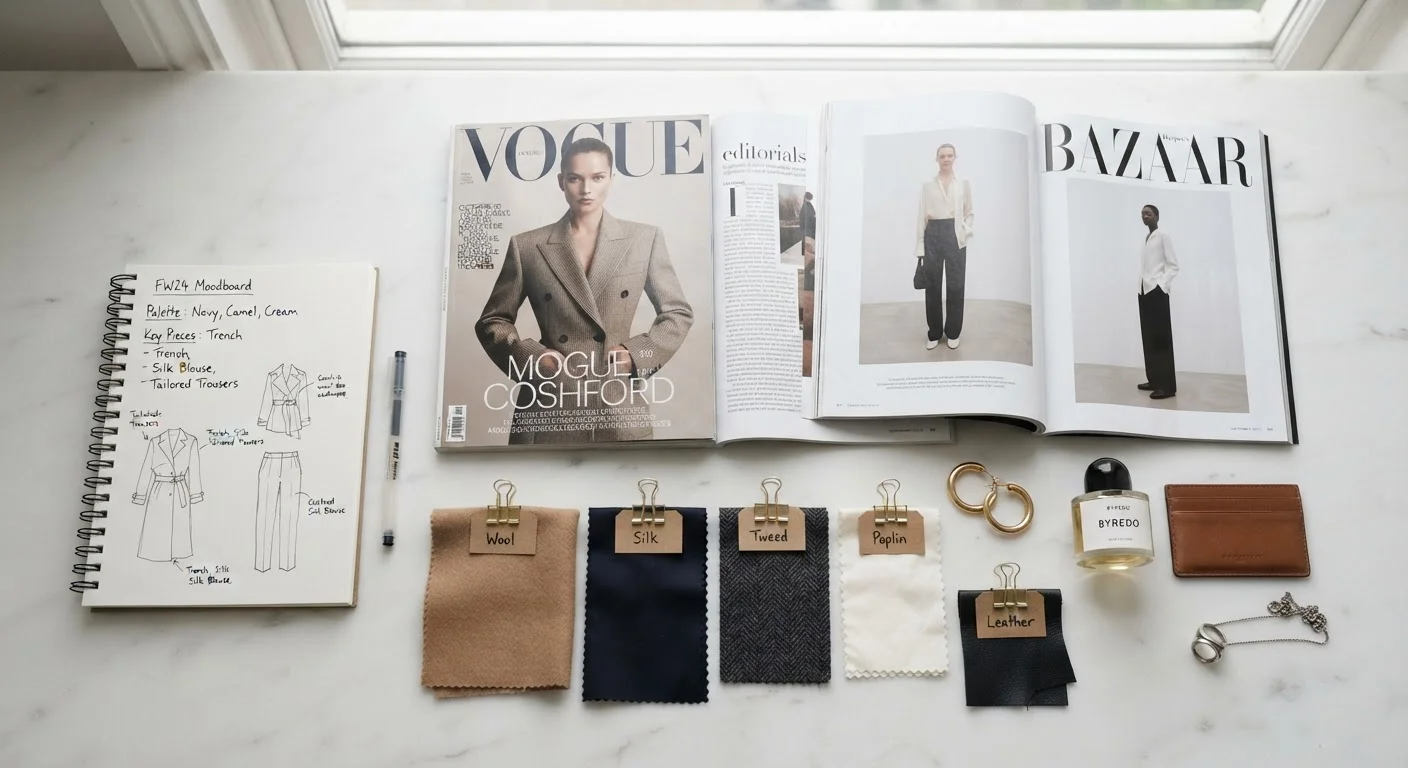
Photo: UnlockTopics.com | Unlocking Trending Content editorial
Why Fashion Terminology Matters to Everyday Readers
Seasonal trend coverage — whether in a magazine, a style newsletter, or a retailer's lookbook — is written in a fairly specific dialect. Terms like directional, hero piece, and tonal dressing appear constantly, rarely with definitions. For readers who want to follow trends without working in the industry, that vocabulary gap can make perfectly useful information feel inaccessible.
This reference glossary is designed to close that gap. The terms below are the ones that surface most reliably in seasonal fashion coverage, presented in plain language with enough context to understand how writers and stylists actually use them. You don't need to adopt the terminology yourself — but recognising it makes the coverage far more useful. For a deeper look at how one specific layer of trend language works, see our guide on how trend authorities set seasonal colour palettes.
Silhouette
The overall outline or shape a garment creates. Trend reports often signal a season's direction by describing which silhouettes — wide, fitted, asymmetric — are dominant.
Proportion
The size relationship between different parts of an outfit. Deliberate proportion — pairing a loose top with a fitted bottom, for example — is central to what makes an outfit look considered.
Directional
Describing a look or item that is ahead of where mainstream fashion currently sits. Directional pieces often appear in editorial coverage before reaching wide retail availability.
Hero Piece
The focal point of an outfit — the single item the rest of the look is styled around. Also called a statement piece. Identifying the hero piece simplifies every other styling decision.
Tonal Dressing
An approach that combines multiple shades of the same colour family in one outfit rather than using contrasting hues. It reads as polished and cohesive with minimal effort.
Capsule
A deliberately limited, coordinated group of garments. A true capsule is defined by versatility — each piece works with the others — rather than simply a small wardrobe.
Elevated Basics
Everyday wardrobe staples made in superior fabric or cut. The "elevation" is in quality and construction, not novelty of design.
Commercial
In trend reporting, this describes a look or item that has moved from runway experimentation into widely available, accessible versions. It's descriptive, not pejorative.
Edit
A curated selection — used by stylists and publications to describe a chosen assortment of pieces. 'A spring edit' means a hand-picked group of items for that season.
Transitional Dressing
Styling for the period between seasons — typically late summer into autumn or late winter into spring — when temperatures and light are inconsistent. Layering is a core technique.
Colour Story
The specific palette a designer or trend report uses for a season. A colour story includes not just individual hues but the relationships and combinations among them.
Runway vs. Ready-to-Wear
Runway (or haute couture) refers to the most experimental, show-format collections. Ready-to-wear (prêt-à-porter) describes clothing designed to be produced in standard sizes and sold directly to consumers.
Key Concepts: From Silhouette to Capsule
Several of the most frequently used terms relate to the overall shape and structure of clothing — the architectural decisions a designer makes before choosing fabric or colour.
| Most-used shape term | Silhouette |
| Seasons in a standard fashion calendar | Spring/Summer and Autumn/Winter (plus pre-season drops) |
| What 'directional' signals | Ahead of mainstream — seen in editorial before retail |
| Capsule wardrobe origin | Concept popularised by stylist Susie Faux in the 1970s |
| Tonal dressing effect | Creates a lengthening, cohesive appearance |
| Hero piece principle | One focal item; all others in supporting roles |
Silhouette is probably the most important of these. It refers to the outline a garment creates against the body — wide shoulders, a tapered waist, a relaxed column. When trend reports announce that "the silhouette is shifting," they mean the dominant shape of the season is changing, which has practical implications for what reads as current versus dated.
Proportion works alongside silhouette. It describes the relationship between different parts of an outfit — how an oversized top balances against a fitted trouser, for instance. Much of what stylists mean by a "well-put-together" look comes down to considered proportion rather than expensive pieces.
A capsule is a curated, limited group of garments that work together — the idea being that a small number of versatile pieces can generate many outfits. The term has become somewhat diluted by overuse, but its original meaning is still the useful one. See our Fashion Basics hub for more foundational style concepts that complement this kind of vocabulary.
Trend Language: Directional, Hero Piece, and More
A second cluster of terms describes where a trend sits on the spectrum from experimental to mainstream.
When a look or item is called directional, it means it's pointing somewhere fashion is headed rather than reflecting where it currently is. Directional pieces are often seen first on runways or in editorial shoots; they take a season or two to filter into wider availability. The opposite end of the spectrum is sometimes called commercial — meaning the trend has been adapted into accessible, widely available versions.
A hero piece (sometimes statement piece) is the single most prominent item in an outfit — the item the styling decision is built around. Everything else is chosen to support it rather than compete with it. This is a useful concept for getting dressed: identifying which item you want to lead helps resolve decisions about the rest of an outfit.
Tonal dressing refers to combining pieces in the same colour family — wearing multiple shades of one hue together rather than contrasting colours. It's a reliable way to look considered without a lot of deliberate effort. For context on where colours come from each season, see how seasonal colour forecasts work.
Finally, elevated basics describes everyday wardrobe staples — a white shirt, a straight-leg trouser — made in fabrics or cuts that lift them slightly above commodity versions. The term signals quality of construction and material rather than novelty of design, which connects directly to the kind of guidance in our fabric glossary.
Understanding these terms doesn't require fluency in runway culture — it just requires a reference point. And if you've ever wondered whether a particular "rule" you've read about is actually worth following, our piece on style rules that aren't actually rules is a good next stop.
The content on this site is for informational purposes only and is not a substitute for professional advice. Always consult a qualified professional for guidance specific to your situation.