
Chemical Exfoliants vs. Physical Scrubs: How Each Approach Works on Skin

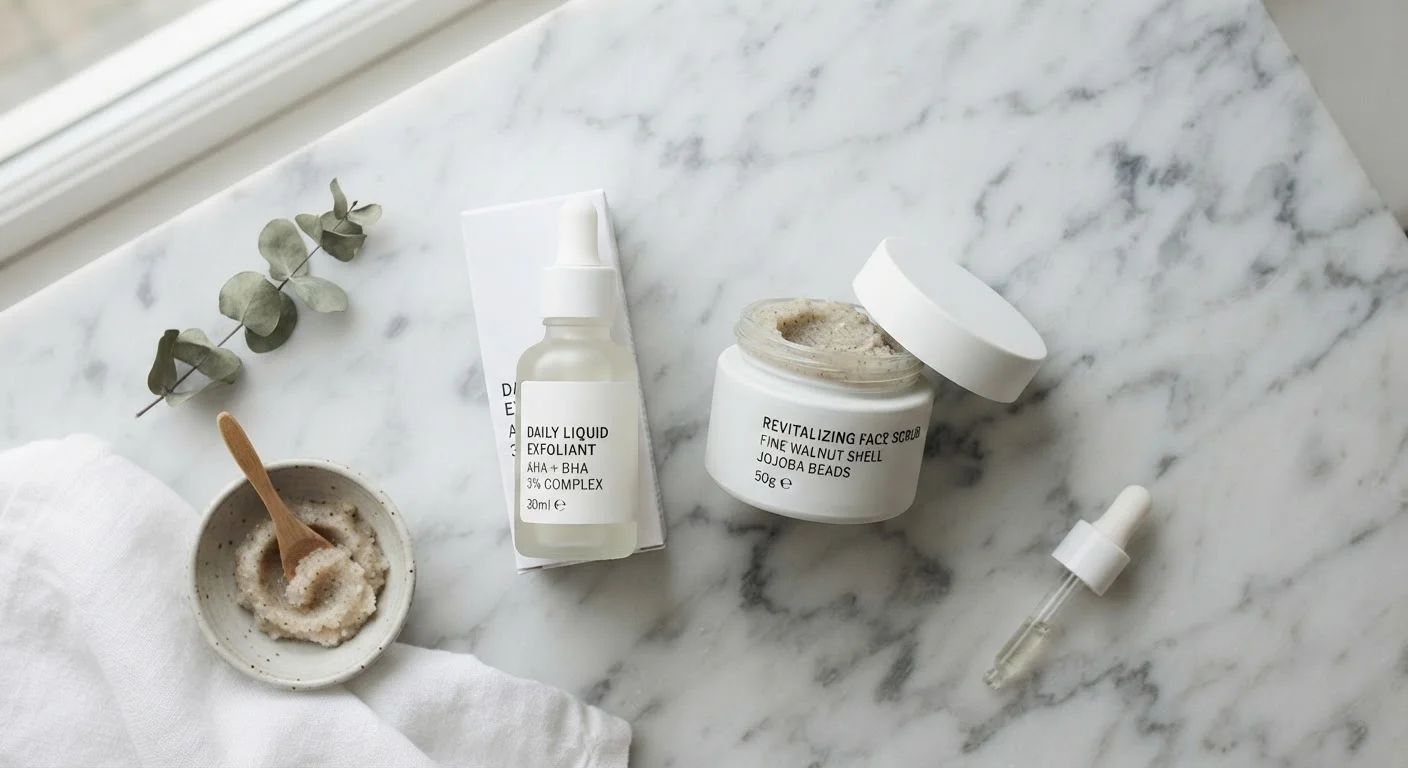
Photo: UnlockTopics.com | Unlocking Trending Content editorial
Key Takeaways
- Chemical exfoliants dissolve the bonds between dead skin cells using acids or enzymes, requiring no physical rubbing.
- Physical scrubs use abrasive particles to manually buff away surface skin cells through friction.
- Skin type and sensitivity level are the most important factors when choosing an exfoliation method.
- Over-exfoliation — from either method — is a common cause of redness, irritation, and compromised skin barriers.
- Many skincare professionals advise against combining both methods in the same routine without careful timing.
What Exfoliation Actually Does
Exfoliation is the process of removing dead skin cells from the outermost layer of skin — the stratum corneum. Skin sheds cells naturally through a process called desquamation, but this cycle can slow due to age, environmental stress, or skin type. When dead cells accumulate, the result is often dullness, rough texture, clogged pores, and uneven tone.
Both chemical and physical exfoliation address this buildup, but through entirely different mechanisms. Choosing between them isn't just about personal preference — it has real implications for skin health, especially if your skin is sensitive, reactive, or dealing with specific concerns like acne or hyperpigmentation. See our skincare routine audit if you're unsure whether your current exfoliation approach is actually working for you.
How Chemical Exfoliants Work
Chemical exfoliants use active ingredients — typically acids or enzymes — to dissolve the bonds that hold dead skin cells together, allowing them to shed more efficiently without any scrubbing. There are three main categories:
- AHAs (Alpha Hydroxy Acids) — such as glycolic acid and lactic acid — are water-soluble and work on the skin's surface. They're widely used for improving texture, brightness, and fine lines. Lactic acid is gentler and often better tolerated by sensitive skin.
- BHAs (Beta Hydroxy Acids) — salicylic acid being the most common — are oil-soluble, meaning they can penetrate inside pores. This makes them particularly effective for acne-prone or congested skin.
- PHAs (Polyhydroxy Acids) — such as gluconolactone — have a larger molecular structure, penetrate more slowly, and are considered the mildest option, making them suitable for reactive or dry skin types.
Because chemical exfoliants don't require friction, they offer more even, controlled action across the skin surface. However, active acids require careful use: concentration, pH level, and application frequency all affect how the skin responds.
AHAs and Sun Sensitivity
Chemical exfoliants also increase photosensitivity, particularly AHAs. Applying SPF during the day is essential when using these ingredients — a point worth noting if you're navigating seasonal skincare assumptions about when sun protection is necessary.
How Physical Scrubs Work
Physical exfoliants — commonly called scrubs — rely on abrasive particles to manually dislodge and buff away surface-level dead skin cells through friction. Common scrub materials include sugar, salt, ground oatmeal, jojoba beads, and finely milled pumice.
The appeal is immediacy: skin often feels smoother right after use, and the tactile sensation of scrubbing is satisfying for many users. Physical exfoliants are also predictable — they do exactly what they appear to do on the surface, with no chemistry to track.
The limitations, however, are significant for certain skin types. Uneven pressure during application can cause microtears in the skin — particularly with coarse or irregularly shaped particles. Scrubs tend to work only on the skin's surface and cannot address congestion inside pores the way oil-soluble chemical exfoliants can.
Choosing a Gentler Physical Scrub
For those who prefer physical exfoliation, the particle size and shape of the scrub matter considerably. Fine, rounded particles (like jojoba beads) are less likely to cause surface damage than jagged granules. Applying with a light hand and circular motion also reduces the risk of irritation.
Comparing the Two Approaches
The differences between chemical and physical exfoliation go beyond surface-level mechanics. Here's how the two methods compare across several practical considerations:
| Chemical Exfoliants | Physical Scrubs | |
|---|---|---|
| Mechanism | Dissolves cell bonds using acids or enzymes | Manually buffs cells using abrasive particles |
| Penetration depth | Can reach inside pores (BHAs) | Surface-level only |
| Sensitivity risk | Low if concentration is appropriate | Higher with coarse or irregular particles |
| Results timeline | Gradual improvement over days to weeks | Immediate surface smoothness |
| Sun sensitivity increase | Yes, especially AHAs — SPF required | No direct photosensitivity effect |
| Best skin types | Most types; gentlest for sensitive skin | Normal to oily; less ideal for reactive skin |
It's worth noting that these methods aren't always mutually exclusive — some routines incorporate both, alternated on different days. That said, using both in the same session is generally not recommended, as it can overstimulate the skin barrier. If you're building or adjusting your routine, our guide to skincare layering covers how exfoliants fit into a broader product sequence.
Matching the Method to Your Skin
Skin type remains the most practical guide when deciding which exfoliation method to use — or whether to combine them at all:
- Oily or acne-prone skin often responds well to BHAs, which clear pore congestion from within. Physical scrubs can help with surface texture but won't address the root of breakouts.
- Dry or dehydrated skin can benefit from AHAs like lactic acid, which also have mild humectant properties. Coarse physical scrubs may strip already-compromised moisture barriers.
- Sensitive or reactive skin is usually better served by low-concentration PHAs or enzyme exfoliants, which work more gradually. Many physical scrubs are too harsh for this skin type.
- Normal or combination skin generally tolerates both methods with appropriate frequency and product selection.
Regardless of method, over-exfoliation is a common and easily overlooked problem. Signs include persistent redness, tightness, increased breakouts, or a shiny, thin-looking skin texture. Most skin types benefit from exfoliating no more than two to three times per week. If you're introducing exfoliation into your morning or evening routine for the first time, our guides to building a morning routine and optimizing your evening routine offer a grounded starting point.
This article is for general informational purposes only and does not constitute medical or dermatological advice. Individuals with skin conditions or concerns should consult a qualified dermatologist before introducing new exfoliating ingredients or treatments.
The content on this site is for informational purposes only and is not a substitute for professional advice. Always consult a qualified professional for guidance specific to your situation.