
Indoor Pet vs. Outdoor Pet: What Each Lifestyle Really Means for Animal Wellbeing

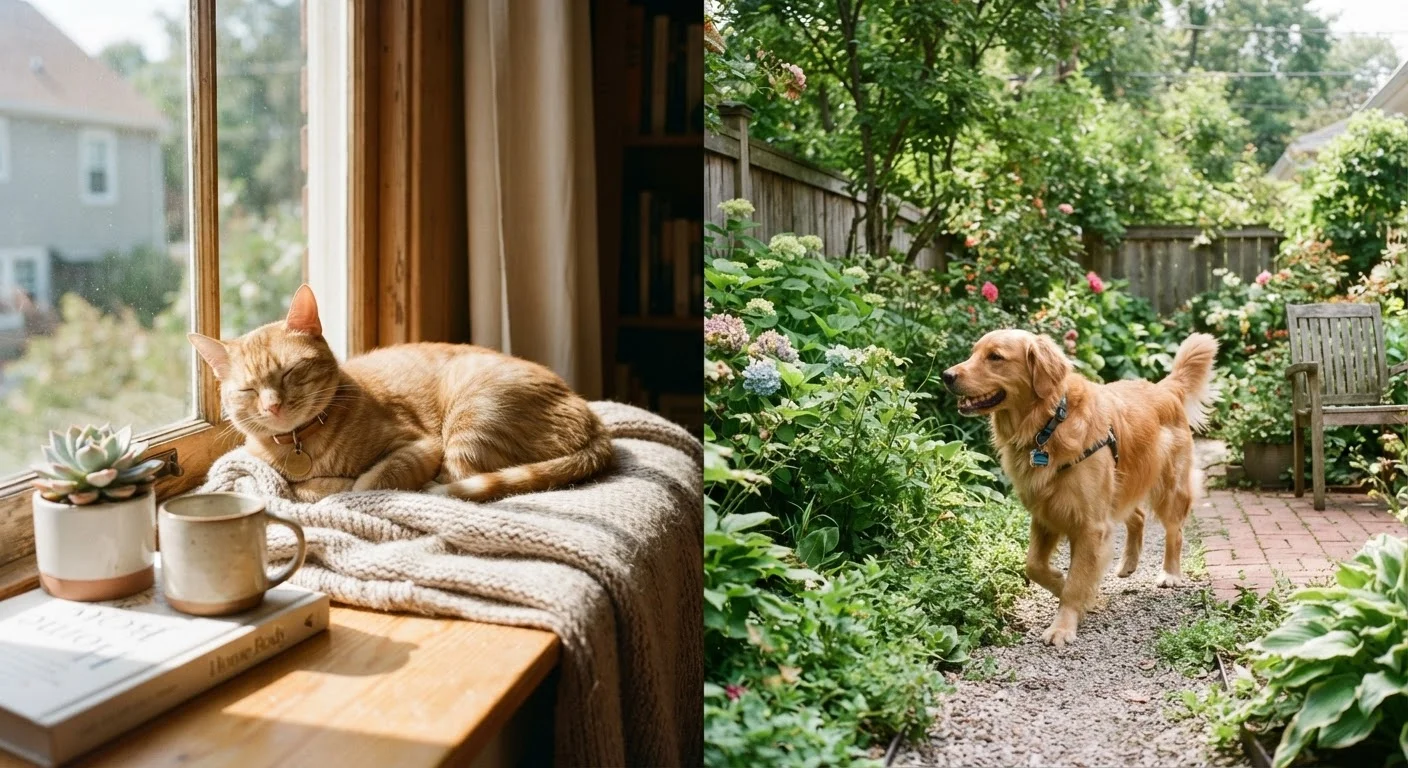
Photo: UnlockTopics.com | Unlocking Trending Content editorial
Key Takeaways
- Indoor pets generally live longer on average due to reduced exposure to predators, traffic, and disease.
- Outdoor access provides physical stimulation and behavioral enrichment that can be difficult to replicate inside.
- The right choice depends on species, individual temperament, and how well owners can manage the associated risks.
- Hybrid approaches - like supervised outdoor time - can offer a meaningful middle ground for many pets.
- Veterinary guidance should inform any significant change to a pet's living environment.
Why the Indoor vs. Outdoor Question Matters
Where a pet spends most of its time shapes nearly every aspect of its health - from disease exposure and injury risk to mental stimulation and behavioral development. Despite how common the debate is, there's no single right answer that applies to all pets or all households.
The conversation is most urgent for cats, who are often kept exclusively indoors or allowed to roam freely outdoors. But it's also relevant for dogs, rabbits, guinea pigs, and other small animals. Understanding what each lifestyle genuinely involves - not just the surface-level trade-offs - helps owners make more deliberate choices.
For a deeper look at cat-specific considerations, see indoor vs. outdoor cat health trade-offs. This article takes a broader view across species and common care scenarios.
The Real Risks of Outdoor Living
Outdoor access exposes pets to a range of hazards that are largely absent indoors. For cats, these include vehicle traffic, territorial conflicts with other animals, predator encounters, and a significantly higher risk of infectious disease transmission - including feline leukemia virus (FeLV) and feline immunodeficiency virus (FIV), both spread through contact with infected cats.
Parasites are another major concern. Fleas, ticks, intestinal worms, and heartworm are all more prevalent in pets with regular outdoor exposure. Skipping or inconsistently applying parasite prevention in outdoor pets is one of the more consequential care gaps owners make - a topic explored in more detail in our article on well-meaning habits that can quietly harm a pet's health.
For small animals like rabbits and guinea pigs, outdoor time in unsecured enclosures carries predator risk even in suburban yards. Sudden frights alone can cause fatal cardiac stress in prey species.
Outdoor Access Without Precautions Carries Real Risk
What Indoor Living Can Cost Your Pet
A fully indoor life removes many physical dangers, but it introduces its own welfare concerns - most of them behavioral and psychological. Cats kept exclusively indoors without adequate enrichment can develop anxiety, compulsive behaviors, and obesity. Dogs confined primarily indoors without sufficient exercise and stimulation face similar challenges.
Boredom is often underestimated as a welfare issue. Pets who lack appropriate outlets for natural behaviors - hunting, foraging, climbing, exploring - may express frustration through destructive habits, excessive vocalization, or withdrawal. This is particularly true for cats, who retain strong instinctual drives even in domestic settings.
Thoughtfully structured enrichment can address much of this. Puzzle feeders, climbing structures, window perches, and rotating toys all serve a real purpose. Our guide on enrichment activities that benefit your pet's mental health breaks down options by species.
Enrichment Is Not Optional for Indoor Pets
Comparing the Two Lifestyles Across Key Factors
The table below summarizes how indoor and outdoor living typically compare across the dimensions that matter most for animal wellbeing. Keep in mind that outcomes vary considerably based on individual pets, local environments, and the quality of owner care.
| Indoor Lifestyle | Outdoor Lifestyle | |
|---|---|---|
| Lifespan (cats) | Typically longer average lifespan | Generally shorter due to hazard exposure |
| Disease exposure | Lower risk of infectious disease | Higher risk; requires robust vaccination |
| Parasite burden | Lower; prevention still recommended | Significantly higher; consistent prevention essential |
| Physical stimulation | Requires deliberate enrichment | Natural exercise through exploration |
| Behavioral enrichment | Owner-dependent; can be excellent | Naturally high from environmental novelty |
| Injury and accident risk | Very low | Elevated - traffic, predators, conflict |
| Owner control over diet/health | High | Lower; scavenging and exposure harder to track |
Hybrid approaches - such as leash walks for cats, enclosed catios, or supervised yard time for small animals - can shift several of these trade-offs in a more favorable direction without fully committing to either extreme.
Species and Temperament Make a Difference
There is no single framework that applies equally to a Bengal cat, a Basset Hound, and a Holland Lop rabbit. Species-level biology matters enormously. Cats, for example, are obligate hunters with territorial instincts that differ sharply from dogs, who evolved as cooperative social animals more adapted to human-directed activity.
Within species, individual temperament shapes how well a pet tolerates each lifestyle. A highly active, stimulus-seeking cat may show signs of stress in a sparse indoor environment. A more placid, human-bonded cat may thrive indoors without any outdoor access at all.
For owners of small animals, the decision involves different considerations altogether. Small pets like rabbits and guinea pigs are often housed indoors but benefit from safe outdoor grazing time when weather and enclosure security allow it.
Observing your individual pet's behavioral cues - activity level, exploratory drive, signs of stress or contentment - provides more useful information than species generalizations alone. A veterinarian or certified animal behaviorist can offer personalized guidance for complex situations. For a broader look at pet health decisions, the Pet Health & Wellness hub covers key topics across species.
This article is for general informational purposes only and does not constitute veterinary advice. Always consult a licensed veterinarian for guidance specific to your pet's health and circumstances.
The content on this site is for informational purposes only and is not a substitute for professional advice. Always consult a qualified professional for guidance specific to your situation.