
Enrichment Activities That Actually Benefit Your Pet's Mental Health

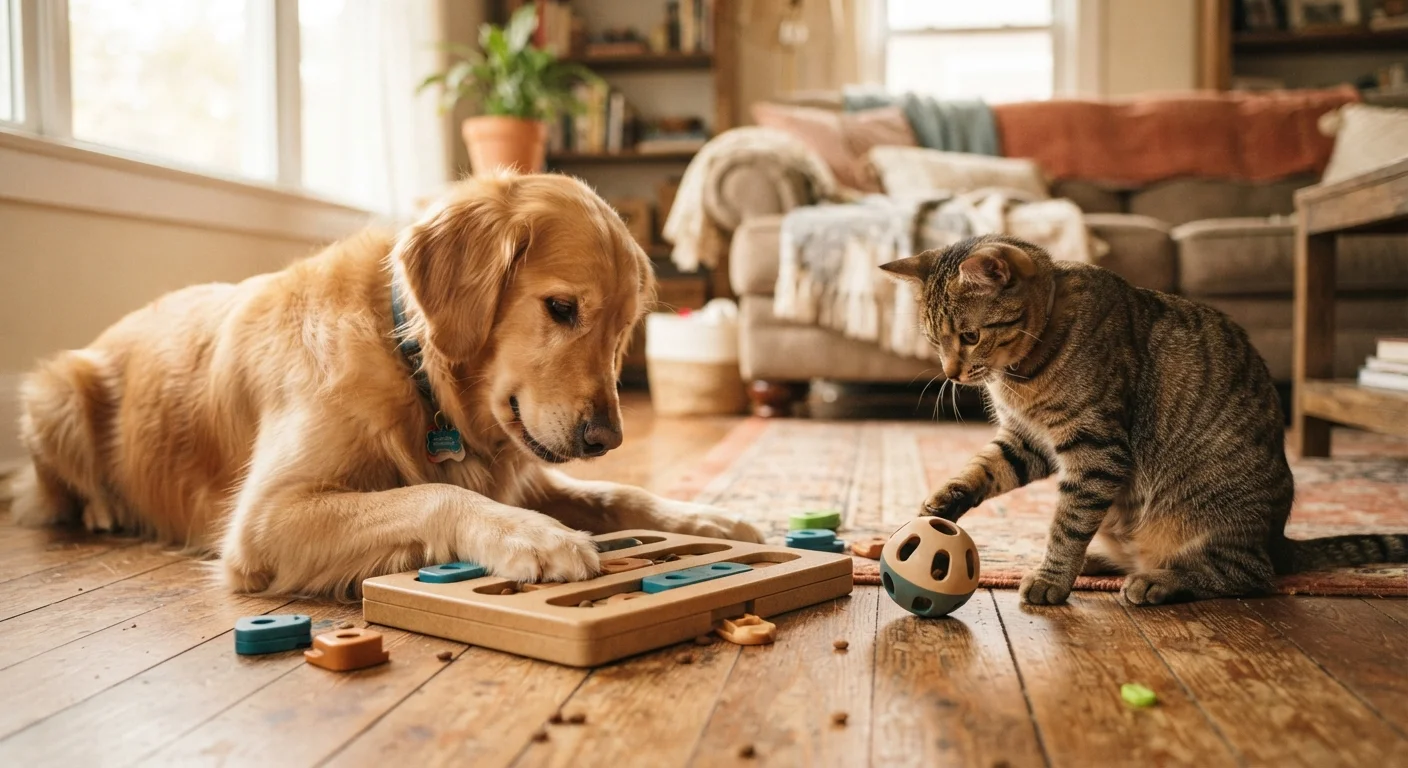
Photo: UnlockTopics.com | Unlocking Trending Content editorial
Key Takeaways
- Boredom and understimulation can lead to anxiety, destructive behavior, and depression in pets.
- Enrichment should match your pet's species, age, and individual temperament - not a one-size-fits-all approach.
- Even small daily enrichment routines produce measurable improvements in pet behavior and wellbeing.
- Dogs, cats, birds, and small animals each benefit from distinct types of mental stimulation.
- Enrichment doesn't require expensive gear - many effective activities use items already at home.
Why Mental Health Matters for Every Pet
Most pet owners focus on the basics: feeding schedules, vet checkups, and exercise. But mental stimulation often falls off the radar - and that gap has real consequences. Animals kept in monotonous environments can develop chronic stress, compulsive behaviors, and even symptoms resembling depression. Veterinary behaviorists have long recognized that understimulation is a welfare concern across virtually every companion species.
Enrichment refers to any activity or environmental modification that engages an animal's natural instincts - foraging, hunting, problem-solving, socializing, or exploring. When built into a regular routine, these activities support broader pet health and wellness in ways that go well beyond what a walk or a cuddle can provide on their own.
The activities below are grounded in behavioral science and adaptable for beginners. Whether you share your home with a dog, cat, bird, or small mammal, there's a starting point here for you.
Food Puzzle Feeders for Dogs
Dogs are natural foragers, and making them work for their meals engages problem-solving circuits that basic bowl feeding simply doesn't. Food puzzle feeders - containers that dispense kibble or treats as the dog manipulates them - slow eating, reduce boredom, and provide a focused cognitive workout.
Start with simpler puzzle designs and progress in difficulty as your dog gains confidence. Snuffle mats, which hide food in fabric folds that mimic grass, are particularly good for anxious dogs because the nose-driven searching naturally lowers arousal. Lick mats with spreadable food (like plain pumpkin puree) offer a soothing, repetitive activity well-suited to dogs prone to stress.
Making dogs work for meals engages problem-solving circuits that bowl feeding simply doesn't.
Scent Work and Nose Games
A dog's nose is vastly more powerful than its eyes, and scent-based activities tap directly into that capacity. Basic nose work involves hiding a treat or scented object and encouraging the dog to locate it using smell alone. This is mentally exhausting in the best possible way - many owners report that 20 minutes of scent work tires a dog more thoroughly than an hour-long walk.
You don't need formal equipment to get started. Hide treats under overturned cups, inside cardboard boxes, or around different rooms of the house. As your dog gets the idea, increase the hiding difficulty. This activity also builds confidence in shy or reactive dogs because success is self-reinforcing.
Twenty minutes of scent work can tire a dog more thoroughly than an hour-long walk.
Environmental Enrichment for Indoor Cats
Indoor cats face a particular enrichment challenge: their environment is safe but often static. Cats are predators wired for stalking, chasing, and capturing, and without outlets for those drives, frustration builds. Vertical space - cat trees, wall-mounted shelves, or window perches - immediately expands a cat's territory and satisfies the instinct to survey from height.
Interactive wand toys that mimic prey movement are among the most effective enrichment tools for cats. Brief daily play sessions using unpredictable, erratic toy movement engage hunting instincts far more effectively than leaving a toy on the floor. Rotate toys in and out of availability so they retain novelty. For context on how indoor living affects cats holistically, see what indoor versus outdoor life really means for animal wellbeing.
Unpredictable, erratic toy movement engages a cat's hunting instincts far better than static toys.
Foraging Enrichment for Birds
Wild parrots and other birds spend a large portion of their day searching for food. In captivity, food served in a bowl eliminates that mental effort entirely - a significant source of boredom and feather-destructive behaviors. Foraging enrichment reintroduces that challenge by hiding food inside paper, wrapping treats in foil, or placing food in containers the bird must open or manipulate.
Even simple techniques help: threading food items on skewers, hanging greens from cage bars, or placing seed inside a toilet paper roll stuffed with paper. Rotating the type and location of foraging opportunities prevents habituation. Foraging enrichment has been specifically supported by avian veterinarians as a core strategy for improving psychological wellbeing in pet birds.
Foraging enrichment reintroduces the mental effort that wild birds spend most of their day on.
Tunnels, Hides, and Exploration for Small Animals
Rabbits, guinea pigs, hamsters, and similar small animals are often kept in enclosures that underestimate their need for space and complexity. These species are prey animals in the wild, and environments that offer hides, tunnels, and varied terrain address deep instinctual needs for security and exploration.
Cardboard boxes with cut-out holes, PVC tunnels, crinkle tubes, and hay-filled paper bags all provide low-cost enrichment. For foraging species like rabbits and guinea pigs, scattering hay and vegetables throughout the enclosure rather than placing them in a single bowl encourages natural rooting and grazing behavior. Small pet ownership involves more enrichment planning than many new owners expect.
Small animals need hides and varied terrain - their welfare depends on more than just a wheel.
Training as Mental Stimulation Across Species
Training is one of the most underused enrichment tools available to pet owners. Learning new behaviors requires concentration and problem-solving, which is cognitively demanding and satisfying for most animals. Dogs benefit from this obviously, but cats, parrots, rabbits, and even rats can learn behaviors through positive reinforcement - and many enjoy the focused attention that training sessions provide.
Keep sessions short - five minutes is often ideal - and end on a successful note. The goal isn't obedience for its own sake; it's mental engagement and trust-building. Training also strengthens the human-animal bond and, for understanding pet behavior, offers real insight into how your individual animal thinks and communicates.
Training is one of the most cognitively demanding and satisfying enrichment activities available to any pet.
Building Enrichment Into Your Routine
Consistency matters more than intensity. A 10-minute puzzle session every morning beats a one-hour enrichment marathon once a week. Rotate activities regularly so novelty itself becomes part of the benefit - animals, much like people, habituate to the same stimuli over time.
Start Simple and Build Gradually
It's also worth paying attention to how your pet responds to specific activities. Some animals are highly food-motivated; others respond more to social or sensory stimulation. Matching the enrichment type to your individual pet's personality will yield better results than following a generic checklist. If you notice persistent anxiety, repetitive behaviors, or withdrawal that doesn't improve with enrichment, consult your veterinarian - these can be signs of underlying health or behavioral issues that warrant professional evaluation.
Enrichment pairs naturally with other aspects of good care. A well-stimulated pet is often easier to groom, more receptive to handling, and better behaved overall. See our guide to stress-free grooming at home for ideas on combining calm, positive experiences into your daily routine.
This article is for general informational and educational purposes only. If your pet shows signs of significant behavioral distress or health concerns, consult a licensed veterinarian or certified veterinary behaviorist for guidance specific to your animal.
The content on this site is for informational purposes only and is not a substitute for professional advice. Always consult a qualified professional for guidance specific to your situation.