
Fixed vs. Variable Expenses: Knowing the Difference Changes How You Budget

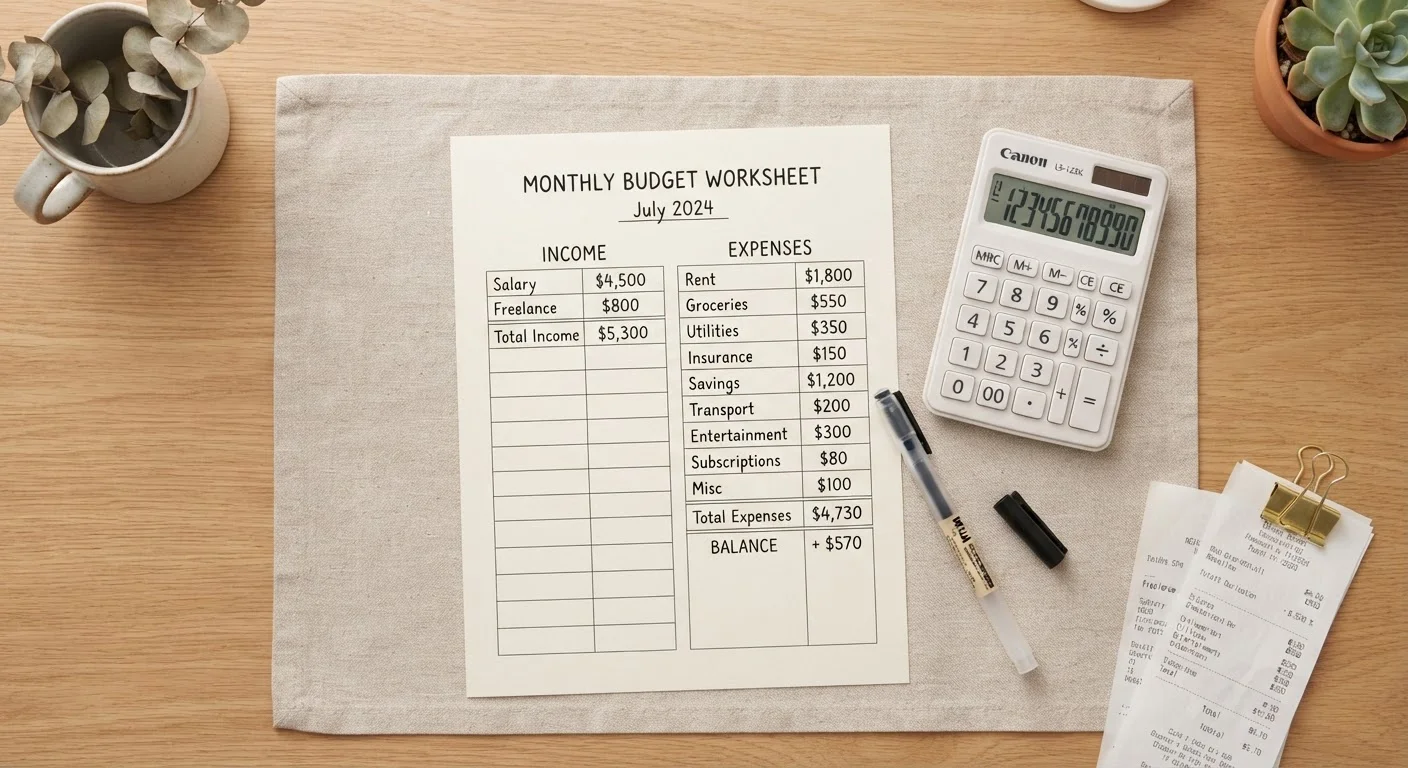
Photo: UnlockTopics.com | Unlocking Trending Content editorial
Key Takeaways
- Fixed expenses stay the same amount each month; variable expenses change based on usage or choices.
- Knowing your fixed costs tells you the minimum income you need to cover obligations each month.
- Variable expenses are the primary area where active budgeting decisions can make a real difference.
- Some expenses are semi-variable - they have a fixed base with an adjustable portion on top.
- Tracking both categories separately makes it easier to find savings without overhauling your entire budget.
What Makes an Expense Fixed or Variable
The core difference is straightforward: a fixed expense is one that costs the same amount every billing cycle, regardless of how you live that month. A variable expense shifts - it can go up or down depending on your behavior, usage, or circumstances.
Common fixed expenses include rent or mortgage payments, car loan payments, insurance premiums, and subscription services billed at a flat rate. You owe the same dollar amount in January as you do in August. These costs don't respond to how often you eat out or whether you drove less this week.
Variable expenses work differently. Groceries, gas, utilities, dining, entertainment, and clothing all fall into this category because the amount you spend changes month to month. A cold winter means a higher heating bill. A busy social month means more restaurant spending. Your choices directly shape what these costs look like.
There's also a middle category worth knowing: semi-variable expenses. A cell phone plan with a flat base rate but data overage charges, or an electric bill that has a fixed service fee plus usage-based charges, fits this description. They have a predictable floor but an adjustable ceiling. For budgeting purposes, most people treat the base as fixed and the variable portion as - well - variable.
For a broader look at related terminology, see our everyday budgeting glossary.
Side-by-Side: How They Compare in Practice
Seeing both expense types laid out together makes the practical contrast clearer - especially when you're building or revising a monthly budget.
| Criterion | Fixed Expenses | Variable Expenses |
|---|---|---|
| Amount each month | Same every cycle | Fluctuates based on use or choice |
| Common examples | Rent, car loan, insurance premium | Groceries, gas, dining, utilities |
| Predictability | High - easy to plan around | Low to moderate - requires tracking |
| How to reduce | Requires contract change, refinancing, or cancellation | Can be reduced with immediate behavior changes |
| Budget role | Defines your monthly spending floor | Where most active budget decisions occur |
| Response to income drop | Stays the same - must be paid or negotiated | Can often be cut quickly in an emergency |
One implication that often surprises people: your fixed expenses represent a financial commitment you've already made, sometimes contractually. Changing them usually requires a deliberate action - refinancing a loan, moving, canceling a plan, or renegotiating a contract. Variable expenses, by contrast, respond almost immediately to behavior changes.
This is why many budgeting frameworks, including those compared in zero-based vs. percentage-based budgeting, treat fixed costs as a non-negotiable starting point and build the rest of the budget around what remains.
Why the Distinction Matters for Real Budgeting
Separating your spending into these two buckets changes what you can actually do with your budget. Here's how:
~60-70%
Of household income spent on fixed-like obligations
Federal Reserve and Bureau of Labor Statistics consumer expenditure data consistently show that housing, transportation, and insurance alone consume a large share of American household budgets.
$1 in $5
Typical share of spending that is truly discretionary
Budget researchers and financial educators commonly estimate that discretionary and variable spending combined offer the most immediate room for adjustment in a typical household.
Fixed costs give you your baseline. Add them all up and you have the minimum monthly income you need just to keep your obligations intact. If your fixed expenses total $2,400 per month, any income below that number puts you in immediate stress territory - before you've bought a single grocery item.
Variable costs give you your leverage. Because they fluctuate, they're also where you have the most agency. If your budget feels tight, auditing your variable spending is usually the most productive first move. You can often find meaningful room without any major life change.
This distinction also matters when an income disruption hits. Knowing exactly which costs are fixed - and therefore unavoidable - tells you how long your emergency fund will last and where to prioritize during a lean period.
It's worth noting that fixed vs. variable is a related but different concept from discretionary vs. non-discretionary spending. A fixed expense can still be discretionary (a gym membership you chose to sign up for), and a non-discretionary expense can still be variable (groceries). The discretionary vs. non-discretionary distinction is its own useful lens.
If you're ready to put this into practice, building a monthly budget from scratch walks through the full process step by step.
This article is for general informational and educational purposes only and does not constitute personalized financial advice. Consider consulting a qualified financial professional for guidance tailored to your individual circumstances.
The content on this site is for informational purposes only and is not a substitute for professional advice. Always consult a qualified professional for guidance specific to your situation.