
Zero-Based Budgeting vs. Percentage-Based Budgeting

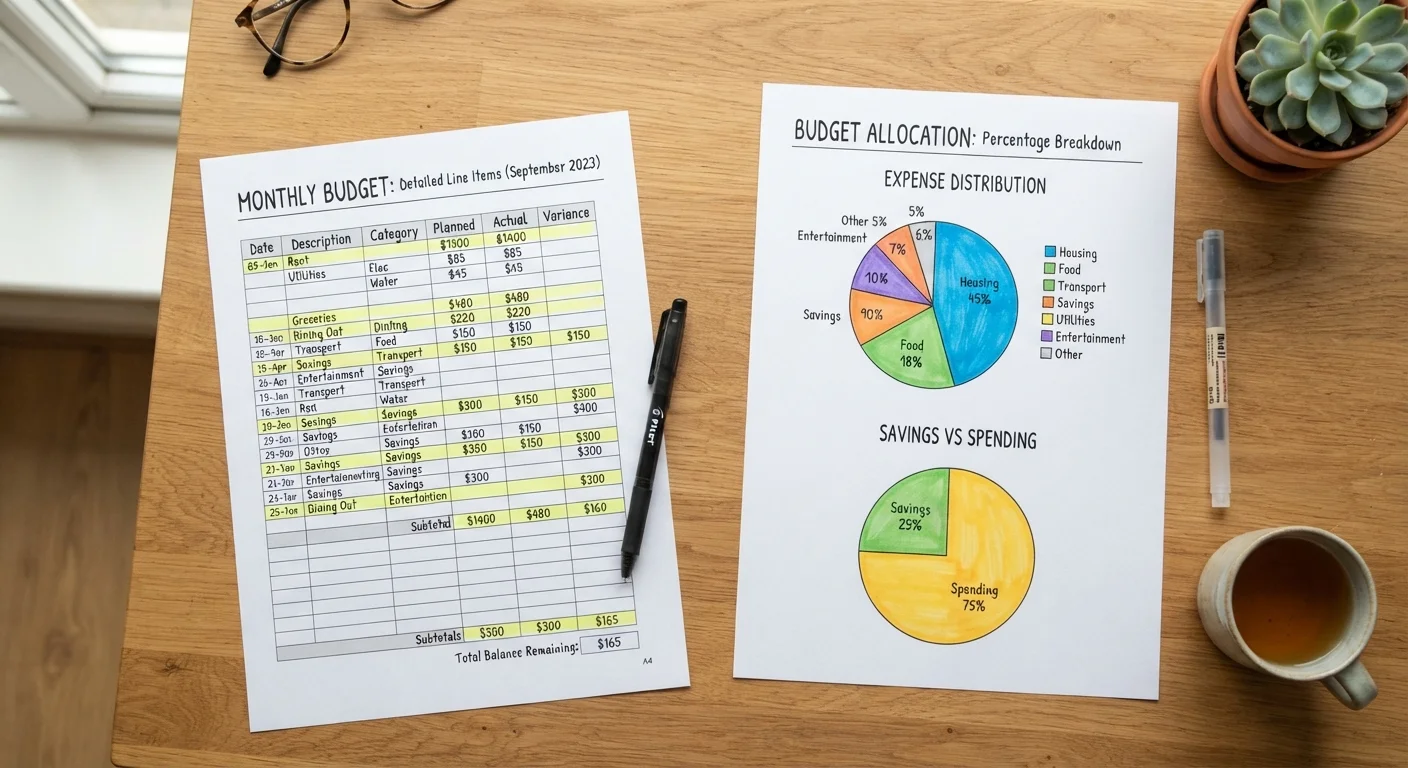
Photo: UnlockTopics.com | Unlocking Trending Content editorial
Key Takeaways
- Zero-based budgeting assigns every dollar of income to a specific category until nothing is left unallocated.
- Percentage-based budgeting divides income into broad spending buckets using fixed ratios, such as 50/30/20.
- Zero-based offers more granular control; percentage-based is faster to set up and easier to maintain.
- Neither method guarantees financial success - consistency matters more than which system you choose.
- Your income stability and tolerance for detailed tracking are the biggest factors in picking a method.
What Each Method Actually Does
Zero-based budgeting (ZBB) starts with your total monthly income and works downward, assigning every dollar to a specific category - housing, groceries, transportation, savings, and so on - until the remaining balance equals zero. That zero doesn't mean you've spent everything; it means every dollar has a job, including dollars earmarked for savings or debt repayment.
Percentage-based budgeting takes a different angle. Rather than tracking individual line items, it divides income into broad spending categories using fixed ratios. The widely referenced 50/30/20 rule, for example, suggests allocating roughly 50% of after-tax income to needs, 30% to wants, and 20% to savings and debt repayment. The exact percentages can be adjusted, but the logic stays the same: proportional allocation that scales with what you earn.
If you're still getting comfortable with budgeting concepts, the guide to building your first personal budget lays out the foundational ideas clearly before you commit to a method.
| Criterion | Zero-Based Budgeting | Percentage-Based Budgeting |
|---|---|---|
| Core logic | Every dollar assigned a purpose | Income split into fixed ratios |
| Setup time | Higher - rebuilt each month | Lower - set ratios once |
| Best income type | Variable or irregular | Stable, predictable |
| Spending visibility | High - line-item detail | Moderate - broad categories |
| Flexibility | Adapts each month | Scales automatically |
| Learning curve | Steeper for beginners | Gentler entry point |
| Risk of oversight | Lower - nothing unassigned | Higher - broad buckets can mask drift |
Where Each Method Performs Best
Zero-based budgeting shines when income fluctuates month to month. Because you're rebuilding the budget from scratch each cycle, there's no assumption baked in about what you'll earn. Freelancers, hourly workers, and anyone with variable pay often find this method keeps them honest when a lean month arrives. The trade-off is time - a proper zero-based budget can take 30 to 60 minutes each month to build accurately.
Percentage-based budgeting is well-suited to people with stable, predictable income. Once the ratios are established, the system largely runs itself. A salaried employee can apply the same percentages every month without recalculating from zero. This simplicity makes it easier to sustain long-term, though it offers less visibility into specific spending habits.
It's worth noting that both methods are variations within a broader set of approaches. The comparison of popular budgeting frameworks covers how these two methods sit alongside envelope budgeting and pay-yourself-first strategies, which may also be worth considering.
~33%
Americans who follow a formal budget
Gallup polling has consistently found that only about one-third of U.S. adults maintain a detailed household budget.
50/30/20
Most cited percentage-based ratio
The 50/30/20 framework, widely discussed in personal finance education, divides after-tax income into needs, wants, and savings.
Practical Limitations to Know Before You Choose
Zero-based budgeting demands consistency. Skipping a month or forgetting to update a category can lead to overspending in areas you thought were covered. It also assumes a level of financial self-awareness that takes time to develop - knowing how much you typically spend on groceries or utilities is necessary before you can assign those dollars confidently.
Percentage-based budgeting's flexibility is both a strength and a weakness. The broad categories mean small overspending in one area can quietly erode another. If your "needs" regularly consume 60% of income rather than 50%, the framework still technically works - but the intended balance breaks down without adjustment.
Both systems also carry genuine trade-offs beyond the mechanical ones. The honest trade-offs of strict budgeting explores what tighter financial control actually costs in terms of flexibility and mental energy - a useful read before committing to either approach.
You Can Combine Elements of Both
This article is for general informational purposes only and does not constitute personalized financial advice. Consider speaking with a qualified financial professional for guidance specific to your situation.
The content on this site is for informational purposes only and is not a substitute for professional advice. Always consult a qualified professional for guidance specific to your situation.