
Building a Monthly Budget From Scratch

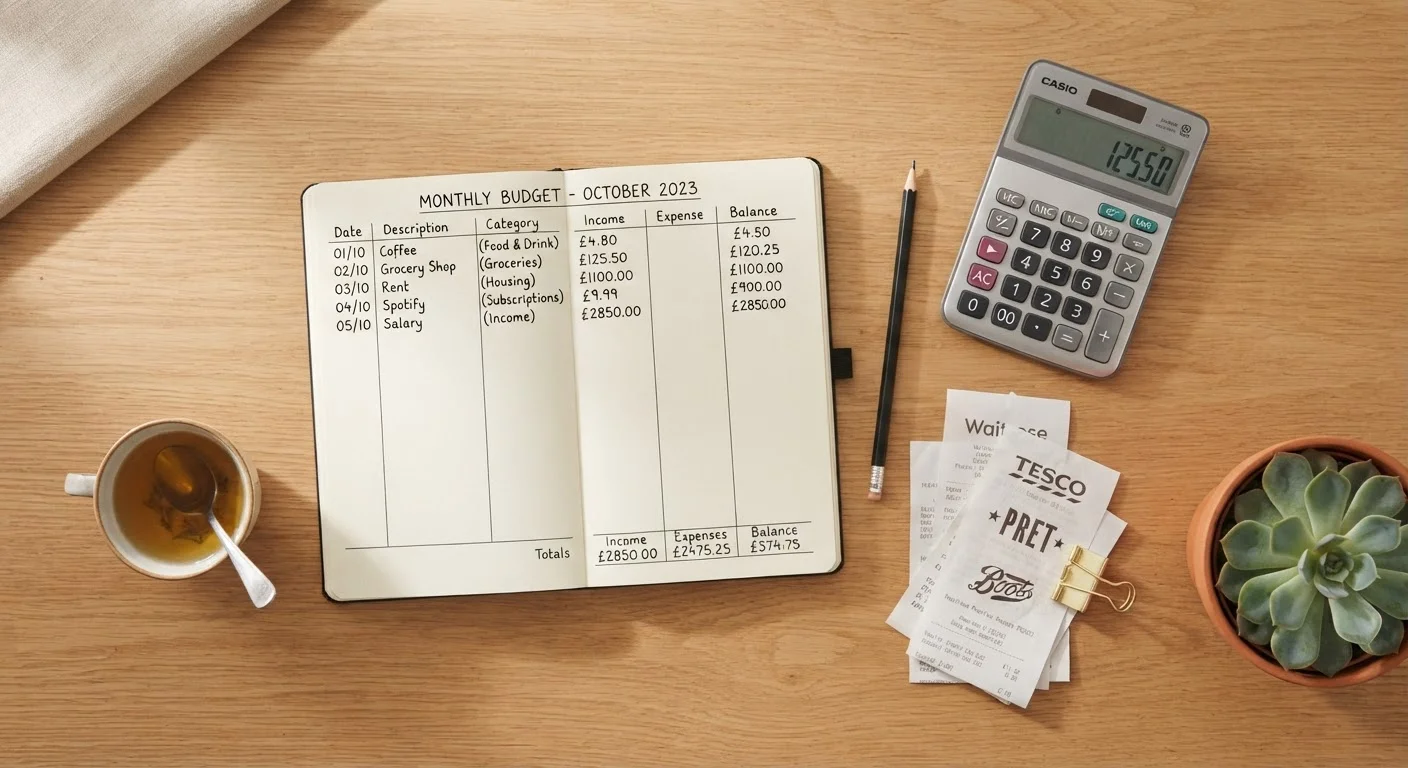
Photo: UnlockTopics.com | Unlocking Trending Content editorial
Key Takeaways
- Start with your net (take-home) income, not your gross salary - that's the money you actually have to work with.
- List every fixed and variable expense before assigning any spending targets.
- A simple framework like 50/30/20 gives beginners a reliable starting allocation.
- Your first budget is a draft - expect to revise it after the first month.
- Tracking actual spending against your plan is what makes a budget useful.
Why Structure Matters Before You Start Spending
Most people have a general sense of what they earn and a vague awareness of where the money goes - but vague awareness doesn't prevent overdrafts or month-end shortfalls. A written monthly budget replaces guesswork with a deliberate plan. It doesn't restrict your freedom; it shows you exactly how much freedom you actually have in each area of spending.
If you've never put a budget together before, the first personal budget guide covers foundational concepts worth reviewing alongside this walkthrough. This article focuses on the mechanical process of building the plan itself.
Don't Budget From Gross Income
Before you start, gather the tools you'll need:
Bank and credit card statements (last 1-3 months)
Provide actual spending data to inform realistic category estimates.
Spreadsheet or budgeting app
Record income, expense categories, and track actuals versus targets each month.
Pay stubs or direct deposit records
Confirm your exact net income figure for the budgeting period.
List of recurring bill amounts and due dates
Capture fixed obligations accurately so nothing is overlooked in the plan.
What you will need
Following the Steps: From Income to a Balanced Plan
The steps below move in sequence for a reason - income must be established before expenses are listed, and expenses must be totaled before any framework is applied. Skipping steps or working out of order often produces a budget that looks right on paper but breaks down in the first week.
Use Last Month's Bank Statement as a Baseline
Calculate your total monthly net income
Add up every source of after-tax income you reliably receive in a month: your primary paycheck, any side income, freelance payments, or benefits. Use the amount that actually lands in your account - not your salary before deductions. If your income varies month to month, use a conservative estimate based on your lowest recent months. For more context on handling unpredictable earnings, see budgeting on an irregular income.
List all fixed expenses
Fixed expenses are obligations that stay the same amount each month: rent or mortgage, car payment, insurance premiums, student loan payments, and set subscription fees. Write down each one with its exact amount and due date. These are non-negotiable line items - your budget must cover them before anything else is allocated.
Estimate variable spending categories
Variable expenses shift month to month: groceries, gas, dining out, clothing, personal care, entertainment. Review your recent statements to find realistic averages rather than guessing. Group similar items - for example, all food-related spending together - so categories stay manageable. Unfamiliar with terms like discretionary spending? The everyday budgeting terms glossary has plain-language definitions for these concepts.
Apply a spending framework to allocate the totals
A framework keeps your allocation balanced without requiring you to invent percentages from scratch. The widely referenced 50/30/20 guideline suggests directing roughly 50% of net income toward needs (housing, utilities, groceries), 30% toward wants (dining, entertainment, hobbies), and 20% toward savings and debt repayment. These are starting points - not rules - and your numbers may look different based on your cost of living, debt load, or goals. Adjust proportions so the total matches your net income exactly. For a broader look at how budgeting structures work, the complete budgeting foundation guide walks through multiple approaches.
Assign amounts to savings and debt repayment
Treat savings as a fixed line item, not what's left over after spending. Even a small, consistent amount builds the habit. If you're starting from zero, building an emergency fund from scratch outlines a realistic first milestone. If you carry high-interest debt, prioritize paying beyond the minimum where your budget allows. Both savings and extra debt payments should appear as named line items before you allocate discretionary spending.
Check that income minus all expenses equals zero
Add up every category - fixed expenses, variable spending, savings, and debt payments. Subtract the total from your net income. A zero-based budget assigns every dollar a purpose, leaving no unallocated money that tends to disappear untracked. If you're over budget, reduce discretionary categories. If you have surplus, direct it intentionally to savings or a financial goal rather than leaving it floating.
Track actual spending throughout the month
A budget written once and never checked is just a document. Log real expenditures against your categories as the month progresses - weekly check-ins work well for most people. When a category runs over, adjust another category to compensate rather than ignoring the gap. At month's end, use your actuals to refine the next month's plan. The end-of-month budget review checklist is a useful companion for that process.
Once your first monthly budget is in place, use the monthly savings audit checklist to regularly surface spending patterns that quietly erode progress. And if your household budget extends to major purchases, building a household buying strategy offers practical principles for spending decisions beyond the monthly plan.
This Is General Education, Not Personal Advice
This article is for general informational and educational purposes only and does not constitute personalized financial, tax, or legal advice. Consult a qualified financial professional before making decisions based on your individual circumstances.
The content on this site is for informational purposes only and is not a substitute for professional advice. Always consult a qualified professional for guidance specific to your situation.