
A Glossary of Everyday Budgeting Terms

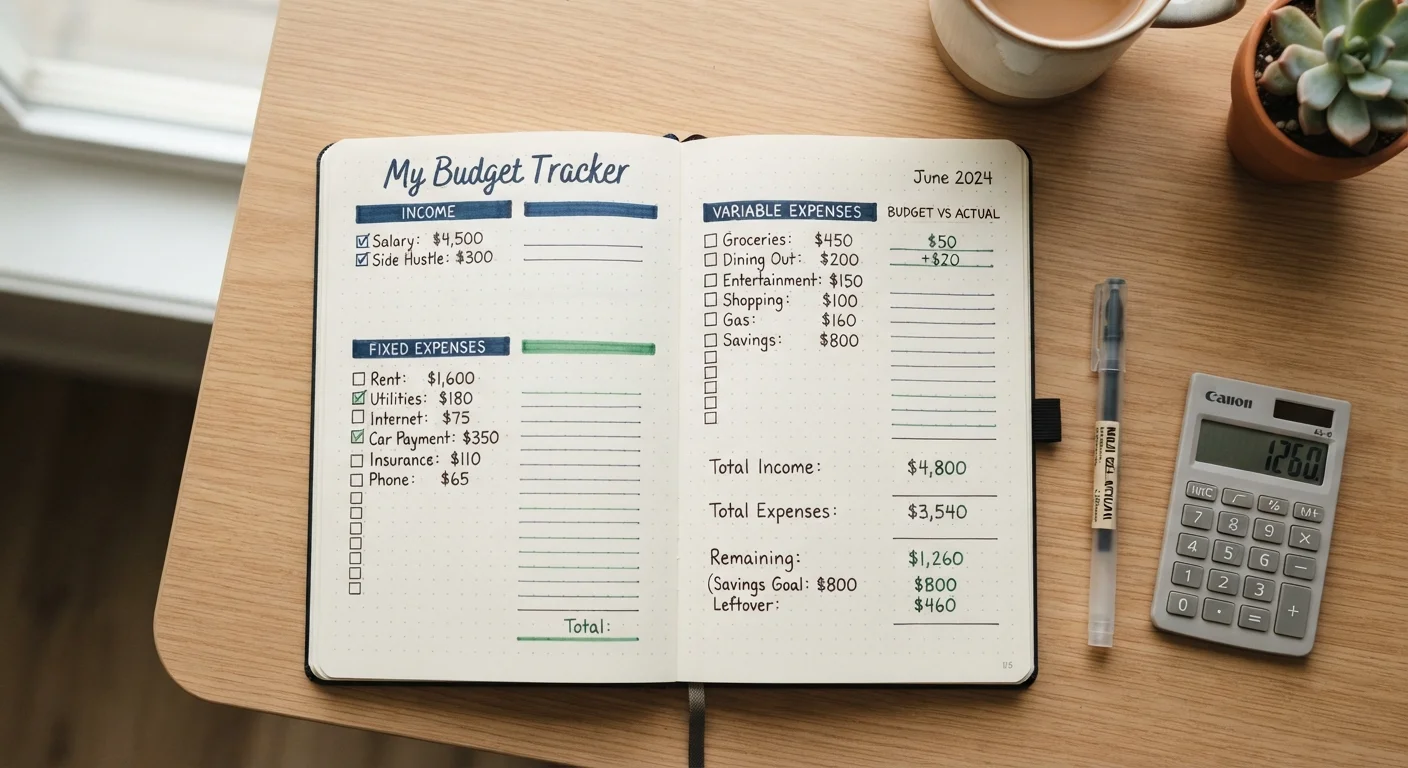
Photo: UnlockTopics.com | Unlocking Trending Content editorial
Why Budgeting Has Its Own Vocabulary
Budgeting guides and financial apps tend to throw around terms - net income, sinking fund, discretionary spending - as though everyone already knows them. Most people don't, and that's completely normal. Language that feels exclusive is one of the quiet reasons people avoid budgeting altogether.
This glossary is a plain-English reference you can return to whenever a term stops you cold. Whether you're building your first budget or refining a system you've used for years, having these definitions handy makes the process clearer and less intimidating.
Terms are grouped by theme rather than alphabetically, so related ideas sit together and are easier to absorb. For a deeper look at how these concepts connect in practice, see our complete foundation guide to personal budgeting.
Net Income
Your take-home pay after taxes, benefits, and other deductions are withheld from your gross earnings. This is the figure you should base your budget on.
Gross Income
Your total earnings before any deductions. Gross income is higher than what you actually receive, so budgeting from this number leads to shortfalls.
Fixed Expenses
Costs that remain the same each month regardless of usage or behavior - rent, a car payment, or a fixed-rate loan installment are typical examples.
Variable Expenses
Costs that change in amount from month to month, such as groceries, gasoline, or utility bills. These are often the most flexible part of a budget.
Discretionary Spending
Spending on wants rather than needs - dining out, entertainment, hobbies, and similar non-essential purchases. This category is usually where budget adjustments happen first.
Sinking Fund
A savings pool built up gradually over time for a specific, anticipated future expense - such as a vacation, car maintenance, or annual insurance premium.
Emergency Fund
A dedicated cash reserve set aside exclusively for unexpected financial shocks, such as job loss, medical bills, or urgent repairs. Commonly recommended at three to six months of essential expenses.
Zero-Based Budgeting
A method in which every dollar of income is assigned to a category - spending, saving, or debt - so that income minus allocations equals zero. Nothing is left unassigned.
Cash Flow
The net movement of money in and out over a given period. Positive cash flow means you took in more than you spent; negative means the reverse.
Budget Surplus
The amount remaining when income exceeds planned or actual spending for a period. A surplus can be directed toward savings, debt payoff, or future spending goals.
Budget Deficit
A shortfall that occurs when spending exceeds income for a period. Recurring deficits signal that a budget needs to be rebalanced - by reducing expenses, increasing income, or both.
Pay Yourself First
A savings approach in which you set aside money for savings or debt repayment at the beginning of each pay cycle, before spending on discretionary items.
Income, Expenses, and the Space Between
The core math of a budget is straightforward: money coming in versus money going out. But the terminology around each side of that equation matters, because it shapes how you categorize and plan.
| Budget from | Net income (take-home pay) |
| Fixed expense example | Rent or mortgage payment |
| Variable expense example | Groceries, gas, utilities |
| Emergency fund target | 3-6 months of essential expenses (Widely cited guideline; individual needs vary) |
| 50/30/20 rule split | 50% needs, 30% wants, 20% savings/debt (General guideline; adjust to your circumstances) |
Gross income is your total earnings before any taxes or deductions are removed - the number on your offer letter. Net income (sometimes called take-home pay) is what actually lands in your account after taxes, insurance premiums, and retirement contributions are withheld. Always budget from net income, not gross.
On the spending side, fixed expenses are costs that stay the same from month to month - rent, a car payment, a loan installment. Variable expenses shift in amount each cycle - groceries, gas, utilities, and dining out are common examples. Understanding this split is genuinely useful; for more on why, see our article on fixed vs. variable expenses.
Discretionary spending covers wants rather than needs - entertainment, subscriptions, hobbies, and similar non-essential purchases. Non-discretionary spending covers necessities you can't easily cut, like housing, food, and healthcare. The line between these two categories isn't always perfectly clear, but drawing it helps when you need to find room in a tight month.
Cash flow describes the net movement of money over a period - positive cash flow means more came in than went out; negative means the reverse. A budget's job is largely to keep your cash flow positive or at least break-even.
Budget Structures and Saving Strategies
Different budgeting methods use different frameworks. Recognizing these terms lets you evaluate any approach you encounter.
The 50/30/20 rule is a popular guideline suggesting roughly 50% of net income goes to needs, 30% to wants, and 20% to savings and debt repayment. It's a starting point, not a rigid prescription - your situation may call for different proportions.
Zero-based budgeting means assigning every dollar of income a job - spending, saving, or debt payment - until the total reaches zero. Nothing is left unallocated. It requires more tracking but gives you precise control.
A budget surplus occurs when your income exceeds your planned expenses for the period. A budget deficit is the opposite: you've spent or planned to spend more than you earned. Consistent deficits are a signal that something needs to change - either income, spending, or both.
A sinking fund is money set aside gradually over time for a known future expense - a car repair, a vacation, holiday gifts, or an annual insurance premium. Instead of being caught off guard, you spread the cost across many months. It's distinct from an emergency fund, which covers unexpected expenses rather than anticipated ones.
An emergency fund is a dedicated reserve - typically three to six months of essential expenses - held separately from everyday spending money. Its only purpose is to absorb genuine financial shocks: job loss, a medical bill, a major repair.
Pay yourself first is a savings philosophy, not just a phrase. It means directing money toward savings or debt repayment at the start of a pay cycle, before discretionary spending happens, rather than saving whatever happens to be left over.
For terminology that extends beyond budgeting into saving vehicles and interest, the savings terminology glossary covers APY, compound interest, liquidity, and related concepts. And if you're ready to put these ideas into action, our step-by-step guide to building a monthly budget walks through the full process.
This article is for general informational and educational purposes only and does not constitute personalized financial advice. For guidance specific to your situation, consider consulting a qualified financial professional.
The content on this site is for informational purposes only and is not a substitute for professional advice. Always consult a qualified professional for guidance specific to your situation.