
What Thermal Mass Actually Does in a Home - and Why It Matters

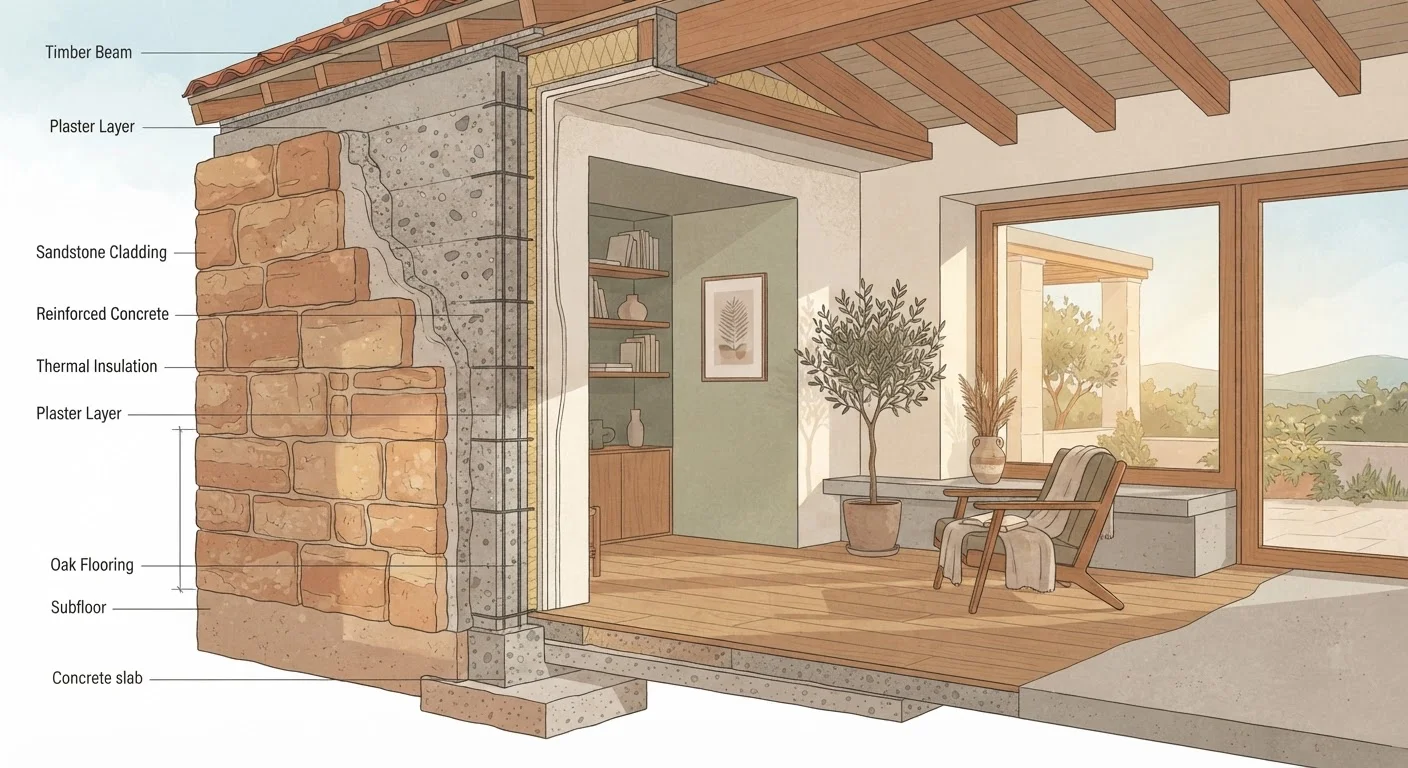
Photo: UnlockTopics.com | Unlocking Trending Content editorial
Key Takeaways
- Thermal mass absorbs heat when a space is warm and releases it when temperatures drop.
- Dense materials like concrete, brick, and stone provide the most effective thermal mass.
- Thermal mass works best when paired with good insulation and thoughtful window placement.
- Lightweight construction materials like timber framing offer very little thermal mass.
- Understanding thermal mass helps homeowners make smarter decisions about flooring, walls, and heating systems.
The Basic Mechanism: How Heat Gets Stored and Released
Think of thermal mass as a thermal battery. When the temperature in a room rises - from sunlight streaming through a window or a heating system running - a dense material absorbs that energy rather than letting it raise the air temperature immediately. Hours later, as the room cools, the material slowly releases that stored energy back into the space.
This is why a stone-floored room often feels warmer in the evening than you'd expect, and why an unheated brick building doesn't immediately freeze when outdoor temperatures drop. The stored energy keeps radiating into the space at a gentle, even rate.
The practical result is a more stable indoor temperature - fewer peaks and troughs across the day. For comfort, that stability is often more valuable than a higher average temperature. A room that holds steady at 68°F feels more livable than one that swings between 62°F and 74°F.
Thermal Mass Is Not the Same as R-Value
Why the Pairing with Insulation Matters So Much
Thermal mass and insulation are frequently confused or conflated, but they do fundamentally different jobs. Insulation resists the transfer of heat - it slows heat from escaping outward through walls, roofs, and floors. Thermal mass, by contrast, affects the timing of how heat moves within the conditioned space.
A thick stone wall without insulation loses its stored heat rapidly to the cold outdoors. A well-insulated wall with no mass heats up fast when the sun hits it, but also cools quickly once the heat source is removed. The combination - dense material on the interior side, insulation toward the exterior - is what delivers lasting temperature stability.
This is particularly relevant when evaluating flooring or wall upgrades. A concrete slab floor with insulation beneath it behaves very differently from one laid directly on uninsulated ground. For a deeper look at how different insulation types perform, see our comparison of common insulation materials.
Position Mass Where Sunlight Reaches It
Where Thermal Mass Shows Up in Everyday Homes
Most US homes built with wood framing have relatively low thermal mass. Drywall, timber studs, and fiberglass batt insulation are all lightweight materials that heat up and cool down quickly. That responsiveness is useful - the home heats fast when the furnace kicks on - but it also means temperatures can fluctuate noticeably through the day.
Homes built with concrete block, brick veneer with solid backing, or poured concrete slabs naturally have more mass. Older masonry construction - stone farmhouses, brick row homes - often demonstrates this effect clearly: they stay cool in summer and hold warmth in winter in ways that lightweight construction simply doesn't replicate.
For existing homes, practical ways to add thermal mass include: replacing carpet with tile, stone, or polished concrete flooring; installing an interior masonry feature like a brick fireplace surround; or adding a concrete or stone countertop in a kitchen that gets good sun exposure. These aren't dramatic renovations, but they shift how a room behaves thermally. For broader ideas on changes that alter day-to-day comfort, see upgrades that change how a home feels day-to-day.
~2x
Heat capacity of concrete vs. timber
Concrete stores roughly twice as much heat per unit volume as timber, making it significantly more effective as thermal mass in building applications.
6-8 hrs
Typical heat release delay in dense masonry walls
Thick masonry walls - such as 12-inch brick or rammed earth - can delay heat transfer by six to eight hours, shifting daytime solar gain into evening hours.
~30%
Potential reduction in temperature swings
Research in passive solar building design suggests high thermal mass, when properly paired with insulation and shading, can reduce daily indoor temperature variation by around 30% compared to lightweight construction.
How Thermal Mass Interacts with Heating and Cooling Systems
Understanding thermal mass helps clarify some counterintuitive behavior in how heating systems work. A high-mass home requires more energy to bring up to temperature from cold - the mass itself has to be heated, not just the air. But once warm, it holds that temperature far longer, meaning the system cycles less frequently.
This dynamic is especially relevant when comparing heating delivery methods. Underfloor heating, which warms a dense floor slab directly, pairs naturally with thermal mass principles - the floor becomes a large, low-temperature radiator that releases heat steadily. You can explore that trade-off further in our breakdown of underfloor heating vs. radiators.
Smart thermostats also interact with thermal mass in ways that aren't always obvious. A high-mass home needs longer lead times to heat up or cool down, which can affect how well programmable schedules perform. For a clear-eyed look at what smart thermostats actually deliver, our article on smart thermostat myths is worth reading alongside this one.
The takeaway isn't that one approach is universally better, but that thermal mass is a variable that shapes how every other system in your home performs - and ignoring it leads to decisions that don't quite add up in practice.
Frequently Asked Questions
The content on this site is for informational purposes only and is not a substitute for professional advice. Always consult a qualified professional for guidance specific to your situation.