
Upgrades That Change How a Home Feels Day-to-Day

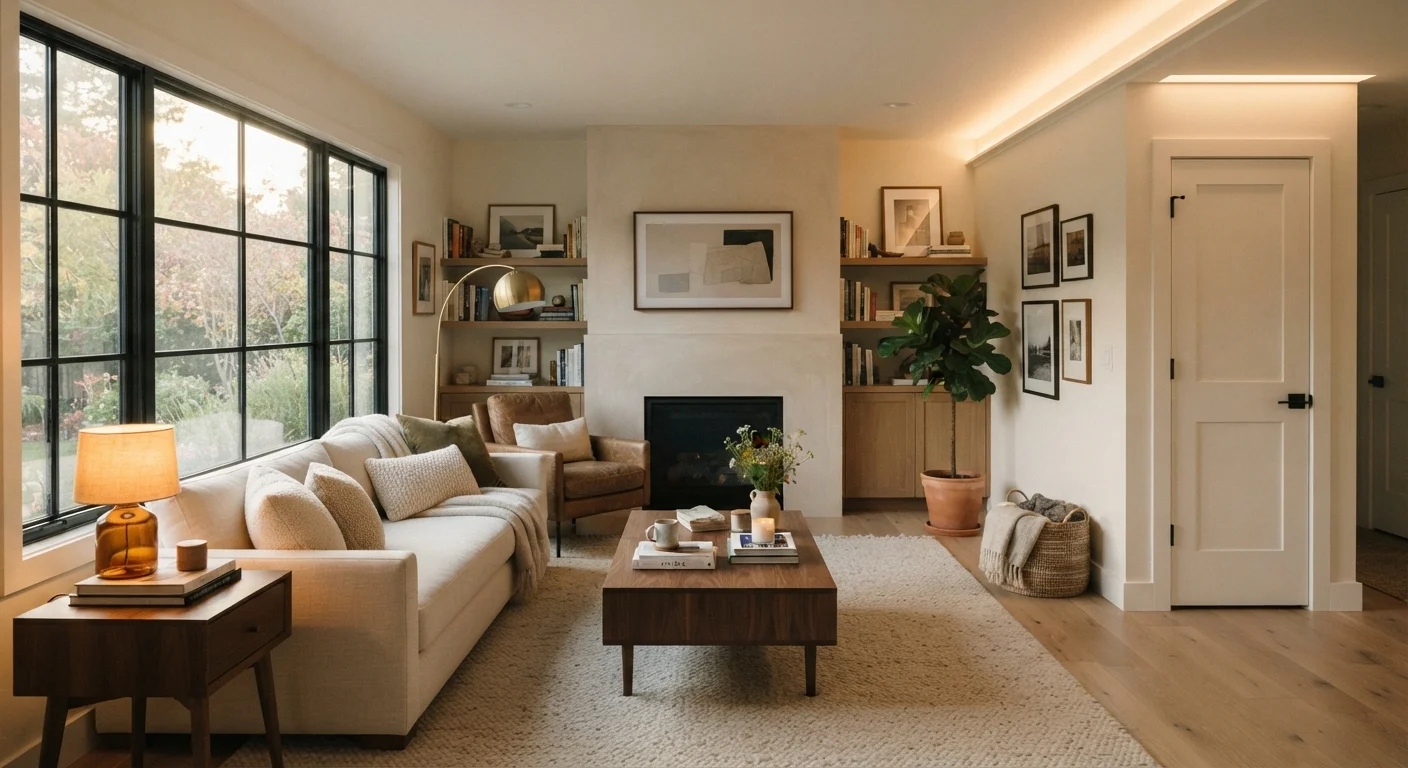
Photo: UnlockTopics.com | Unlocking Trending Content editorial
Key Takeaways
- High-impact home upgrades often cost less and take less time than structural renovations.
- Lighting layers, hardware, and acoustic treatments address daily friction most remodels overlook.
- Tactile touchpoints - handles, switches, textiles - shape how a space feels to use repeatedly.
- Task-specific lighting near workspaces and kitchen counters reduces eye strain noticeably.
- Small changes compound: several modest upgrades together can transform a room's character.
The Upgrades Worth Thinking About Differently
Most home improvement conversations start big: new kitchen, open-plan extension, bathroom remodel. Those projects matter, but they're also rare - and in between them, you live with the ordinary details every single day. The door handle you grip a hundred times. The light that's never quite right for reading. The drawer that sticks just enough to be annoying.
These friction points accumulate quietly, and so does their opposite: the quiet satisfaction of a home where the small things work well. The upgrades below aren't glamorous. Some cost very little. But each one targets something that touches daily life directly - comfort, usability, or the way a room feels to be in. If you're thinking about a more substantial project, understanding the full renovation lifecycle can help you put these smaller improvements in context.
Start With What Annoys You Most
Seven Changes With an Outsized Daily Impact
Replace overhead-only lighting with layered sources
A single overhead fixture is the default in most rooms - and one of the most common sources of daily discomfort. Overhead light flattens a space, creates harsh shadows on faces and surfaces, and leaves corners dim while the centre is overly bright. Layering means adding a floor lamp, table lamp, or under-cabinet strip alongside whatever ceiling fixture is already there.
The goal is control: the ability to dial illumination up for focused tasks and down for relaxed evenings. Even one additional lamp at a lower height transforms the ambience of a room after dark. For a fuller treatment of how light sources interact across a full day, the guide on natural versus artificial lighting layers is worth reading alongside this.
One additional lamp at a lower height transforms how a room feels after dark.
Add task lighting where you actually work
Kitchen counters, home desks, and bathroom vanities are all places where people perform detailed tasks - chopping, reading, applying products - but are often lit from above and behind, which means working in your own shadow. A small, directed light source positioned to illuminate the surface (not the person) makes a measurable difference in both accuracy and eye comfort.
Under-cabinet lighting in a kitchen is a particularly efficient upgrade because it illuminates the prep surface directly. In a home office, a desk lamp with adjustable colour temperature lets you shift from cool white (better for focus) to warm white (easier on the eyes in the evening). See also our article on keeping a home office functional under real daily use.
Working in your own shadow is one of the most common and easily fixed home frustrations.
Upgrade door and cabinet hardware
Hardware is a tactile experience repeated dozens of times daily. Builder-grade handles and knobs are often lightweight, poorly finished, and slightly awkward in the hand. Replacing them - on kitchen cabinets, interior doors, or bathroom vanities - is one of the few upgrades that delivers both a visual and a physical improvement simultaneously.
The change doesn't need to be expensive or dramatic. Solid, heavier hardware simply feels different in a way that registers subconsciously every time you reach for it. It also tends to function more smoothly: better-made hinges don't creak, better latches don't rattle. This is a genuinely DIY-friendly project that requires only a screwdriver and accurate measuring.
Solid hardware is a tactile experience repeated dozens of times daily - it registers every time.
Address acoustic discomfort in high-noise rooms
Hard floors, bare walls, and open layouts create spaces where sound bounces freely - conversations become fatiguing, outside noise intrudes more, and the space never quite feels restful. Rugs, upholstered furniture, heavy curtains, and even wall-mounted artwork all absorb sound in ways that reduce echo without requiring structural changes.
This matters most in rooms where you spend time talking or concentrating. A rug under a dining table doesn't just look intentional - it makes conversation noticeably easier. For a more systematic approach to sound in the home, reducing noise without gutting your walls covers the principle room by room.
A rug under a dining table makes conversation noticeably easier - and it requires no tools.
Fix door seals and draughts at threshold level
Draught-proofing is one of the most overlooked comfort upgrades in older homes. Cold air entering under external doors, around window frames, or through letterboxes creates localised discomfort that heating systems can't fully compensate for - you feel the chill regardless of the thermostat setting. Door threshold strips and foam or brush seals for window frames are inexpensive, widely available, and installable without specialist tools.
Beyond comfort, reducing air infiltration typically lowers energy use modestly. The benefit is most obvious in cold months: a draught-proofed hallway stays warmer, which in turn keeps adjacent rooms more comfortable. For a deeper look at how building materials interact with temperature, understanding thermal mass provides useful context.
You feel a draught regardless of the thermostat setting - sealing it is more effective than turning up the heat.
Introduce soft furnishings that absorb rather than reflect
Minimalist interiors with hard surfaces look clean in photographs but can feel cold and clinical to live in. Cushions, throws, curtains with some body, and upholstered seating all contribute to thermal and acoustic comfort - they absorb both sound and temperature variation in ways that make a room feel more settled.
Curtains specifically serve multiple functions: they block draught, reduce heat loss at night when drawn, dampen external noise, and control light. Lined or interlined curtains do this substantially better than lightweight unlined panels. This is an area where the investment in better-quality fabric - not necessarily expensive, but heavier and more densely woven - pays back in daily comfort.
Lined curtains quietly handle draught, heat loss, noise, and light - four functions in one upgrade.
Repaint with finish and undertone in mind, not just colour
Paint colour is only part of what changes when a room is repainted. The sheen level - matte, eggshell, satin - affects how light moves across the surface and how the room feels at different times of day. A flat matte absorbs light and reads as calm; a satin reflects it and can feel busier or more energetic. Neither is wrong, but the choice should be deliberate rather than default.
Undertones matter equally. A white that reads as neutral on a swatch card may pull pink, yellow, or green once applied to four walls under your specific light conditions. Testing paint in sample patches before committing - and observing those patches at different times of day - is the single most reliable way to avoid the common experience of a colour that looks nothing like you expected. Why repainting feels so different from what you imagined breaks this down in detail.
Testing paint in sample patches at different times of day is the most reliable way to avoid colour regret.
When to Involve a Professional
Putting It Together
None of these upgrades requires a contractor or a permit. What they share is intentionality - each one targets a specific moment in daily life that currently has a rough edge. Done individually, they improve a single touchpoint. Done together across a home, they shift the baseline of how the space feels to inhabit.
A useful next step: spend one week noticing where you experience small frustrations - the light you never turn on because it's too harsh, the room you avoid after dark. Those friction points are your shortlist. For further reading on how light and space interact, see our guide on designing with natural and artificial lighting layers.
The content on this site is for informational purposes only and is not a substitute for professional advice. Always consult a qualified professional for guidance specific to your situation.