
Busting the Myths Around Smart Thermostats and Energy Savings

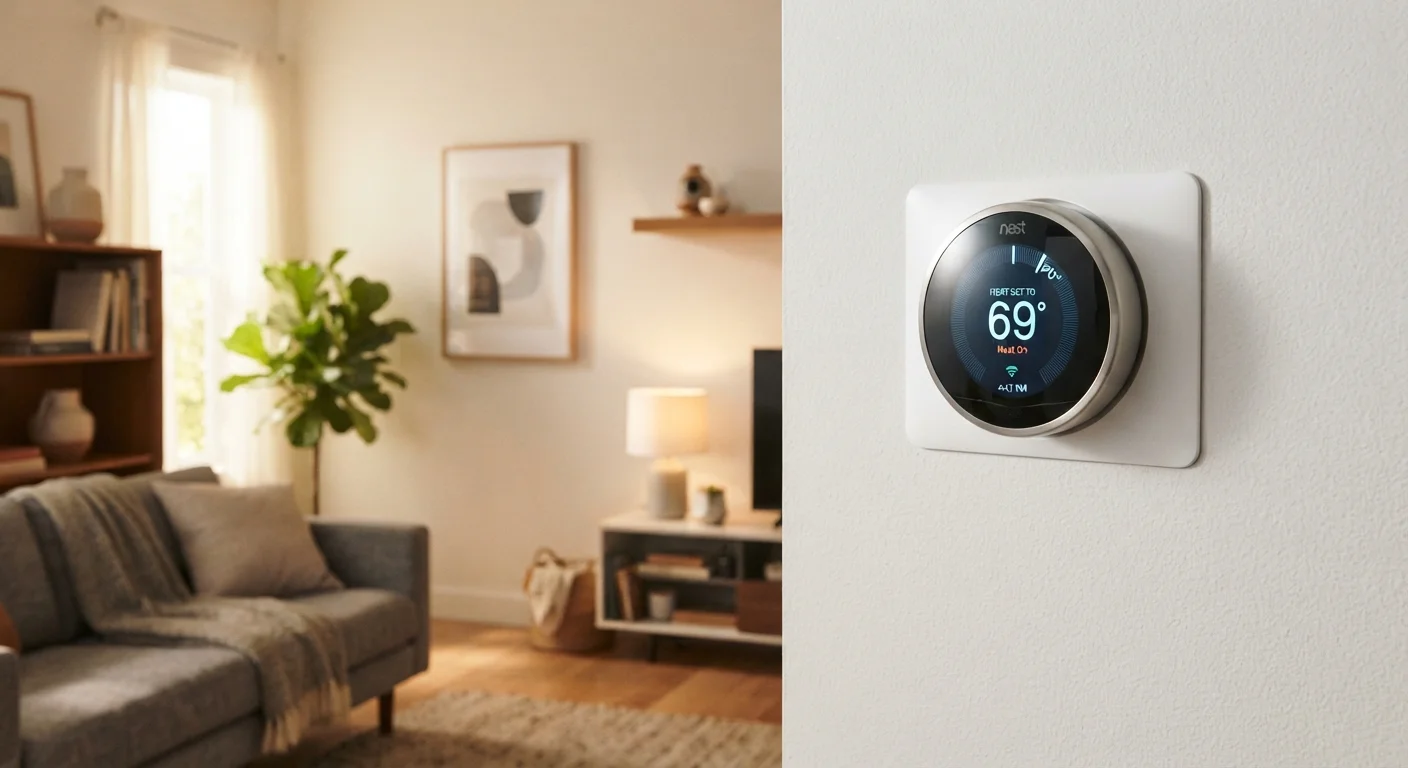
Photo: UnlockTopics.com | Unlocking Trending Content editorial
Key Takeaways
- Smart thermostats do not automatically reduce energy bills without deliberate scheduling and setup.
- Savings depend heavily on your home's insulation, climate, and existing heating system.
- Learning features need weeks of real usage data before they optimize effectively.
- Turning the heat off completely overnight can sometimes increase overall energy consumption.
- Compatibility with your HVAC system matters — not every thermostat works with every setup.
Why Smart Thermostat Myths Persist
Smart thermostats are among the most marketed home technology products of the past decade. The gap between promotional claims and real-world outcomes has created a cluster of persistent misconceptions — some rooted in misunderstood statistics, others in genuinely optimistic assumptions about what automation can achieve.
The core problem is that energy savings are behavioral as much as they are technological. A device installed in a household that never changes its temperature habits will deliver little benefit. One installed in a thoughtfully managed home, with good insulation and a compatible HVAC system, can deliver measurable reductions. Understanding which side of that spectrum you are on requires honest evaluation — not just a product purchase.
This kind of evidence-based thinking applies well beyond thermostats. Much like common ventilation myths that lead homeowners astray, smart home technology is an area where confident-sounding advice is often incomplete.
Myth
Installing a smart thermostat will immediately cut my energy bill.
Fact
A smart thermostat is a tool, not a solution. Savings depend almost entirely on how well it is configured and whether occupant habits support it.
Marketing for smart thermostats often leads with eye-catching savings percentages. The reality is more conditional. A device that is installed with factory defaults and never programmed typically performs no better — and sometimes worse — than a basic programmable thermostat. The savings cited in studies generally reflect households that actively set schedules, use away modes consistently, and adjust setpoints based on real occupancy patterns.
If you live in a poorly insulated home or have an aging HVAC system, no thermostat alone will compensate for those structural issues. For context on what smart home devices genuinely cost versus what they save, see our breakdown of hidden smart home costs.
Myth
The 'learning' feature means I don't need to do anything — it figures everything out.
Fact
Learning algorithms require several weeks of behavioral data and still need periodic human correction to remain accurate.
Auto-learning thermostats track when you adjust temperatures and try to anticipate your preferences. However, the learning phase typically takes two to four weeks, and the model it builds reflects your habits during that period — not necessarily your ideal schedule. Irregular routines, seasonal changes, or guests can confuse the system and lead to inefficient heating or cooling cycles.
Most manufacturers still recommend reviewing and manually refining the generated schedule after the learning period ends. Treating the device as fully autonomous is one of the most common reasons users end up disappointed with their energy results.
Myth
Turning the heat completely off when I leave saves the most energy.
Fact
Completely shutting off heat can force your system to work harder to recover temperature, sometimes using more energy than a modest setback would.
This is one of the more counterintuitive truths in home energy management. When a home's temperature drops very low during absence, the heating system must run an extended recovery cycle to return to a comfortable level before you arrive home. Depending on your home's thermal characteristics — particularly its insulation and thermal mass — this recovery can consume as much or more energy than simply maintaining a lower setpoint.
A recommended approach in many energy guidance resources is a setback of roughly 7–10°F during away periods rather than a full shutdown. Understanding how thermal mass works in your home can help you calibrate the right setback depth for your specific construction type.
Myth
Smart thermostats work equally well in all homes.
Fact
Performance varies considerably based on insulation quality, HVAC type, home size, and local climate.
A smart thermostat in a well-insulated, modern home in a mild climate has very different optimization potential than the same device in an older, drafty home in a region with extreme winters. The device can only control the heating and cooling system — it cannot compensate for heat loss through walls, windows, or roofs. Homes with significant air leakage or inadequate insulation will see diminishing returns from any thermostat upgrade until those underlying issues are addressed.
Similarly, the type of heating system matters. Forced-air systems respond quickly to setback and recovery commands. Radiant or hydronic systems operate on longer thermal cycles and may benefit less from aggressive scheduling. Always evaluate your home's specific setup before expecting published average savings figures to apply to your situation.
Myth
Remote control via smartphone means the thermostat is always making smart decisions.
Fact
Remote access is a convenience feature, not an intelligence feature — the system still depends on user-defined inputs.
Being able to adjust your thermostat from a phone is useful, but it is functionally equivalent to walking over and turning a dial. The device does not know you are running late or that a cold snap is coming unless you tell it — or unless it is integrated with a geofencing or weather-aware system that you have configured correctly. Many users enable remote access but never set up geofencing or weather integration, leaving a significant portion of the device's potential unused.
Treat smartphone control as a helpful fallback for unexpected schedule changes, not as the primary mechanism for energy savings.
What Actually Determines Your Savings
Three factors have the strongest influence on whether a smart thermostat delivers meaningful savings: occupancy patterns, home envelope quality, and HVAC system type.
Check HVAC Compatibility Before Buying
Occupancy patterns matter because thermostats optimize around your schedule. A household with highly predictable routines — similar departure and return times each day — benefits most from scheduled setbacks. Households with irregular schedules may benefit more from geofencing (which adjusts temperature based on your phone's location) than from fixed time-based programming.
Home envelope quality — the insulation, windows, and air sealing of your home — determines how quickly heat escapes or enters. A smart thermostat cannot retain heat that leaks through inadequate insulation. For homeowners considering broader upgrades, exploring smart shopping decisions for home improvements can help prioritize where money is best spent.
HVAC system compatibility is a practical threshold issue, not just a performance variable. An incompatible installation creates real risk.
Savings Are Not Guaranteed
If your expectations are calibrated to these realities, a smart thermostat can be a genuinely useful addition to a well-managed home — just not a passive shortcut to lower bills.
The content on this site is for informational purposes only and is not a substitute for professional advice. Always consult a qualified professional for guidance specific to your situation.