
Whole Foods vs. Processed Foods: What the Research Actually Shows

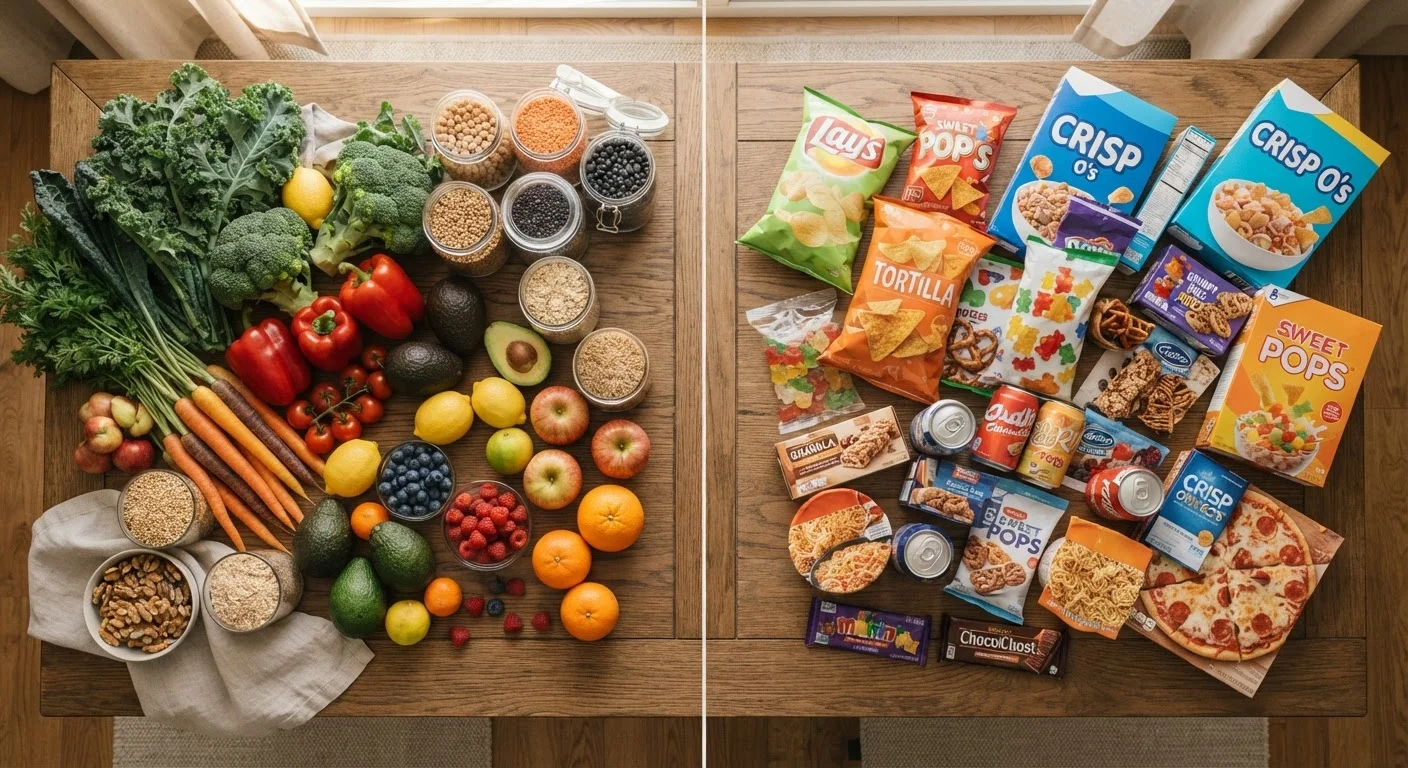
Photo: UnlockTopics.com | Unlocking Trending Content editorial
Key Takeaways
- Not all processed foods are equally harmful; processing exists on a spectrum from minimal to ultra-processed.
- Whole foods consistently deliver more fiber, micronutrients, and beneficial phytochemicals than heavily processed alternatives.
- Research links high ultra-processed food consumption to increased risk of cardiovascular disease, obesity, and type 2 diabetes.
- Food access, cost, and cultural context shape dietary choices-moralistic framing misses this reality.
- A predominantly whole-food diet, applied flexibly, is the approach most supported by current nutritional evidence.
Defining the Terms: What Do 'Whole' and 'Processed' Actually Mean?
The word processed covers an enormous range of foods, from roasted almonds and pasteurized milk to shelf-stable snack cakes engineered with dozens of additives. This spectrum is why blanket statements about processed food being universally harmful or inherently safe both miss the mark.
Researchers increasingly use the NOVA classification system, developed by nutritional epidemiologists at the University of São Paulo, to categorize foods by the extent and purpose of processing. NOVA identifies four groups: unprocessed or minimally processed foods; processed culinary ingredients (oils, flours, salt); processed foods (canned fish, cheese, cured meats); and ultra-processed foods-formulations that go far beyond preservation and typically include cosmetic additives, flavor enhancers, and emulsifiers absent from home cooking. For a deeper look at how ultra-processed is defined scientifically, see what ultra-processed really means.
Whole foods, by contrast, are foods consumed close to their natural form-vegetables, fruits, legumes, whole grains, nuts, seeds, eggs, and unprocessed meat or fish. They may be cooked, chopped, or frozen, but their fundamental nutritional structure remains largely intact.
| Criterion | Whole Foods | Processed Foods |
|---|---|---|
| Definition | Minimally altered; close to natural form | Altered by industrial or culinary methods |
| Fiber content | Generally high | Often reduced or absent |
| Micronutrient density | Typically preserved | Variable; may be lost or added back |
| Added sugars & sodium | Naturally low | Often elevated, especially ultra-processed |
| Satiety signaling | Stronger, supported by food matrix | Weaker in ultra-processed formats |
| Convenience & shelf life | Often lower | Generally higher |
| Cost accessibility | Variable; fresh produce can be costly | Often more affordable per calorie |
| Chronic disease risk association | Lower risk in large cohort studies | Higher risk for ultra-processed category |
What the Research Says About Health Outcomes
The evidence base on dietary patterns and chronic disease has grown substantially over the past two decades. Several large prospective cohort studies-including the NutriNet-Santé study in France and the UK Biobank-have found associations between high ultra-processed food consumption and elevated risk of cardiovascular disease, all-cause mortality, obesity, and type 2 diabetes. These findings are observational, meaning they identify associations rather than direct causation, and researchers continue to investigate the mechanisms involved.
Mechanistic research offers plausible explanations. Whole foods are generally richer in dietary fiber, which supports gut microbiome diversity and is linked to better glycemic control and cardiovascular health. They also retain micronutrients and phytochemicals-plant compounds with antioxidant and anti-inflammatory properties-that processing can degrade or remove. How food choices influence the gut microbiome is an increasingly active area of research with meaningful implications for general wellbeing.
Ultra-processed foods, in contrast, tend to be calorie-dense, low in fiber, and high in added sugars, sodium, and refined carbohydrates. A landmark randomized controlled trial published in Cell Metabolism (Hall et al., 2019) found that participants assigned an ultra-processed diet consumed significantly more calories and gained more weight over two weeks compared with those on an unprocessed diet-even when both diets were matched for offered calories and macronutrients-suggesting that food matrix and processing level may influence satiety signaling.
~57%
Share of US calories from ultra-processed foods
Research published in BMJ Open (Martínez Steele et al., 2017) estimated that ultra-processed foods accounted for roughly 57% of energy intake in the US diet.
~500 kcal/day
Extra calories consumed on ultra-processed diet
In a randomized controlled trial by Hall et al. (2019, Cell Metabolism), participants on an ultra-processed diet ate approximately 500 more calories per day than those on an unprocessed diet.
10% increase
CVD risk per ultra-processed food serving increment
A large NutriNet-Santé cohort analysis associated each 10% increase in ultra-processed food proportion of the diet with a roughly 10-12% higher cardiovascular disease risk.
Understanding how different macronutrients function within these food types also matters. Our guide to macronutrients explains why balance and food quality are more relevant than eliminating any single nutrient class.
Nuance, Accessibility, and What This Means in Practice
Nutrition research is clear that diets built predominantly around whole foods are associated with better long-term health outcomes. But translating that finding into everyday advice requires acknowledging real-world constraints. Food access, cost, cooking time, cultural food traditions, and individual health conditions all shape what people eat-and a framework that ignores these factors is neither useful nor equitable.
Notably, not all processed foods are nutritional liabilities. Frozen vegetables retain most of their micronutrient content. Canned legumes provide fiber and protein at low cost. Fortified breakfast cereals have contributed meaningfully to reducing micronutrient deficiencies in the general population. The problem lies predominantly with ultra-processed foods-a narrower category within the broader processed label. For a grounded exploration of common nutrition misconceptions, including assumptions about processed and fat-free foods, see common nutrition myths that persist despite the evidence.
The practical takeaway supported by research is directional rather than absolute: shifting the overall dietary pattern toward whole and minimally processed foods, where feasible, is associated with meaningful health benefits. Perfection is not the goal-and it's worth remembering that eating less is not the same as eating well. Nutritional quality matters independently of caloric quantity.
Processing Is Not Binary - Context Matters
This article is for general informational and educational purposes only and does not constitute medical or dietary advice. Individual nutritional needs vary; consult a registered dietitian or qualified healthcare provider for guidance tailored to your health circumstances.
The content on this site is for informational purposes only and is not a substitute for professional advice. Always consult a qualified professional for guidance specific to your situation.