
Tyre Pressure and Fuel Efficiency: The Connection Most Drivers Overlook

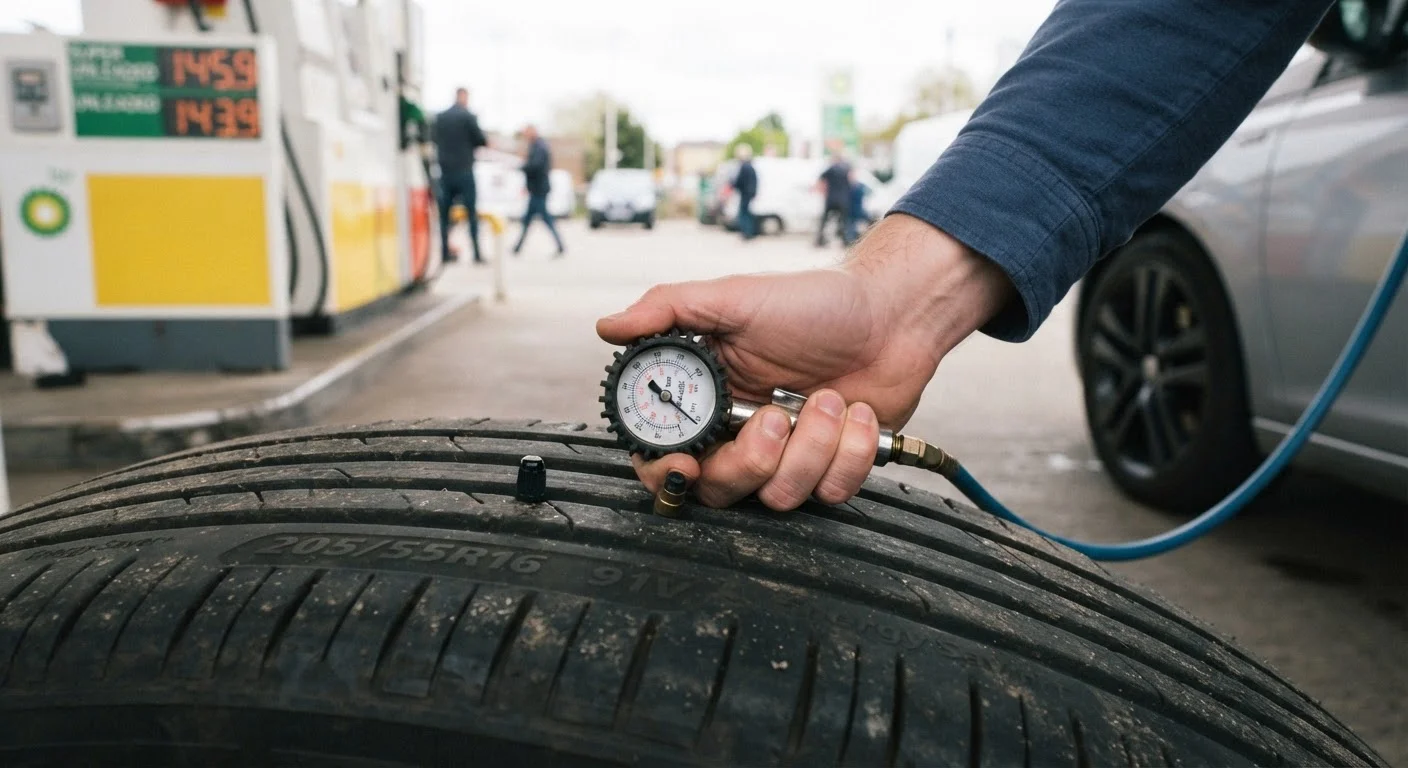
Photo: UnlockTopics.com | Unlocking Trending Content editorial
Key Takeaways
- Underinflated tyres increase rolling resistance, forcing the engine to burn more fuel.
- The U.S. Department of Energy estimates that properly inflated tyres can improve fuel economy by up to 3%.
- Tyre pressure drops roughly 1 PSI for every 10°F fall in outside temperature.
- Correct pressure is found on the driver's door jamb sticker - not on the tyre sidewall.
- Overinflation also carries risks, including reduced grip and uneven tread wear.
Why Tyre Pressure and Fuel Efficiency Are Linked
Most drivers know that tyre pressure matters for safety - but its direct impact on fuel consumption is one of the most consistently overlooked factors in everyday car ownership. The connection is straightforward: an underinflated tyre deforms more as it rolls, increasing the amount of rubber in contact with the road and amplifying rolling resistance. Your engine has to produce more power to overcome that resistance, burning extra fuel in the process.
Think of it like riding a bicycle with soft tyres. The ride feels sluggish and laboured because more energy is wasted flexing the tyre rather than propelling you forward. The same principle applies at highway speeds in a 3,500-pound vehicle - just scaled up significantly.
Up to 3%
Fuel economy gain from properly inflated tyres
According to the U.S. Department of Energy, keeping all four tyres at the correct pressure can improve fuel economy by up to 3% compared to significantly underinflated tyres.
~1 PSI
Pressure lost per 10°F temperature drop
This well-established relationship between air temperature and tyre pressure is why seasonal checks are particularly important in autumn and spring.
0.2%
Fuel efficiency lost per 1 PSI underinflation
The U.S. Department of Energy estimates roughly 0.2% fuel efficiency loss for each PSI below recommended pressure across all four tyres.
This efficiency loss is cumulative. A tyre that's been running low for weeks quietly chips away at your fuel economy on every trip. Pair that with harsh acceleration habits, and the fuel cost compounds fast.
How Temperature Changes Pressure - and Why That Matters
Tyre pressure isn't a set-it-and-forget-it number. Air expands when heated and contracts when cooled, meaning your tyre pressure fluctuates with ambient temperature. As a general rule, pressure drops roughly 1 PSI for every 10°F decrease in outside temperature. A tyre correctly inflated at 35 PSI on a warm fall day could read closer to 30 PSI by mid-winter - without any leak.
This seasonal drift is one reason so many drivers unknowingly spend entire winters on underinflated tyres. It's also why fuel economy drops noticeably in cold months - tyre pressure loss is one of several contributing factors.
TPMS Is a Warning System, Not a Gauge
The reverse is also true. Tyres heat up during extended highway driving, so pressure rises slightly mid-journey. Always check pressure when tyres are cold - before driving or after the car has sat for at least three hours - to get an accurate reading that matches the manufacturer's specification.
Reading the Right Number and Checking Pressure Correctly
One of the most common mistakes drivers make is inflating tyres to the number stamped on the sidewall. That figure - often labeled Max. Press. - is the tyre's maximum structural pressure, not a target for daily driving. The correct number for your vehicle is on the driver's door jamb sticker or in the owner's manual, and it can differ between front and rear axles.
Checking pressure correctly takes about two minutes:
- Check tyres cold - before driving or after at least three hours at rest.
- Remove the valve cap and press a quality tyre gauge firmly onto the valve stem.
- Compare the reading to the door-jamb specification.
- Add or release air as needed, then replace the valve cap.
For a deeper look at what over- and underinflation do to handling and wear, see our guide to tyre pressure and safety. Tyre wear patterns can also reveal whether your vehicle has been running on incorrect pressures - learning to read them is a useful diagnostic skill.
Use Your Door Jamb, Not the Tyre
The Bigger Picture: Pressure as Part of a Maintenance Habit
Tyre pressure is one of the simplest - and cheapest - maintenance tasks available to any driver, yet it regularly goes unaddressed. Building a monthly pressure check into your routine costs nothing and takes less time than a cup of coffee. The payoff in fuel savings, reduced tyre wear, and preserved handling is disproportionately large relative to the effort.
It's also worth being realistic about the limits. Correct tyre pressure won't transform your fuel economy overnight, but it removes an entirely avoidable drag on efficiency. Combined with other habits - like using cruise control strategically and questioning common fuel myths - it forms part of a broader approach to smarter, more economical driving. For a broader review of maintenance tasks that actually matter versus those that don't, see common car maintenance myths.
Frequently Asked Questions
The content on this site is for informational purposes only and is not a substitute for professional advice. Always consult a qualified professional for guidance specific to your situation.