
Tyre Pressure: The Small Number That Has a Big Impact on Safety and Fuel Use

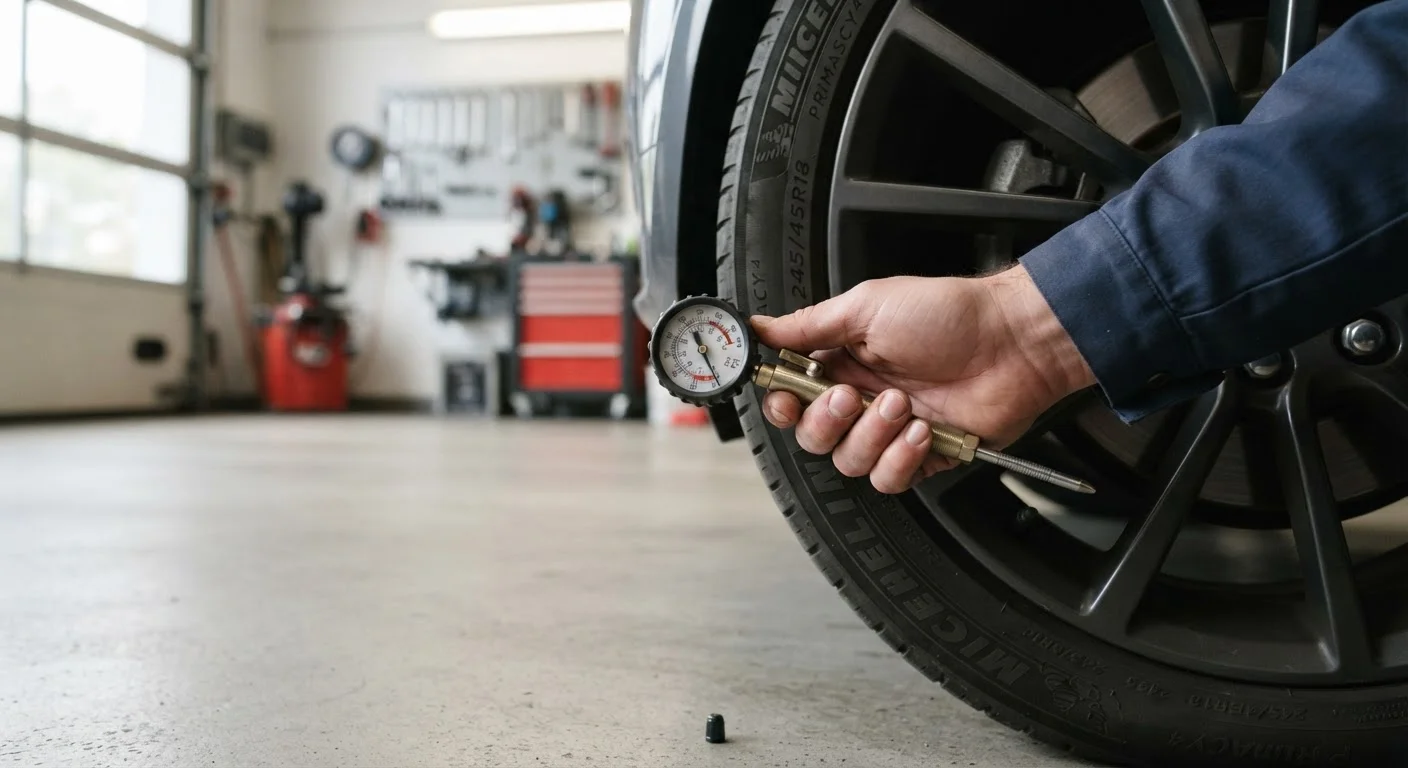
Photo: UnlockTopics.com | Unlocking Trending Content editorial
Key Takeaways
- Your vehicle's correct tyre pressure is found on the driver's door jamb sticker or owner's manual - not on the tyre sidewall.
- Under-inflated tyres increase fuel consumption, cause uneven wear, and raise blowout risk.
- Over-inflated tyres reduce grip and make the ride harsher, especially on uneven road surfaces.
- Tyre pressure drops roughly 1 PSI for every 10°F decrease in outside temperature.
- Check tyre pressure monthly and always before long road trips, using a cold tyre reading.
Why That Small Number Matters More Than You Think
Most drivers glance at their tyres and assume they look fine. But tyre pressure is not something you can judge reliably by eye - a tyre can be 10 PSI below the recommended level and still appear visually normal. That gap between perception and reality is where problems begin.
Correct tyre pressure is one of the simplest, cheapest forms of vehicle maintenance available to any driver. It directly affects three things that every driver cares about: safety, fuel costs, and how long the tyres last. Neglecting it costs money and, in serious cases, creates genuine road hazards.
For drivers interested in building smarter vehicle habits overall, tyre pressure is a logical starting point. It connects to a wider set of smarter driving practices that add up to a safer, less expensive ownership experience.
~0.2%
Fuel economy loss per 1 PSI under-inflation
According to the U.S. Department of Energy, fuel economy drops by approximately 0.2% for every 1 PSI below recommended pressure across all four tyres.
1 PSI
Pressure drop per 10°F temperature fall
This is a well-established physical property of gases - relevant for drivers checking pressure seasonally or after overnight cold snaps.
25%+
Pressure drop that triggers a TPMS warning
Federal regulations require TPMS systems to alert drivers when any tyre falls 25% or more below the vehicle's recommended pressure - a threshold already associated with measurable handling degradation.
Under-Inflation: The More Common Problem
Under-inflation is the more frequent of the two pressure errors, and it carries a range of compounding consequences. When a tyre is low on air, its sidewalls flex more than they should with each rotation. This generates excess heat - and heat is the primary cause of tyre failure.
Beyond blowout risk, under-inflated tyres have a larger contact patch with the road than intended. That sounds counterintuitive, but it increases rolling resistance, meaning the engine must burn more fuel to maintain speed. It also causes the outer edges of the tread to wear faster than the centre, a pattern that shortens tyre life noticeably. You can learn more about reading these wear signals in our guide to tyre wear patterns as a diagnostic tool.
The fuel efficiency impact is meaningful over time. The connection between tyre pressure and fuel efficiency is one that most drivers underestimate until they run the numbers.
Check All Four Tyres - Including the Spare
Over-Inflation: Less Common, Still Costly
Over-inflated tyres are a less frequent error but one that carries its own risks. When a tyre is pumped beyond the recommended pressure, it becomes excessively rigid. The contact patch with the road shrinks to a narrower central strip, reducing grip - particularly in wet or uneven conditions.
The ride becomes noticeably harsher, and the tyre is more vulnerable to impact damage from potholes or road debris because it has less ability to absorb shock. Centre-tread wear is the characteristic pattern: the middle of the tread deteriorates faster than the edges, the mirror image of under-inflation damage.
How to Check Tyre Pressure Correctly
The process takes about five minutes and requires only an inexpensive tyre pressure gauge, available at most auto parts retailers. Here is the straightforward process:
- Check when cold. Wait until the car has been parked for at least three hours, or has been driven fewer than one mile. Heat from driving expands the air and inflates the reading artificially.
- Find your target pressure. Look at the sticker on the inside of the driver's door jamb. This lists the correct PSI for your front and rear tyres - and sometimes a separate value for when carrying a heavy load. Ignore the maximum pressure number on the tyre sidewall; that is not your target.
- Remove the valve cap and press the gauge firmly onto the valve stem. A quality gauge gives a steady, accurate reading without air escaping.
- Add or release air as needed. Most petrol stations have air compressors. Release air by pressing the small pin inside the valve stem with a narrow object.
- Replace the valve cap. This protects the valve from dust and moisture.
Pair this habit with other everyday habits that affect a car's lifespan and the cumulative benefit is significant.
TPMS Is a Warning System, Not a Maintenance Tool
Temperature, Seasons, and Pressure Changes
Air is sensitive to temperature. A tyre inflated correctly in summer will lose pressure as temperatures fall in autumn and winter - roughly 1 PSI for every 10°F drop in ambient temperature. This is a physical property of gases, not a slow leak. It means a tyre that was properly inflated in warm weather may be measurably low by the time winter arrives.
For this reason, seasonal checks are just as important as monthly ones. Drivers in regions with pronounced seasonal temperature shifts should treat pressure checks as a standard part of seasonal vehicle preparation, alongside checking wiper blades and coolant levels.
This kind of proactive approach sits alongside other commonly misunderstood maintenance habits - understanding the facts helps you spend time and money where it actually matters.
This article is intended for general informational purposes. Always refer to your vehicle's owner's manual and consult a qualified mechanic for advice specific to your vehicle.
Frequently Asked Questions
The content on this site is for informational purposes only and is not a substitute for professional advice. Always consult a qualified professional for guidance specific to your situation.