
Cruise Control Isn't Always the Fuel-Saver You Think It Is

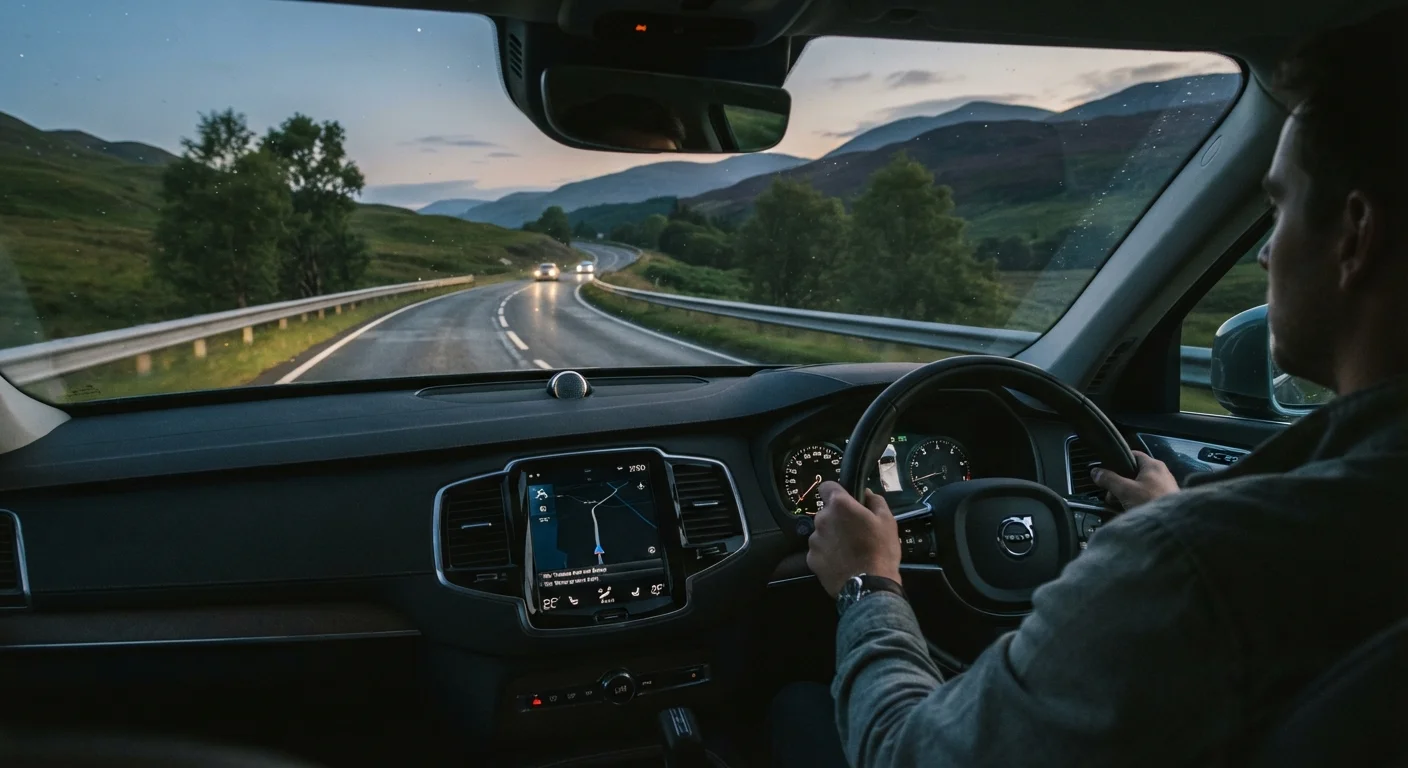
Photo: UnlockTopics.com | Unlocking Trending Content editorial
Key Takeaways
- Cruise control saves fuel on flat, open highways but can increase consumption on hilly terrain.
- On grades, cruise control aggressively accelerates to maintain speed, burning more fuel than a human driver would.
- Adaptive cruise control handles varying speeds better but still isn't perfect on steep or rolling roads.
- Manual throttle modulation on hills - letting speed drop slightly on climbs - is often more fuel-efficient.
- The biggest fuel savings come from smooth, consistent driving habits regardless of cruise control use.
The Flat-Road Assumption Behind Cruise Control's Reputation
Cruise control earned its fuel-saving reputation on long, flat interstate stretches - and in that specific context, the reputation is largely deserved. By maintaining a steady speed, the system eliminates the small speed fluctuations that come from inattentive throttle inputs, which do waste fuel. On a pancake-flat highway with light traffic, holding a constant 65 mph is genuinely more efficient than drifting between 62 and 68.
The problem is that most US driving - even on highways - involves elevation changes. Rolling terrain, mountain passes, and highway grades are far more common than perfectly level road, and it's on these surfaces that cruise control's logic starts working against you.
For a broader look at how road conditions affect efficiency and engine wear, see how highway vs. city driving affects your engine.
Myth
Cruise control always saves fuel, regardless of where or how you're driving.
Fact
Cruise control saves fuel on flat roads, but on hilly terrain it can increase consumption by aggressively compensating for speed loss on grades.
The fuel-saving effect of cruise control is real but conditional. On flat highways, eliminating micro-speed variations reduces unnecessary throttle input. On any meaningful grade, however, the system reacts to slowdowns by demanding full throttle to recover set speed - a less efficient response than an anticipatory human driver easing off before the crest.
Myth
Adaptive cruise control is fuel-efficient because it's more advanced technology.
Fact
Adaptive cruise control is designed primarily for safety and gap-keeping, not fuel economy - and it can still burn excess fuel on hilly roads.
ACC adds radar or camera-based speed modulation for traffic, which does reduce some unnecessary braking and acceleration in congestion. But its fuel behavior on hills is similar to standard cruise control: it prioritizes maintaining a set range rather than smoothing energy use over elevation changes.
Myth
Letting your speed drop slightly on a hill wastes fuel and is inefficient driving.
Fact
Allowing a modest speed reduction on a climb and recovering it naturally on the descent is typically more fuel-efficient than forcing constant speed.
Physics favors the gentle approach. A car climbing a grade at sustained speed requires continuous high power output. Allowing speed to drop 3-5 mph on a climb reduces the throttle demand substantially, and gravity does much of the recovery work on the downslope. This technique - sometimes called "driving the terrain" - is a foundation of hypermiling and professional fuel-economy driving.
Myth
Cruise control is safe to use in rain because it keeps speed steady.
Fact
Using cruise control in wet or icy conditions is a recognized safety risk and is discouraged by most vehicle manufacturers.
In slippery conditions, the system may apply sudden throttle to maintain speed after a momentary wheel slip, which can worsen a skid or cause loss of control. Most manufacturer manuals advise against using cruise control in rain, snow, or ice, and many safety organizations echo this. Consistent speed matters far less in these conditions than driver responsiveness and traction management.
Where Cruise Control Costs You Fuel Instead of Saving It
The core issue is how cruise control responds to hills. When your car begins to slow on an uphill grade, the system interprets that as a speed deviation and responds by pressing hard on the throttle to recover the set speed. That aggressive power demand burns significantly more fuel than if a driver had simply allowed the car to lose a few mph on the climb and then recover naturally on the descent.
A human driver reading the road ahead will often lift off the throttle slightly before a crest, let momentum carry them over, and coast down the other side. Cruise control, reacting rather than anticipating, tends to arrive at the crest still accelerating - then has to throttle back hard or apply brakes on the descent, wasting the energy it just spent.
~10-14%
Fuel savings from steady-speed driving on flat roads
The U.S. Department of Energy notes that maintaining steady highway speed can improve fuel economy by roughly 10-14% compared to variable-speed driving on flat terrain.
Up to 20%
Potential fuel economy loss from aggressive speed correction on grades
Research in driver behavior and fuel consumption has shown that forcing constant speed on hilly roads through aggressive throttle inputs can reduce efficiency by up to 20% versus anticipatory throttle modulation.
Adaptive cruise control (ACC) - which also adjusts for traffic ahead - handles varying conditions better than basic cruise, but it still isn't optimized for fuel economy on hilly terrain. Its primary job is gap management, not energy efficiency.
This connects directly to the value of smooth acceleration and braking habits, which consistently outperform automation on undulating roads.
When to Use Cruise Control - and When to Take Back the Wheel
The practical rule is straightforward: use cruise control when the road ahead is genuinely flat and clear for an extended stretch. Interstate driving across the Great Plains, long desert highways, and similar terrain are ideal candidates. In these conditions, the consistency it provides is a real advantage.
Switch it off - or simply don't engage it - when you're on rolling or hilly terrain, in moderate traffic that requires frequent adjustment, or in wet and wintry conditions where sudden throttle inputs can reduce traction. In rain or snow, cruise control can mask how slippery the surface is, delaying your reaction to a skid.
Don't Use Cruise Control in Wet or Icy Conditions
It's also worth noting that cruise control doesn't account for everything a driver considers: road camber, a car merging ahead, a pothole, or a sharp curve. Staying engaged with the drive is always part of safe, efficient motoring.
Fuel efficiency is rarely about a single feature. Tyre pressure, driving smoothness, and speed all play equally important roles. See how tyre pressure affects fuel efficiency and common fuel myths debunked for more grounded guidance on stretching every tank.
The content on this site is for informational purposes only and is not a substitute for professional advice. Always consult a qualified professional for guidance specific to your situation.