
Your Car's Warning Lights and What They're Actually Telling You

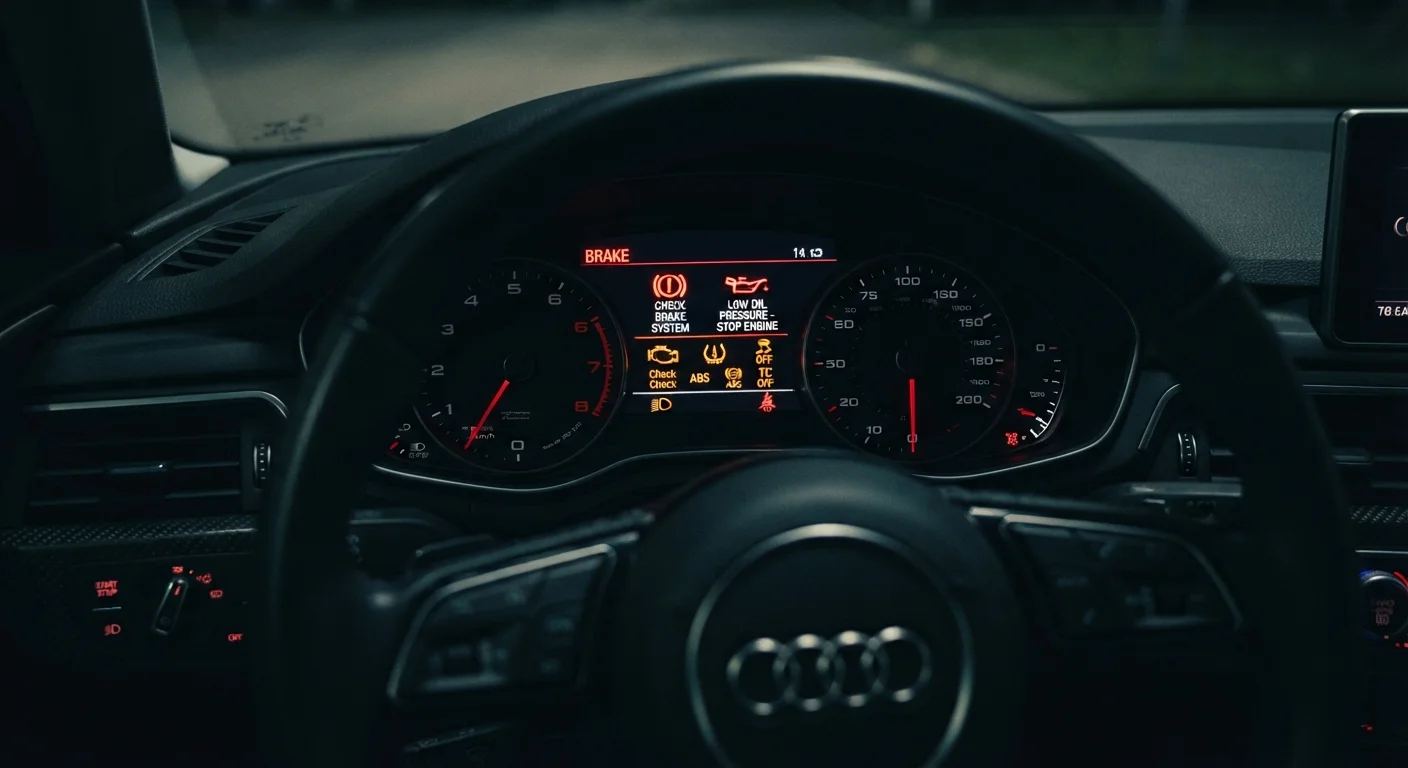
Photo: UnlockTopics.com | Unlocking Trending Content editorial
Warning Lights: Not All Alerts Are Created Equal
Dashboard warning lights are your car's built-in communication system - but their urgency varies enormously. Automakers generally use a three-color system: red signals a serious or potentially dangerous issue requiring immediate attention, amber/yellow indicates a condition that needs service but usually isn't an emergency, and green or blue lights are informational (think high beams or cruise control active). Understanding this hierarchy helps you make smarter, calmer decisions when something lights up mid-commute.
Your owner's manual remains the definitive reference for your specific vehicle - symbol shapes can vary slightly by manufacturer. That said, most modern cars follow industry-standard icons established by international automotive standards bodies.
Red Lights: Stop and Act
Red warning lights generally mean pull over safely and address the issue now - or at minimum, avoid driving until it's diagnosed.
- Engine Temperature (thermometer in water): Your engine is overheating. Pull over, turn off the engine, and let it cool. Continuing to drive can warp the cylinder head or seize the engine. Check your coolant level only after the engine is fully cool - see our guide to identifying and checking car fluids for safe steps.
- Oil Pressure (oil can symbol): Low oil pressure - not simply low oil level - means your engine may not be getting adequate lubrication. Stop driving immediately. Running an engine with low oil pressure can cause catastrophic internal damage within minutes.
- Battery (rectangle with + and − terminals): The charging system has failed. Your car is running on battery reserve, which typically lasts 20-30 minutes. Get to a safe location; the vehicle will stall when the reserve is depleted. Car batteries rarely give obvious advance warning - this light is often the first sign of a deeper electrical issue.
- Brake System (exclamation mark in circle or "BRAKE"): Could indicate low brake fluid, a hydraulic fault, or that the parking brake is engaged. If the parking brake is off and the light remains, have it inspected immediately. Delaying brake repairs carries real safety consequences.
Amber Lights: Schedule Service Soon
Amber lights rarely demand you pull over instantly, but ignoring them reliably turns a manageable repair into an expensive one.
- Check Engine (engine outline): One of the most misunderstood lights. A steady light typically means an emissions or sensor fault - drive to a shop within a few days. A flashing check engine light signals an active engine misfire that can damage the catalytic converter; reduce speed and seek service promptly.
- TPMS (tire with exclamation mark): Tire Pressure Monitoring System has detected a tire at least 25% below its recommended pressure. Check and inflate all four tires; don't rely on visual inspection alone - a tire can look fine while significantly underinflated.
- Traction Control / Stability Control (car with wavy lines): When flashing, it's actively working to prevent a skid - that's normal. If it stays on solid, the system may be disabled or faulty, reducing your vehicle's ability to manage slippery conditions.
- ABS ("ABS" in circle): Anti-lock braking system has a fault. Regular brakes still work, but the ABS safety assist won't function. Serviceable within a week, but don't delay significantly.
OBD-II
On-Board Diagnostics II - a standardized system built into most vehicles sold in the US since 1996 that monitors engine and emissions performance. A code reader plugged into the OBD-II port can retrieve specific fault codes when warning lights appear.
TPMS
Tire Pressure Monitoring System - a sensor-based system that alerts the driver when one or more tires drops significantly below the recommended inflation pressure. Required on all new US passenger vehicles since 2008.
Catalytic Converter
An emissions control device in the exhaust system that converts harmful combustion byproducts into less harmful gases. Engine misfires can force unburned fuel through this component, causing expensive damage.
ABS
Anti-lock Braking System - a safety system that prevents wheel lockup during hard braking, allowing the driver to maintain steering control. An ABS fault means the system's safety assist is unavailable, though standard braking still functions.
Oil Pressure
The force at which engine oil circulates through internal components. Low oil pressure - distinct from low oil level - means the engine is not receiving adequate lubrication and can suffer severe internal damage very quickly.
Common Misconceptions and Smart Habits
One persistent myth: if the check engine light comes on and the car seems to drive fine, it can be ignored indefinitely. In reality, that stored fault code points to a specific issue - often an oxygen sensor or evaporative emissions fault - that, left unaddressed, can affect fuel economy and eventually cause further failures. Many common maintenance beliefs are outdated or simply wrong.
Another habit worth building: when any new light appears, note whether it's solid or flashing, what color it is, and whether any unusual sounds or driving sensations accompany it. This information is genuinely useful to a mechanic and speeds up diagnosis. A basic OBD-II code reader - available at most auto parts stores - can retrieve the specific fault code for check engine light situations before you visit a shop. For broader smarter driving habits and vehicle awareness, treating your dashboard as a communication tool rather than background noise is one of the simplest shifts you can make.
This article provides general educational information about dashboard warning lights. Always consult your vehicle's owner's manual and a qualified mechanic for diagnosis and repair specific to your make and model.
The content on this site is for informational purposes only and is not a substitute for professional advice. Always consult a qualified professional for guidance specific to your situation.