
Smart Speakers vs. Smart Displays: Which Fits Your Home Better?

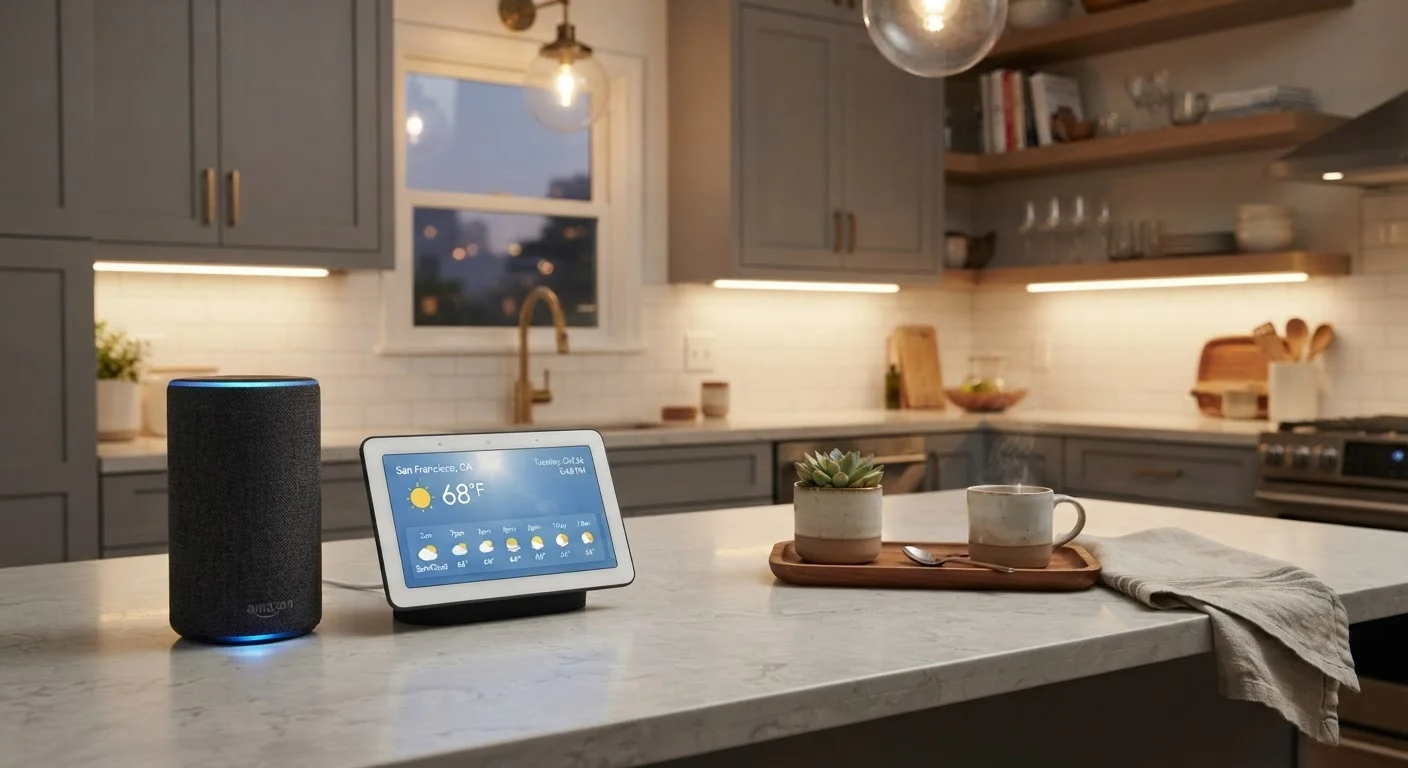
Photo: UnlockTopics.com | Unlocking Trending Content editorial
Key Takeaways
- Smart speakers rely entirely on voice interaction; smart displays add a touchscreen for visual feedback.
- Smart displays typically cost more and take up more counter space than comparably capable smart speakers.
- Both device types connect to smart home ecosystems, but displays offer richer visual control interfaces.
- Kitchens and living rooms benefit most from smart displays; bedrooms and offices often suit speakers.
- Privacy considerations differ slightly — displays have cameras for video calls, speakers generally do not.
What Each Device Actually Does
Both smart speakers and smart displays are voice-activated devices that connect to a digital assistant — such as Amazon Alexa or Google Assistant — to answer questions, control smart home devices, play music, set timers, and more. The fundamental difference is straightforward: smart speakers communicate exclusively through sound, while smart displays add a touchscreen to the mix.
A smart speaker responds to your voice and speaks back. It can tell you the weather, play a playlist, dim your lights, or add something to your shopping list — all without you looking at it. That audio-only design makes it unobtrusive and easy to place anywhere with a power outlet.
A smart display does all of that plus shows visual content. You might see a weather map, a video call, a photo slideshow, a YouTube clip, or a visual interface for controlling your smart home. It responds to touch and voice. For a broader understanding of how these devices fit into a connected home, see our guide to smart home devices.
| Criterion | Smart Speaker | Smart Display |
|---|---|---|
| Interaction method | Voice only | Voice and touchscreen |
| Screen | None | Built-in (varies by size) |
| Camera | Not typically included | Usually included for video calls |
| Typical cost | Lower entry price | Higher due to display hardware |
| Physical footprint | Compact, easy to tuck away | Larger, needs dedicated surface |
| Best room placement | Bedroom, office, small spaces | Kitchen, living room, entryway |
| Video calling | Not supported | Supported |
| Smart home control | Voice commands only | Visual dashboard + voice |
Where Each Device Tends to Work Best
Room placement is one of the clearest ways to evaluate which device suits your household. Smart speakers work well in bedrooms, home offices, laundry rooms, and anywhere you want ambient audio or quick voice commands without a glowing screen competing for attention. Their compact footprint and simpler design blend into a space without demanding visual real estate.
Smart displays tend to shine in high-activity communal spaces — particularly kitchens, living rooms, and entryways. In a kitchen, a screen can show recipe steps, countdown timers with visual indicators, or a quick weather check before you leave. In a living room, it can serve as a digital photo frame, a video calling station, or a hub for viewing short streaming clips.
35%
U.S. adults owning a smart speaker
According to Pew Research Center data, roughly 35% of U.S. adults reported owning a voice-activated smart speaker as of a recent national survey.
2×
Smart display growth vs. speaker growth
Industry analysts have noted that smart display shipments have grown at roughly twice the rate of standalone smart speakers in recent product cycles, reflecting rising demand for screen-equipped devices.
If you're not sure how either type of device fits into a broader smart home plan, this first-time smart home guide walks through how ecosystems, compatibility, and automation work together before you commit to any device.
Privacy, Cost, and Practical Trade-offs
Smart displays include a front-facing camera — primarily for video calls — that smart speakers lack. Both device types include always-on microphones to detect wake words, which is a shared privacy consideration. However, the addition of a camera on a display introduces one more potential data surface in your home. Most devices offer physical mute buttons and camera shutters, but it's worth understanding that trade-off before placing one in a bedroom or private space.
Cost varies widely across both categories depending on screen size and capability, but smart displays generally cost more than entry-level smart speakers. Displays are also physically larger and require more counter or shelf space.
Ecosystem compatibility is largely shared — both device types work within the same platform families (such as Amazon's Alexa ecosystem or Google's ecosystem). If you're weighing long-term lock-in risks or cross-device compatibility, this overview of smart home compatibility covers what to consider before committing.
Ecosystem Lock-In Is Real
For households already using streaming sticks or smart TVs, it's worth considering how a smart display fits alongside existing screens. Comparing streaming options can help clarify which device handles which use case so you don't end up with overlapping hardware.
The content on this site is for informational purposes only and is not a substitute for professional advice. Always consult a qualified professional for guidance specific to your situation.