
SPF in Moisturisers vs. Standalone Sunscreen: What the Difference Actually Means

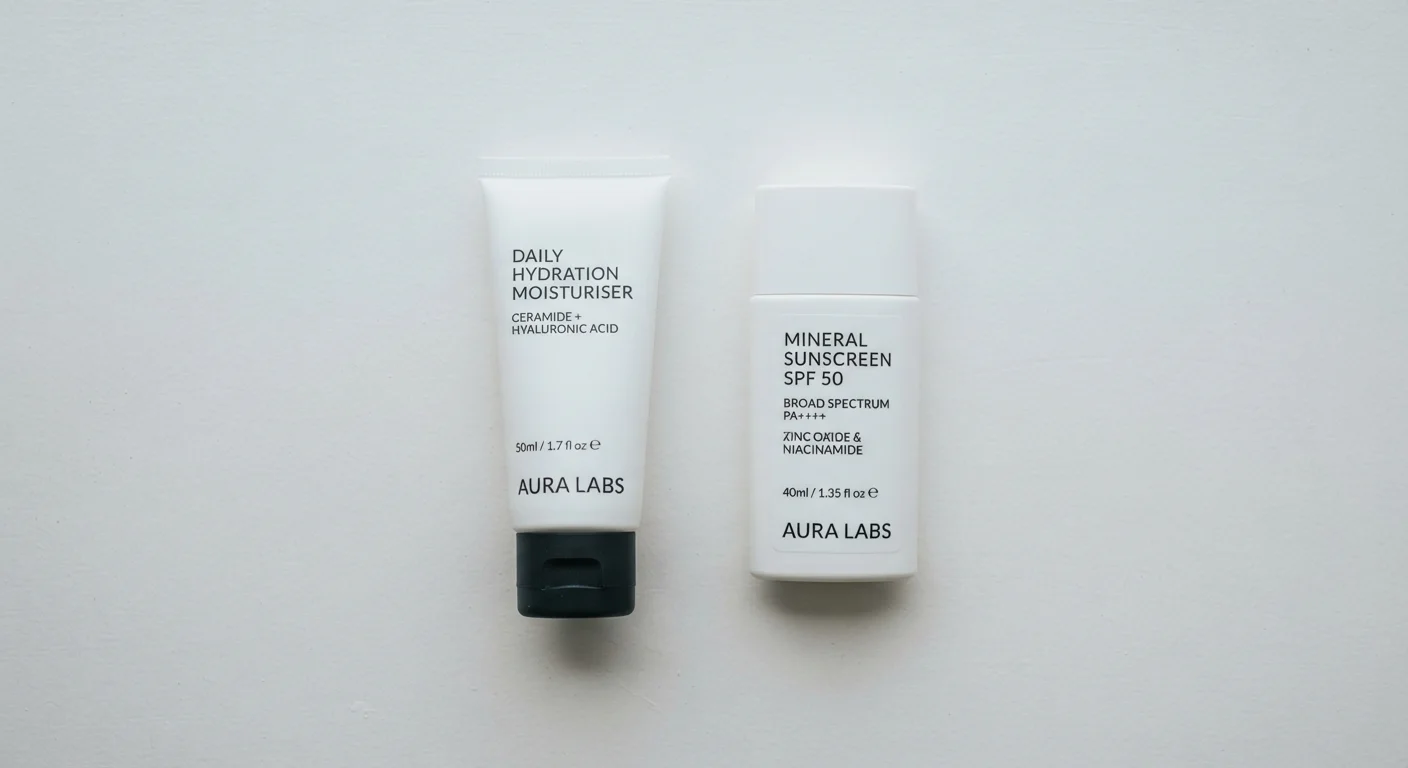
Photo: UnlockTopics.com | Unlocking Trending Content editorial
Key Takeaways
- SPF moisturisers offer convenience but typically deliver lower real-world UV protection than standalone sunscreens.
- Most people apply far less product than the amount used in SPF lab testing, which significantly reduces effective protection.
- Standalone sunscreens are formulated specifically to adhere to skin and resist breakdown from UV exposure.
- Layering a separate sunscreen over moisturiser generally provides more reliable protection than relying on a combined product.
- Neither format replaces the need for reapplication — every two hours during sun exposure is the standard guidance.
- Skin type, routine complexity, and daily UV exposure level should all factor into which approach makes sense for you.
How SPF Is Measured — and Why Application Amount Changes Everything
SPF, or Sun Protection Factor, is determined in controlled lab conditions using a standardised application amount: 2 milligrams of product per square centimetre of skin. That's roughly a full teaspoon for the face and neck alone. In practice, most people apply closer to 25–50% of that amount, which can reduce effective SPF dramatically — an SPF 30 product, applied lightly, may function closer to SPF 10 or less in real-world use.
This matters enormously when comparing SPF moisturisers to standalone sunscreens. With a dedicated sunscreen, a person is usually applying it as the primary protective step and is more likely to use an adequate quantity. With an SPF moisturiser, the temptation is to use only as much as feels comfortable for hydration — which is nearly always less than the amount needed for the stated protection level.
This isn't a flaw unique to moisturiser formulas. It's a behavioural pattern that affects all SPF products. But because standalone sunscreens are perceived as a specific UV-protection step, users tend to apply them more deliberately. That distinction in usage behaviour often matters more than the SPF number printed on the label. For a broader look at how skincare application habits affect outcomes, see our guide to skincare layering.
Formulation Differences That Affect Real-World Protection
Beyond how much product is applied, the formulation itself plays a meaningful role. Dedicated sunscreens are engineered around one primary goal: maintaining UV-filtering efficacy on the skin's surface. Their textures, film-forming agents, and UV filter concentrations are optimised for that purpose.
SPF moisturisers, by contrast, are optimised for skin hydration first. UV filters are incorporated into an existing moisturiser base, which can affect how the filters distribute across the skin, how well they adhere, and how stable they remain under UV exposure. Emollients and humectants in moisturisers can dilute the concentration of UV filters or interfere with even film formation — though the degree varies significantly by product.
| Criterion | SPF Moisturiser | Standalone Sunscreen |
|---|---|---|
| Primary purpose | Hydration with incidental UV protection | Dedicated UV protection |
| UV filter concentration | Often lower; diluted by moisturiser base | Higher; formulated to optimise coverage |
| UVA protection | Varies; not always prioritised | More consistently broad-spectrum |
| Typical application amount | Usually under the recommended quantity | More likely applied in full quantity |
| Ease of reapplication | Impractical over makeup or throughout the day | Easier with lightweight or spray formats |
| Routine simplicity | One fewer product step | Requires a separate application step |
| Suitability for high UV exposure | Generally insufficient for prolonged exposure | Appropriate for extended outdoor use |
It's also worth noting that moisturisers with SPF frequently focus on broad-spectrum UVB protection (which drives the SPF number) without always offering equivalent UVA protection. Standalone sunscreens, particularly those labelled broad-spectrum, are more consistently formulated to address both UVA and UVB wavelengths. UVA rays penetrate more deeply into the skin and are associated with premature ageing and long-term skin damage — a point often overlooked in SPF discussions. Common sunscreen misconceptions, including assumptions about UVA coverage, are worth understanding before settling on a routine.
When a Combined Product Is Genuinely Sufficient
The case against SPF moisturisers is often overstated. For people with low daily UV exposure — those who commute briefly, work indoors, and are rarely outside for extended periods — a well-formulated SPF moisturiser with a broad-spectrum rating provides a meaningful baseline of protection that is far better than none at all.
Consistency is ultimately more protective than perfection. A person who reliably applies an SPF 20 moisturiser every morning will accrue better long-term skin protection than someone who occasionally applies a high-SPF standalone sunscreen. Simplicity supports compliance, and compliance is a genuine advantage of combined products.
A Note on SPF Numbers and Realistic Expectations
That said, neither format removes the need for reapplication. SPF protection degrades with UV exposure, sweat, and physical contact regardless of the product type. Dermatologists generally recommend reapplying every two hours during meaningful sun exposure — something most SPF moisturisers are not practical for throughout a full day. This is one area where a lightweight standalone sunscreen in a portable format holds a practical edge.
If you're unsure how SPF products interact with your existing routine — particularly when using active ingredients like retinol — understanding retinol's photosensitivity implications is a useful next step. And don't overlook the fact that sun protection isn't seasonal — seasonal skincare myths often include the assumption that SPF can be skipped outside of summer.
This article is for general informational and educational purposes only and does not constitute medical or dermatological advice. Consult a qualified dermatologist or healthcare professional for guidance specific to your skin type and concerns.
The content on this site is for informational purposes only and is not a substitute for professional advice. Always consult a qualified professional for guidance specific to your situation.