
Good Debt vs. Bad Debt: Is the Distinction Actually Useful?

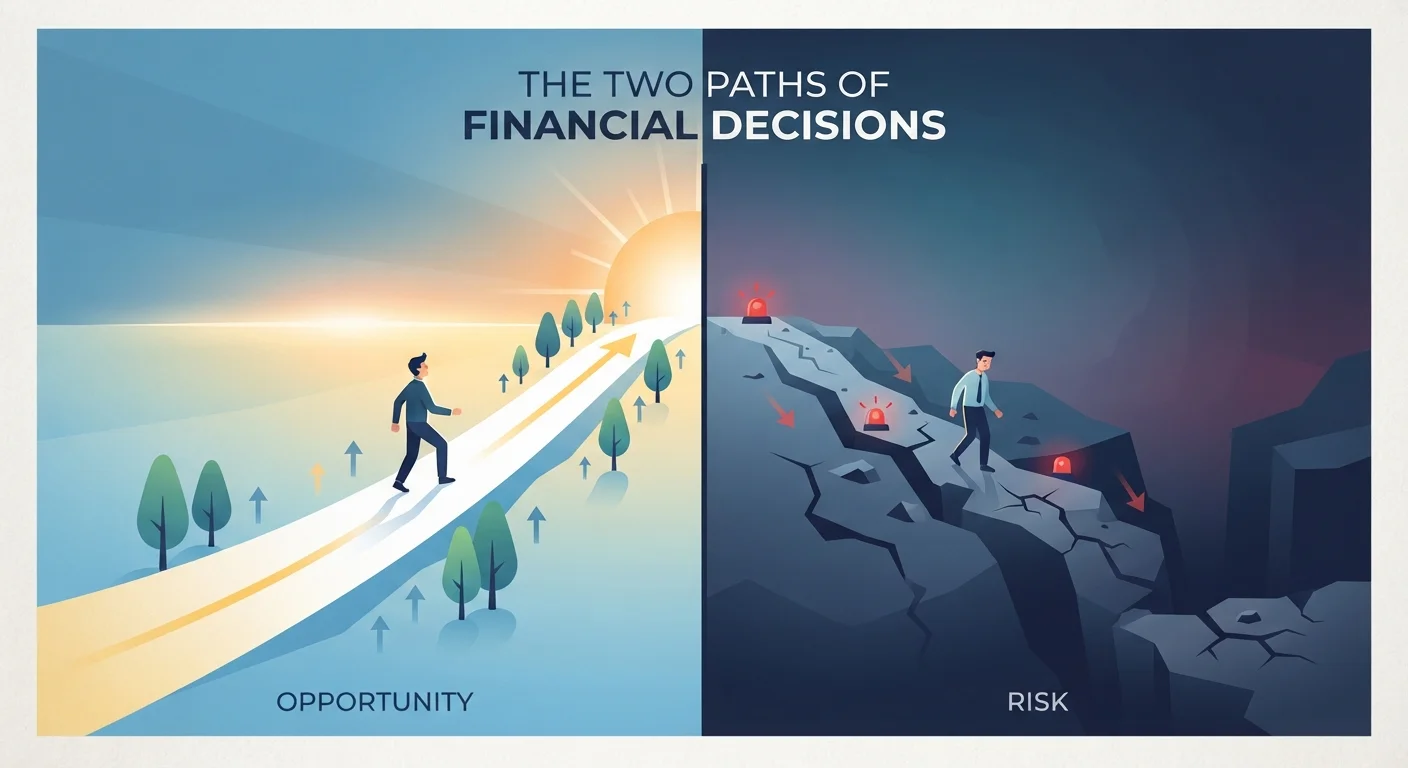
Photo: UnlockTopics.com | Unlocking Trending Content editorial
Key Takeaways
- Debt labeled 'good' can still become harmful if the interest rate, loan amount, or repayment terms are unfavorable.
- The good/bad framework is a rough guide, not a precise financial tool.
- Context matters more than category: the same type of debt affects people differently based on income, job stability, and existing obligations.
- High-interest consumer debt is almost always worth paying down quickly, regardless of what it was used for.
- For major borrowing decisions, a licensed financial adviser can help you evaluate your specific situation.
Where the Idea Comes From
The good debt/bad debt framework became a fixture of personal finance advice during the 1990s and 2000s. The core logic is straightforward: some borrowing finances assets that grow in value or boost your income, while other borrowing finances consumption that leaves you with nothing durable to show for it. A home loan that builds equity looks very different from a credit card balance carried to pay for a vacation.
The distinction has practical value as a mental shortcut. When you're deciding whether to take on a loan, asking "does this put me in a better financial position over time?" is a reasonable first filter. The problem arises when the labels get treated as hard rules rather than starting points.
For a fuller picture of how credit and debt work together in your financial life, see our complete guide to debt and credit.
What Usually Falls Into Each Category
Personal finance educators typically group debt into these buckets:
- Often called "good" debt: Mortgages, federal student loans, and sometimes small-business loans. The argument is that each finances something with long-term return potential - a home, a degree, a business.
- Often called "bad" debt: High-interest credit card balances, payday loans, and financing for depreciating purchases like electronics or fast fashion. The interest cost tends to accumulate quickly while the purchased item loses value.
- The grey zone: Auto loans sit in the middle. A car is a depreciating asset, but for many people it's necessary for employment. Whether an auto loan is "good" depends heavily on the interest rate and how essential the vehicle is.
~$1.77T
Total U.S. student loan debt outstanding
According to Federal Reserve data, student loan balances - commonly labeled 'good debt' - represent one of the largest categories of consumer debt in the United States.
20%+
Typical credit card APR in the U.S.
The Federal Reserve has tracked average credit card interest rates consistently above 20% in recent periods, underlining why carrying a revolving balance is costly.
~$12.5T
Total U.S. mortgage debt outstanding
Federal Reserve data shows mortgage debt dwarfs all other household debt categories, reflecting how central home borrowing is to American household balance sheets.
Understanding whether a specific loan is secured or unsecured can also shift how you think about it - see secured vs. unsecured debt explained for more on that distinction.
Where the Framework Actually Breaks Down
The good/bad framing has real blind spots worth knowing about.
Interest rates matter more than category
A student loan at 12% interest is arguably more damaging than a mortgage at 4%, even though conventional wisdom calls the first "good" and the second also "good." The rate you pay is often a better guide to urgency than the loan's label.
The same debt hits people differently
A $30,000 student loan is a manageable investment for someone entering a high-paying field with stable job prospects. For someone in a lower-wage sector facing an unstable economy, the same loan represents a very different risk. Labels can't capture that context.
"Good debt" can become a permission slip
One subtle danger is that calling certain borrowing "good" can give people psychological cover to take on more of it than is wise. Buying more house than your income supports doesn't become smart just because mortgages are considered good debt.
Focus on the rate, not just the label
If you're concerned your debt load may already be too high, warning signs that debt is becoming unmanageable outlines indicators worth paying attention to.
A More Useful Way to Evaluate Debt
Rather than starting with a category, try asking these questions about any loan you're considering:
- What is the actual interest rate? A lower rate gives you more room; a high rate shrinks your margin for error quickly.
- Does this borrowing finance something that retains or grows value? If yes, the case for it is stronger - but only if you can handle the payments.
- Is my income stable enough to cover payments without sacrificing essentials? Debt that stretches you thin is risky regardless of category.
- What's my exit strategy? Knowing how and when you plan to pay off the loan is more useful than knowing its label.
If you're already managing multiple debts, comparing the debt snowball and debt avalanche methods can help you decide how to prioritise payoff. For those carrying several balances, understanding debt consolidation may also be worth exploring.
This article is for general informational purposes only and does not constitute personalised financial advice. For guidance specific to your situation, consider consulting a licensed financial adviser or credit counselor.
Frequently Asked Questions
The content on this site is for informational purposes only and is not a substitute for professional advice. Always consult a qualified professional for guidance specific to your situation.