
Debt Snowball vs. Debt Avalanche: Two Repayment Strategies Compared

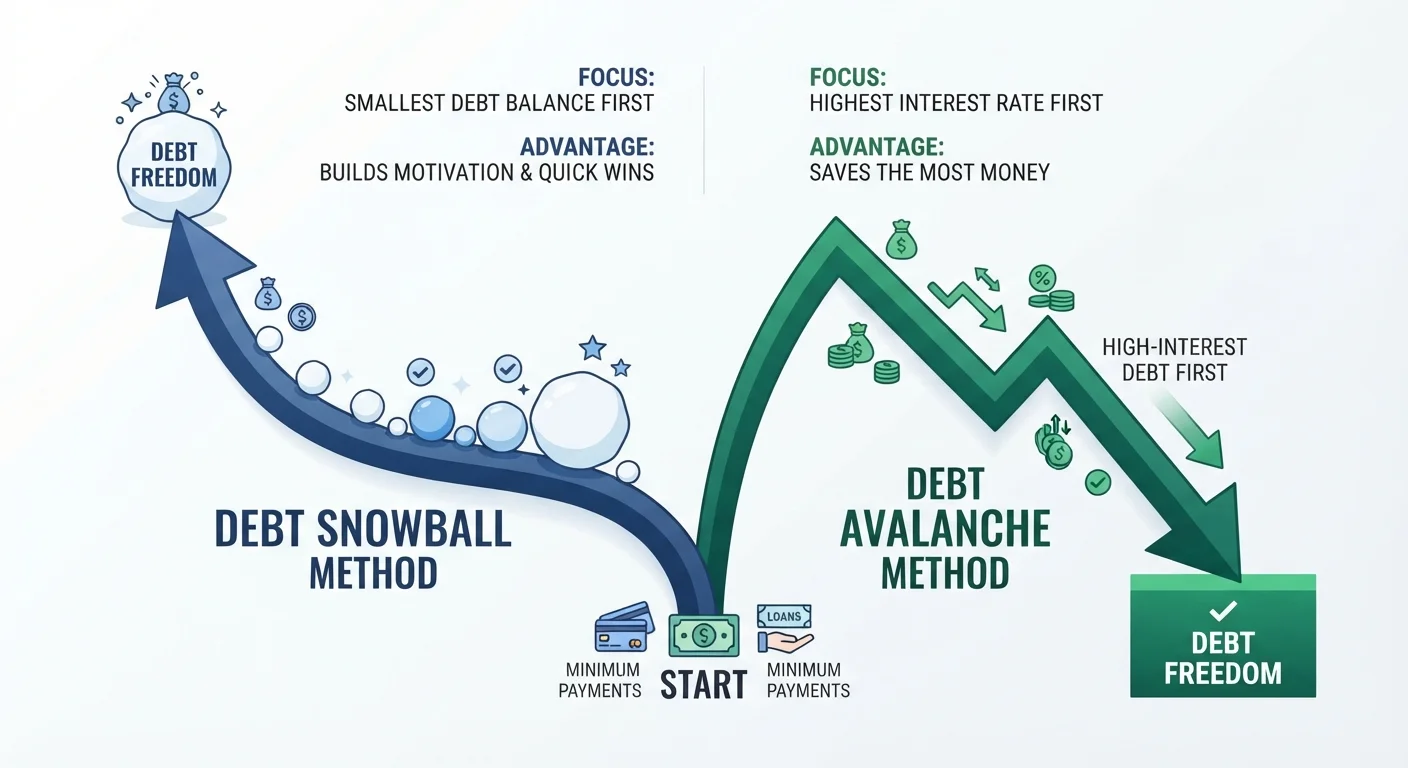
Photo: UnlockTopics.com | Unlocking Trending Content editorial
Key Takeaways
- The debt snowball targets your smallest balances first, building momentum through early wins.
- The debt avalanche targets your highest-interest debt first, minimizing total interest paid over time.
- Neither method is universally superior - your personality and financial situation both matter.
- Both strategies require making minimum payments on all debts while putting extra money toward one target.
- Consulting a financial adviser can help you choose the approach that fits your specific circumstances.
The Core Idea Behind Both Methods
When you're juggling multiple debts - credit cards, personal loans, medical bills - it can be hard to know where to focus your extra dollars. Two widely recognized strategies offer structure: the debt snowball and the debt avalanche.
Both methods share the same foundation: you make the minimum payment on every debt each month, then direct any additional money toward one specific target debt. What differs is how you choose that target. Understanding what kind of debt you're carrying - secured or unsecured - can also help you prioritize before picking a method.
Start With a Complete Debt Inventory
How the Debt Snowball Works
With the snowball method, you rank your debts from smallest balance to largest, regardless of interest rate. You throw every extra dollar at the smallest balance until it's gone, then roll that freed-up payment into the next-smallest debt - and so on.
The logic is psychological. Paying off a small debt quickly delivers a tangible win, which research in behavioral finance suggests can reinforce the habit of continued repayment. You build momentum, much like a snowball rolling downhill and growing as it goes.
Example: If you have a $400 medical bill, a $1,200 store card, and a $5,000 personal loan, you'd attack the $400 bill first - even if the personal loan carries a higher interest rate.
~$1,000+
Potential interest savings with avalanche over snowball
The exact difference varies by debt amounts and rates, but higher-rate debts left unpaid longest can compound substantially over time.
77%
Americans carrying some form of debt
According to Experian's consumer credit data, the vast majority of U.S. adults carry at least one form of debt, making repayment strategy a widely relevant decision.
How the Debt Avalanche Works
The avalanche method ranks debts by interest rate, from highest to lowest. You put extra money toward the highest-rate debt first. Once it's paid off, that payment amount rolls to the next highest-rate debt.
Because high-interest debt costs the most money over time, targeting it first mathematically reduces the total interest you'll pay - often by a meaningful amount compared to the snowball approach.
Example: If your store card charges 24% APR, your personal loan charges 12%, and a car loan charges 6%, you'd focus extra payments on the store card first, regardless of balance size.
The trade-off: if your highest-interest debt also carries a large balance, it could be months or years before you see a debt fully eliminated - which requires patience and discipline.
Side-by-Side Comparison
Here's how the two strategies stack up across the criteria that matter most to most people:
| Debt Snowball | Debt Avalanche | |
|---|---|---|
| Ranking order | Smallest balance first | Highest interest rate first |
| Primary benefit | Motivational momentum from quick wins | Less total interest paid over time |
| Time to first payoff | Often faster - targets small balances | Potentially slower if top-rate debt is large |
| Mathematical efficiency | May cost more in total interest | Typically the lower-cost approach |
| Best personality fit | Needs visible progress to stay on track | Comfortable with long-term focus |
| Complexity | Simple to set up and follow | Requires tracking rates accurately |
For those carrying many different debt types, debt consolidation is another option worth understanding - though it involves its own trade-offs.
Which Approach Might Suit You?
There's no single right answer. Personal finance research consistently shows that the strategy you stick with outperforms the one you abandon. A few questions to consider:
- Do you need quick wins to stay motivated? The snowball may be a better fit.
- Are you comfortable with delayed gratification if it saves money? The avalanche could pay off more.
- Are your balances and rates similar across debts? The two methods may produce nearly identical results.
Either way, pairing your debt-payoff strategy with a broader savings plan strengthens your financial foundation. Our saving strategies hub covers practical ways to build savings alongside debt repayment. For a fuller view of how debt and credit interact, see the complete picture on debt and credit.
Don't Skip Minimum Payments
This article is for general informational and educational purposes only and does not constitute personalised financial or legal advice. Consider speaking with a licensed financial adviser before making decisions about your debt repayment strategy.
The content on this site is for informational purposes only and is not a substitute for professional advice. Always consult a qualified professional for guidance specific to your situation.