
The Envelope Method: How Dividing Cash by Category Shapes Spending Habits

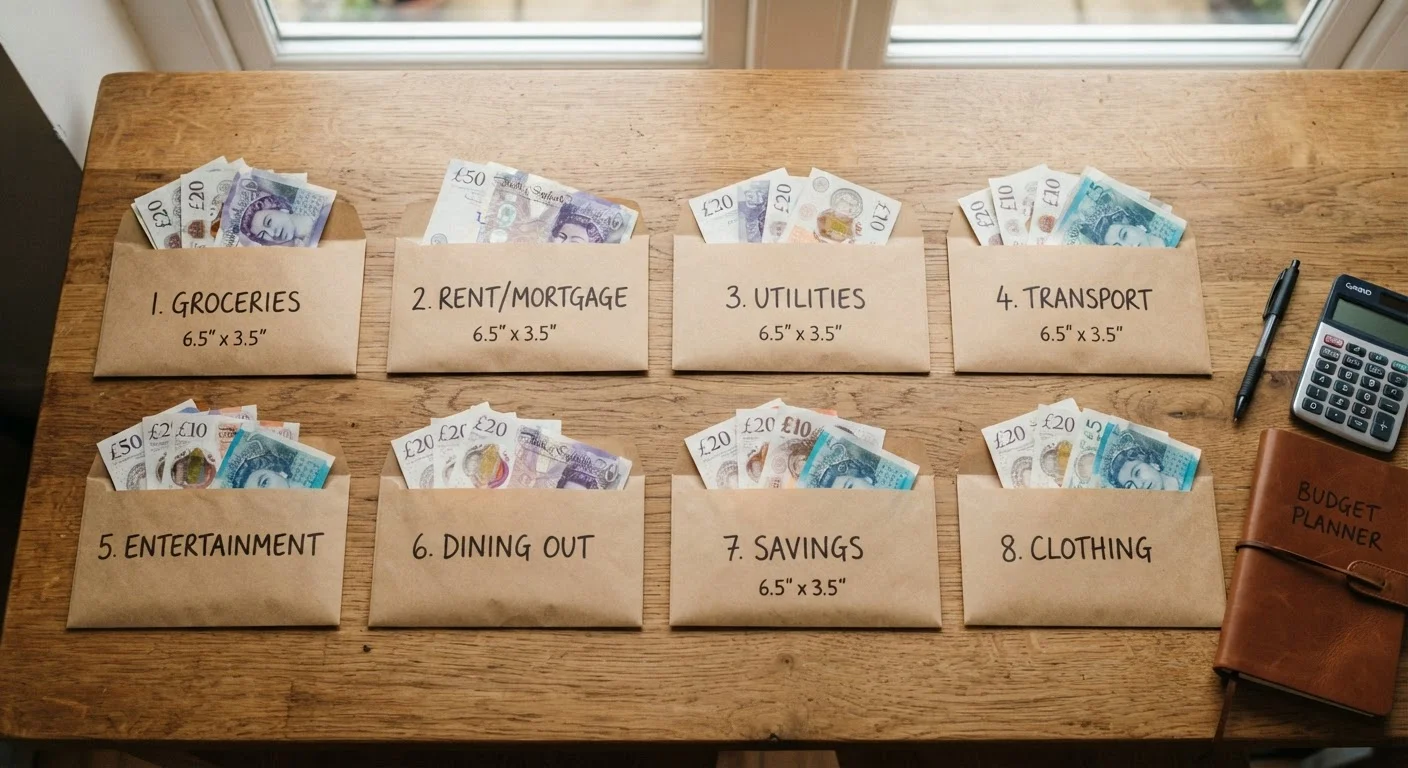
Photo: UnlockTopics.com | Unlocking Trending Content editorial
Key Takeaways
- The envelope method divides cash into labeled categories to enforce hard spending limits.
- It is especially effective for discretionary spending like groceries, dining, and entertainment.
- Digital versions of the system replicate the same logic without requiring physical cash.
- The method works best when paired with an understanding of which expenses are truly flexible.
- It suits people who struggle to track spending mentally but need a tangible system to stay on course.
Where the Idea Comes From
The envelope method predates modern personal finance by decades. Households with tight budgets have long used physical envelopes or jars to separate rent money from grocery money, preventing one expense from quietly eating another. The system became more widely discussed in personal finance circles through mid-20th century budgeting guides and gained renewed attention as a structured antidote to digital spending, where a swipe feels costless in the moment.
The core insight hasn't changed: when money is divided and labeled before it's spent, the limit becomes real in a way that a spreadsheet number often doesn't. You don't need to mentally track how much you've spent on takeout this month - the envelope tells you.
A Method Older Than Spreadsheets
How It Works in Practice
At the start of each budget period - usually a month or a pay cycle - you allocate your after-tax income across spending categories. Each category gets a fixed dollar amount. In the traditional version, you withdraw that amount in cash and place it in a labeled envelope. When the cash is gone, spending in that category is done.
Common envelope categories include groceries, dining out, gas, entertainment, clothing, household supplies, and personal care. Fixed, non-negotiable expenses like rent, utilities, and loan payments typically stay outside the envelope system because their amounts don't vary. To understand which expenses genuinely belong inside envelopes versus which are better handled separately, it helps to have a clear picture of your spending - see discretionary vs. non-discretionary spending for a practical breakdown.
Start With Just Two or Three Envelopes
Digital versions of the system use budgeting apps or multiple bank sub-accounts labeled by category. The mechanics differ, but the principle is identical: pre-assign amounts and treat the limit as firm.
Why It Changes Spending Behavior
The psychological mechanism behind the envelope method is straightforward. Most people don't overspend because they're careless - they overspend because spending feels abstract. A credit card transaction doesn't register as a loss the way handing over cash does. By making money finite and visible per category, the envelope system reintroduces friction at the point of decision.
~18%
Less spent when using cash vs. card
Multiple studies in consumer behavior research have found that people tend to spend meaningfully less when transacting with physical cash compared to cards, due to the tangible nature of the exchange.
1 in 3
Americans without a working monthly budget
Surveys conducted by organizations including the National Foundation for Credit Counseling have consistently found a significant share of American adults do not follow a formal budget.
Research in behavioral economics supports this. The act of labeling money for a specific purpose - whether a physical envelope or a digital bucket - tends to reduce spending in that category compared to drawing from an undifferentiated pool. This is sometimes called the "pain of paying," and it's more pronounced when the transaction is tangible.
The method also forces a budgeting conversation to happen before the month starts rather than as a scramble afterward. That upfront allocation is where the real financial decision-making occurs.
Limitations Worth Knowing
The envelope method has real constraints. Carrying cash is inconvenient for most people today, and many transactions - online purchases, subscriptions, auto-pay bills - don't accommodate cash at all. This is why digital adaptations have largely replaced the physical version for many users.
The system also requires initial effort to set up well. If your category amounts are unrealistic - too tight on groceries, too generous on dining - the envelopes won't reflect how you actually live, and you'll either bust them constantly or find the exercise meaningless. It usually takes two or three budget cycles to calibrate amounts accurately.
Finally, the envelope method is a tracking and limiting tool, not a savings strategy on its own. If you want to build savings alongside it, you'll need to treat savings as its own envelope - or pair the method with a broader savings structure. Setting up a savings system that works with your real life covers how to integrate that layer practically.
Who It Tends to Suit Best
The envelope method works best for people who find abstract budget targets hard to act on. If you've tried tracking expenses after the fact and found it discouraging, pre-allocating money before you spend it can feel more manageable. It's particularly useful for anyone trying to rein in a specific spending category - groceries, restaurants, or personal spending - without overhauling their entire financial life at once.
It tends to be less necessary for people who naturally track their spending mentally or who have very stable, predictable expenses with little discretionary variation. For those individuals, a broader framework like the 50/30/20 rule may offer enough structure with less day-to-day upkeep.
If you want to see how the envelope approach fits alongside other budgeting systems, comparing popular budgeting frameworks is a useful next step.
“The envelope system is really just a way of making your decisions in advance - when you're calm and thinking clearly - rather than in the moment when temptation is highest.”
— Jesse Mecham, Founder of YNAB (You Need A Budget) and author on personal budgeting methods
This article is for general informational purposes only and does not constitute personalized financial advice. Consider speaking with a qualified financial professional about your specific situation.
Frequently Asked Questions
The content on this site is for informational purposes only and is not a substitute for professional advice. Always consult a qualified professional for guidance specific to your situation.