
The 50/30/20 Rule: A Plain-English Breakdown

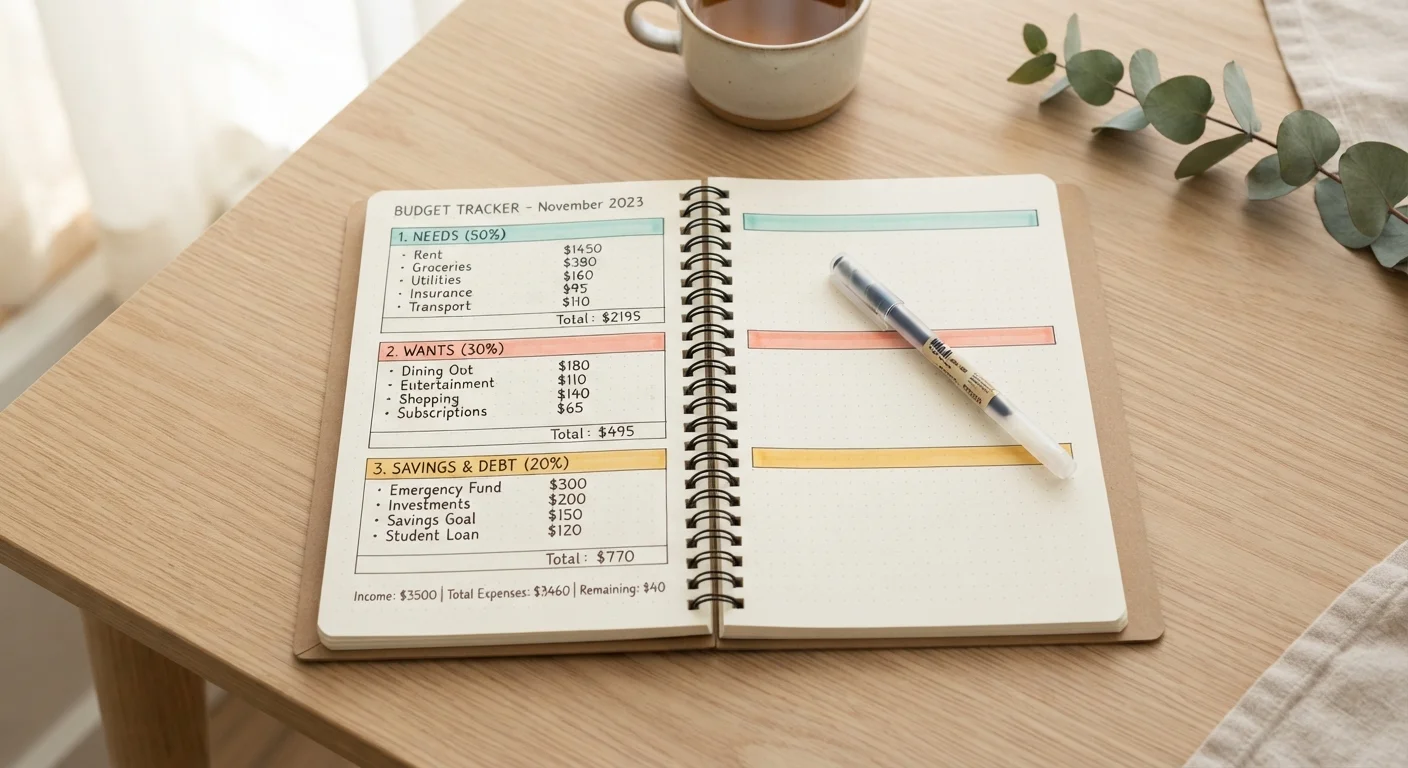
Photo: UnlockTopics.com | Unlocking Trending Content editorial
Key Takeaways
- The 50/30/20 rule splits take-home pay into needs, wants, and savings using fixed percentages.
- "Needs" covers essentials like rent, utilities, groceries, and minimum debt payments.
- "Wants" includes discretionary spending - dining out, subscriptions, and entertainment.
- The 20% savings category can cover an emergency fund, retirement contributions, and extra debt payoff.
- The rule works best as a starting point; real budgets often require personal adjustments.
- It uses after-tax income, not your gross paycheck, as the calculation base.
Where the Rule Comes From
The 50/30/20 framework was popularized in the book All Your Worth as a way to give ordinary households a clear, memorable structure for managing money without needing a finance degree. The central idea: rather than obsessing over line items, divide your monthly take-home pay into three broad buckets and keep each within its target range.
It's worth noting what the rule is and isn't. It's a general guideline - a starting point - not a rigid prescription. If your city has high rents or you're paying down significant student loans, your numbers may look different than the textbook percentages. That's expected and manageable.
If you're building a budget for the first time and want a step-by-step approach, our monthly budget walkthrough is a good companion to this overview.
The Three Buckets Explained
50% - Needs
Needs are non-negotiable expenses. This includes rent or mortgage payments, utilities, groceries, health insurance, transportation costs required for work, and minimum payments on any debts. A useful test: if you stopped paying for it, would you face serious consequences - eviction, car repossession, or a damaged credit score? If yes, it's a need.
Some expenses feel essential but are actually wants in disguise. A $15-per-month gym membership may be meaningful to your health, but it isn't a necessity in the same category as electricity. Being honest about this distinction keeps the 50% bucket from quietly ballooning.
30% - Wants
Wants cover everything you choose to spend on beyond the essentials: dining out, streaming services, clothing beyond basics, hobbies, and travel. This isn't the "guilty spending" category - it's the part of your budget that makes life worth living. The 30% allocation is deliberately generous because sustainable budgets account for enjoyment, not just survival.
20% - Savings and Debt Repayment
The final bucket addresses your financial future. This includes contributions to an emergency fund, retirement accounts like a 401(k) or IRA, and any debt payments above the required minimum. Most financial educators suggest a general priority: build a small emergency cushion first, tackle high-interest debt, then focus on long-term savings - though your specific situation should guide the order.
Curious how this "save first" approach compares to other philosophies? See our piece on paying yourself first vs. saving what's left.
57%
Americans living paycheck to paycheck
According to a 2023 LendingClub report, more than half of U.S. consumers reported spending all or most of their income each month, underscoring how common it is to lack a structured savings plan.
20%
Recommended savings and debt payoff share
The 50/30/20 rule designates one-fifth of take-home pay for financial goals - a benchmark that aligns broadly with guidance from financial educators and nonprofit credit counseling organizations.
$1,000
Median emergency savings for many households
Bankrate's annual emergency savings report has consistently found that a significant share of U.S. adults have less than $1,000 set aside, highlighting why the savings bucket in this framework matters.
How to Apply It in Practice
Start with your actual monthly take-home pay - after taxes, not your gross salary. Multiply that number by 0.50, 0.30, and 0.20 to get your target dollar amounts for each bucket. Then compare those targets to what you actually spend in a typical month.
Use Net Pay, Not Your Salary
Most people find their numbers are off in at least one area. Common discoveries: needs are closer to 60%, wants are being undercounted because subscriptions are scattered, or savings is near zero. This gap between target and reality is the starting point for adjustment, not a reason for shame.
The 50/30/20 rule doesn't require you to track every coffee or categorize receipts by hand. Its power is simplicity - a monthly check-in against three numbers is enough for most people to stay directionally on track.
For a look at how this framework stacks up against more detailed systems like zero-based budgeting and the envelope method, our comparison of popular budgeting methods covers the trade-offs clearly. If a hands-on cash approach appeals to you, the envelope method is worth exploring as an alternative.
This article is for general informational and educational purposes only and does not constitute personalized financial advice. For guidance specific to your financial situation, consider consulting a qualified financial professional.
Frequently Asked Questions
The content on this site is for informational purposes only and is not a substitute for professional advice. Always consult a qualified professional for guidance specific to your situation.