
Popular Budgeting Frameworks Compared: 50/30/20, Zero-Based, Envelope, and Pay-Yourself-First

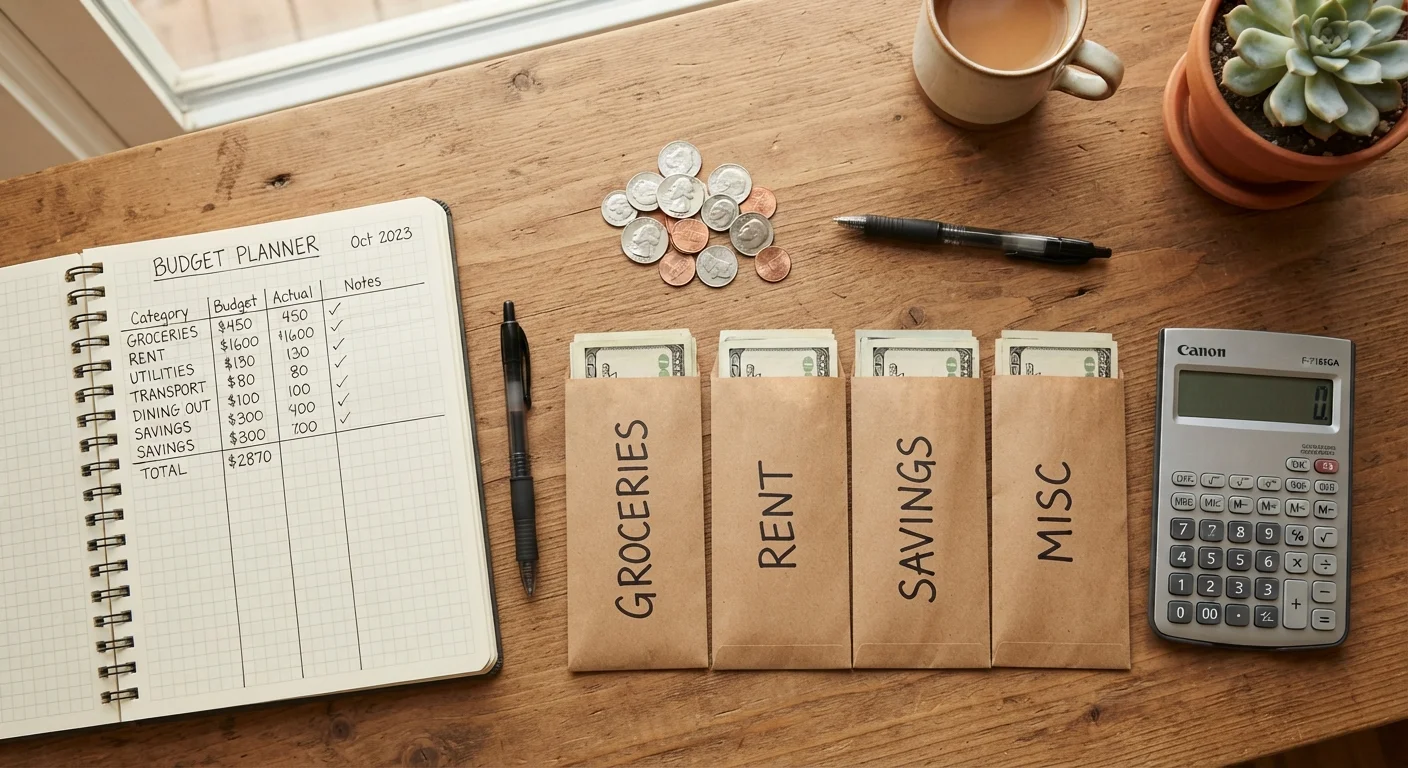
Photo: UnlockTopics.com | Unlocking Trending Content editorial
Key Takeaways
- The 50/30/20 rule splits income into needs, wants, and savings - simple but inflexible for irregular incomes.
- Zero-based budgeting assigns every dollar a job, leaving nothing unaccounted for at month's end.
- The envelope method uses physical or digital spending limits per category to curb overspending.
- Pay-yourself-first prioritizes savings automatically before any spending decisions are made.
- No single framework is universally superior - the right fit depends on your income pattern and habits.
Why Budgeting Frameworks Matter
A budget is only useful if you actually use it. That sounds obvious, but it explains why so many people abandon their spending plans within weeks - the structure they chose didn't match how they think, earn, or spend. The four frameworks below each take a different approach to the same challenge: making sure your money goes where you intend it to go.
If you've never built a budget before, our practical starting point guide covers the foundational concepts worth understanding first. For everyone else, here's how the major frameworks stack up.
| 50/30/20 Rule | Zero-Based | Envelope Method | Pay-Yourself-First | |
|---|---|---|---|---|
| Core logic | Percentage-based categories | Assign every dollar a job | Spend from fixed cash pools | Save first, spend the rest |
| Effort level | Low | High | Medium | Low |
| Best for income type | Steady/salaried | Variable or irregular | Any income type | Steady/salaried |
| Savings priority | 20% target | Assigned explicitly | Not built-in by default | Built in automatically |
| Spending control | Loose, category-level | Tight, line-item level | Tight, per-category | Loose after savings |
| Flexibility | Moderate | Low to moderate | Low | High |
| Works well for beginners | Yes | Requires practice | Yes, if spending-focused | Yes |
The 50/30/20 Rule
The 50/30/20 rule divides your after-tax income into three broad buckets: 50% toward needs (housing, groceries, utilities, minimum debt payments), 30% toward wants (dining out, entertainment, subscriptions), and 20% toward savings and debt repayment. Its main strength is simplicity - three categories cover virtually everything.
The trade-off is rigidity. If you live in a high cost-of-living area, hitting that 50% ceiling for needs can be nearly impossible. The rule also doesn't differentiate between paying down high-interest debt and contributing to a retirement account - both land in that 20% bucket. For a deeper look at how the categories work in practice, see our plain-English breakdown of the 50/30/20 rule.
Adapt the Percentages to Your Reality
Zero-Based Budgeting
Zero-based budgeting (ZBB) starts from the premise that your income minus your planned expenses should equal zero - not because you spend everything, but because every dollar is deliberately assigned a purpose, including savings and investments. At the end of each month, nothing is left unaccounted for.
This method demands more time upfront. You list every expected expense, income source, and saving goal, then adjust until the math balances. It's particularly well-suited to people with irregular or freelance income, because it forces a fresh plan each cycle rather than relying on last month's pattern. The downside: it can feel tedious, and a single unexpected expense can require replanning the whole month.
The Envelope Method
The envelope method assigns a fixed cash amount to specific spending categories - groceries, gas, dining, entertainment - at the start of each pay period. Traditionally, you'd load physical envelopes with cash; once an envelope is empty, spending in that category stops. Digital apps now replicate this with virtual envelopes linked to bank accounts.
Its power is behavioral: the physical (or visual) act of watching money run out creates a natural brake on impulsive spending that abstract numbers in a spreadsheet often don't. It's most effective for the categories where people tend to drift - discretionary spending like food and entertainment. For a thorough look at how this system works and who it tends to suit, see our article on the envelope method and spending habits.
Cash-Only Envelopes Have Real Risks
Pay-Yourself-First
Pay-yourself-first (PYF) flips the typical budgeting order. Instead of saving whatever remains after expenses, you transfer a set amount to savings - or a retirement account, emergency fund, or investment account - the moment your paycheck arrives. Everything else gets spent from what's left.
The approach leans on automation to remove the willpower element. Set up an automatic transfer on payday and the decision is made before discretionary temptations enter the picture. PYF works best when paired with clear savings goals; without a destination in mind, the system can feel abstract. It also doesn't regulate day-to-day spending in detail, which means someone who struggles with overspending may still run short before month's end. Explore specific strategies for growing those transferred savings at our saving strategies hub.
This article is for general informational and educational purposes only and does not constitute personalized financial advice. Consult a qualified financial professional before making decisions about your own finances.
The content on this site is for informational purposes only and is not a substitute for professional advice. Always consult a qualified professional for guidance specific to your situation.