
Unit Price vs. Sticker Price: What Supermarket Shelves Don't Tell You

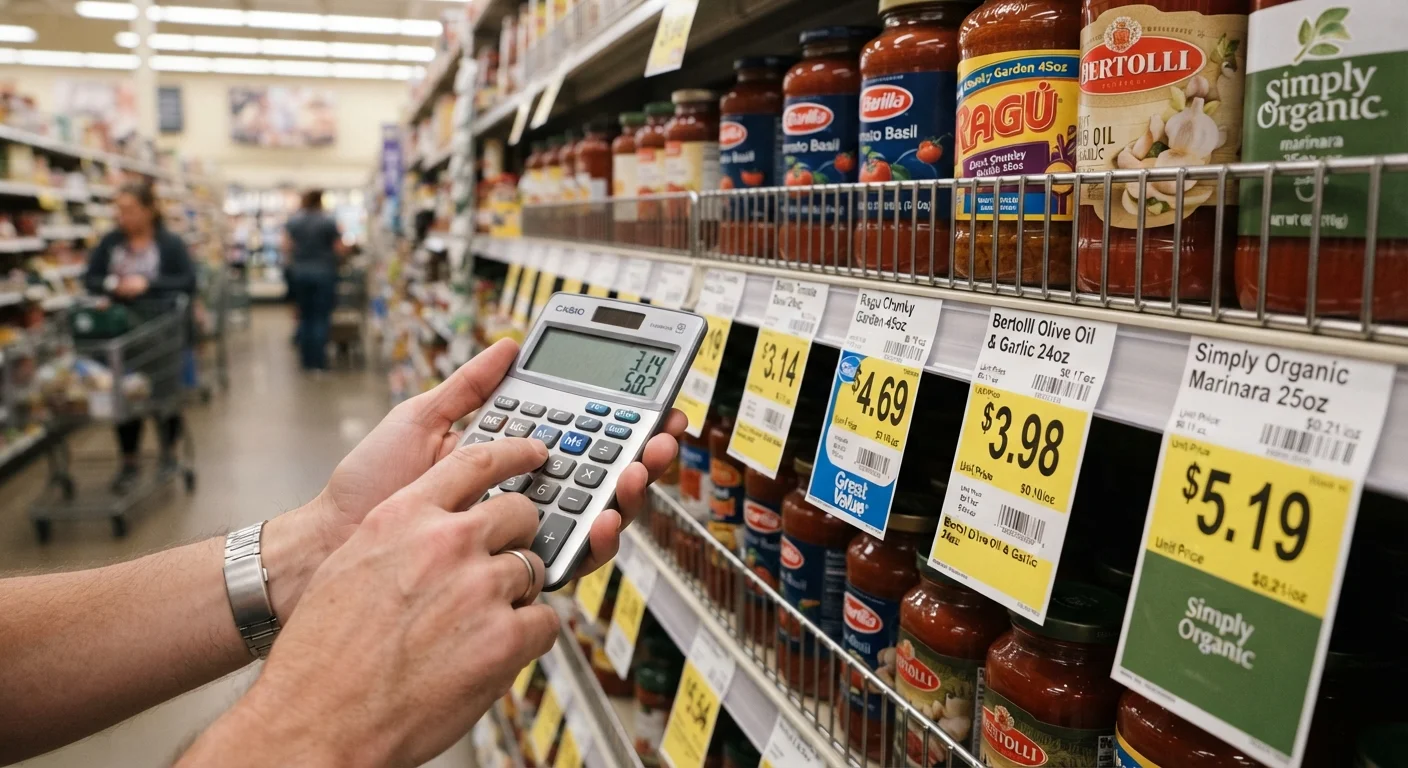
Photo: UnlockTopics.com | Unlocking Trending Content editorial
Key Takeaways
- The sticker price is what you pay; the unit price is what you're actually getting per ounce, sheet, or count.
- Larger packages don't always have a lower unit price - always verify before assuming bulk is better.
- Sales and store-brand alternatives can dramatically shift unit price comparisons.
- Unit price labels on shelves may use different base units, making direct comparison trickier than it looks.
- Comparing unit prices is one of the most reliable ways to stretch a household grocery budget.
Why the Sticker Price Misleads You
Walk down any grocery aisle and you'll see shelves lined with products in varying sizes, each carrying a bold price tag. That number - the sticker price - is what you'll pay at checkout. But it says almost nothing about whether you're getting a fair deal.
The sticker price doesn't account for how much product you're receiving. A $3.99 bottle of dish soap and a $5.49 bottle of the same formula look like an easy choice until you notice the cheaper option holds 18 oz and the pricier one holds 30 oz. At that point, the $5.49 bottle costs significantly less per ounce - and lasts considerably longer.
This gap between what you pay and what you receive is exactly what unit pricing is designed to close. It reframes the question from "which price is lower?" to "which option delivers more value per measurable unit?" That's a much more useful question when you're filling a cart with household staples.
Unit Price Labels Aren't Always Consistent
How Unit Pricing Works in Practice
Unit prices are typically shown in small print on shelf tags, directly beneath the sticker price. You'll see figures like $0.12/oz, $0.04/sheet, or $0.25/count depending on the product category. The unit chosen reflects the most logical way to measure that item - weight for food, sheets for paper products, fluid ounces for liquids.
To use unit pricing effectively, simply compare that per-unit number across the same product category. If a store-brand laundry detergent lists $0.08 per load and a name-brand version lists $0.19 per load, the difference in annual cost for an average household can be substantial. Understanding what drives those gaps is covered in more depth in our look at generic vs. name-brand household products.
If a shelf tag doesn't display the unit price, the math is simple: divide total price by total quantity. A $6.40 package containing 80 counts equals $0.08 per count. A smartphone calculator makes this fast enough to do standing in the aisle.
~30%
Potential savings when choosing by unit price
Consumer research consistently suggests shoppers who compare unit prices can reduce grocery spending by roughly 20-30% on staple categories over time.
40+
U.S. states with some form of unit pricing requirement
Many U.S. states mandate unit price display in grocery and retail settings, though coverage, format, and enforcement vary significantly by jurisdiction.
When Bulk Buying Doesn't Win
Many shoppers assume that bigger packages always deliver a better unit price. This is often - but not always - true. Several scenarios can flip the math:
- Sale pricing on smaller sizes: A promotional discount on a mid-size package can temporarily push its unit price below that of the jumbo version.
- Store-brand alternatives: A store-brand product in a standard size frequently undercuts the unit price of a name-brand bulk package.
- Product shelf life: Buying 96 rolls of paper towels at a great unit price doesn't help if storage space is limited or a portion goes unused.
- Concentration differences: Some cleaning products are more concentrated than others, meaning a higher unit price per ounce could still represent fewer uses per dollar.
It's also worth thinking beyond unit price alone. Some products that appear affordable per unit end up costing more over time because they wear out faster or need frequent replacement - a pattern explored in our piece on the replacement trap.
Use Your Phone's Calculator in the Aisle
Reading Shelf Tags More Critically
Even when unit prices are displayed, they can obscure direct comparison. One common issue: stores sometimes use different base units for competing products in the same category. One detergent might show price per fluid ounce; another shows price per load. Unless you know how many loads per ounce, the comparison breaks down.
A few practical habits help here:
- Always look for the unit price label - don't rely on the sticker price alone.
- Confirm both products use the same unit before comparing. If they don't, default to calculating manually.
- Factor in how you actually use the product. Unit price per serving matters more than unit price per ounce for something you use in variable quantities.
For grocery shopping specifically, pairing unit price awareness with a good understanding of nutrition labels sharpens your decision-making. Our guide to reading a nutrition label without getting confused covers the serving-size details that connect directly to unit price math on food items.
And if you're extending this kind of cost-per-use thinking beyond the grocery store to home technology purchases, the same logic applies - something our piece on the hidden costs of a smart home addresses in detail.
Frequently Asked Questions
The content on this site is for informational purposes only and is not a substitute for professional advice. Always consult a qualified professional for guidance specific to your situation.