
Natural Light vs. Artificial Lighting Layers: Designing for How You Actually Live

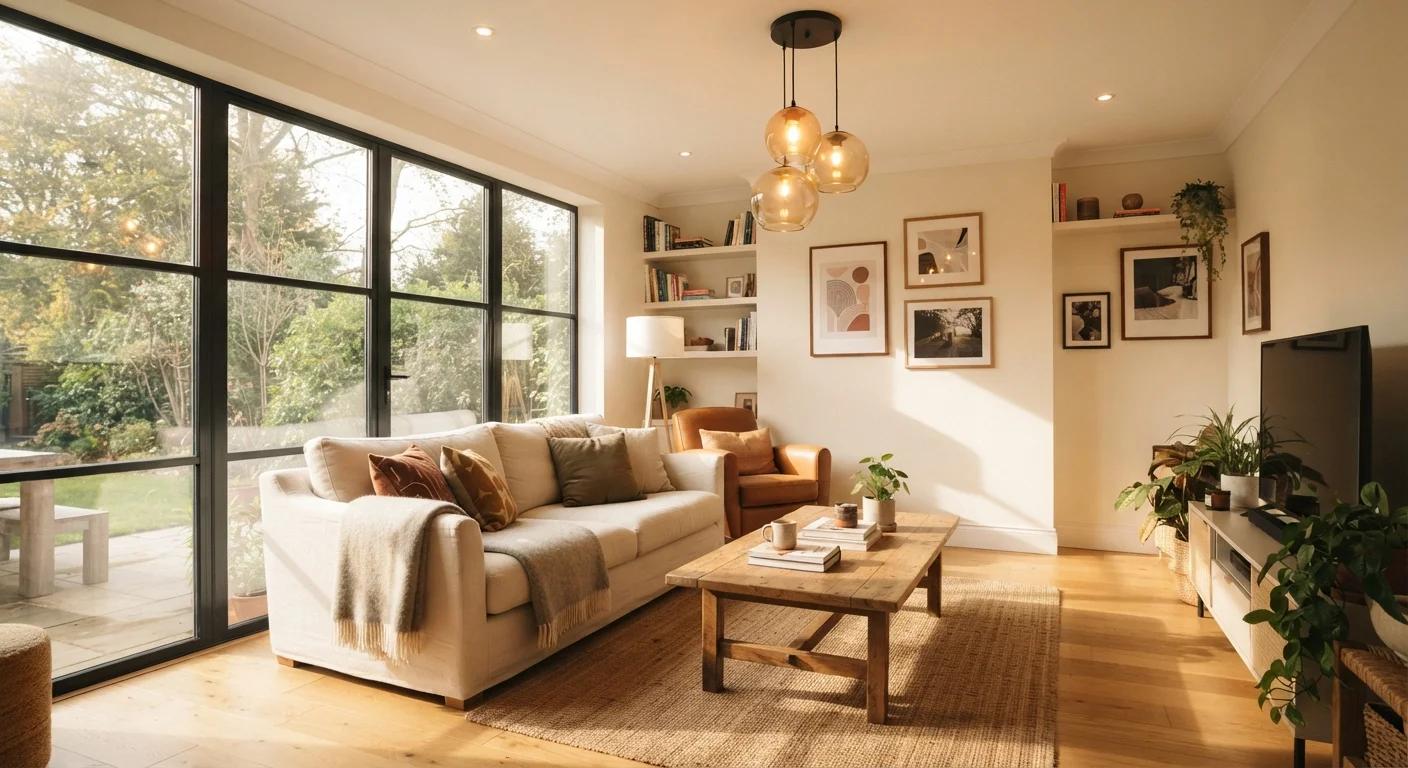
Photo: UnlockTopics.com | Unlocking Trending Content editorial
Key Takeaways
- Natural light improves mood and reduces eye strain but is inconsistent and depends heavily on your home's orientation.
- Layered artificial lighting - ambient, task, and accent - gives you control over intensity and focus throughout the day.
- Most rooms benefit from designing both systems together, not treating one as a backup for the other.
- Window placement, glare management, and dimmer switches are the highest-impact, lowest-cost levers in most homes.
- A room's function at different times of day should drive lighting decisions more than aesthetics alone.
Why Lighting Is a Design System, Not a Single Decision
Most people think about lighting when something isn't working - a kitchen that feels dim at 4 p.m., a home office that causes eye strain by noon, a living room that looks flat in photos but uncomfortable in real life. The problem is almost never the bulbs. It's that natural light and artificial lighting were never designed to work together.
A well-lit room across a full day requires understanding what each light source does, when it works, and - critically - where it falls short. Natural light and artificial lighting layers aren't competing approaches; they're two parts of the same system. Designing them independently is what leads to spaces that feel right only part of the time.
This matters especially in multi-use spaces. If you're navigating the trade-offs of an open-plan layout, lighting consistency becomes even more important - see Open-Plan Living: The Trade-offs Nobody Talks About for context on how light interacts with those layouts.
| Criterion | Natural Light | Artificial Lighting Layers |
|---|---|---|
| Availability | Dependent on time, season, orientation | On demand, any time of day |
| Cost to use | Free once windows exist | Ongoing electricity cost |
| Controllability | Limited (shades, films, placement) | High (dimmers, switches, color temp) |
| Circadian benefit | Significant, especially morning exposure | Partial - tunable bulbs help, but differ |
| Glare risk | High without management | Low with proper fixture placement |
| Evening usability | None after sunset | Full, designed for it |
| Setup complexity | Architectural - hard to change later | Flexible - can be layered incrementally |
| Impact on mood | Strong, especially on overcast days | Moderate - warm tones help most |
What Natural Light Actually Does (and Doesn't Do)
Natural light is circadian-aware in a way no fixture currently replicates at scale. Exposure to daylight - particularly in the morning - helps regulate the body's internal clock, which influences sleep quality, alertness, and mood. That's a meaningful functional benefit, not just aesthetics.
But natural light is constrained by orientation, season, and architecture. A south-facing room in winter receives far less usable light than the same room in June. East-facing spaces flood with morning sun and go dim by early afternoon. North-facing rooms may never receive direct sunlight at all, relying instead on reflected and diffuse sky light - which is cooler, flatter, and harder to work in.
Glare is the other underestimated problem. Unmanaged direct sunlight on a screen, a work surface, or a dining table creates contrast that fatigues the eyes faster than dim light does. Light-filtering shades or frosted window films - not blackout curtains - are the practical fix: they scatter light rather than block it, maintaining brightness while eliminating harsh direct beams.
~30 min
Morning light exposure linked to better sleep timing
General sleep science consensus suggests consistent morning daylight exposure helps anchor the circadian rhythm, improving sleep onset timing over time.
3 types
Lighting layers needed for functional room design
Lighting designers broadly recognize ambient, task, and accent lighting as the three foundational layers required to make a room functional across different uses and times of day.
2700-3000K
Warm white range for living and bedroom spaces
Bulb color temperature in this range produces the warm tones most suitable for relaxation areas, according to standard interior lighting guidance.
The practical takeaway: maximize natural light where your home allows it, manage it where it causes glare, and don't expect it to carry the load after 3 p.m. in winter.
How Artificial Lighting Layers Fill the Gaps
"Layered lighting" refers to combining three distinct types of artificial light in a single space: ambient (general illumination), task (focused light for specific activities), and accent (directional light that adds depth or highlights areas). Using only one type - as most rooms do - flattens a space and forces one fixture to serve functions it was never designed for.
Ambient lighting sets the base brightness level. Recessed ceiling lights and flush-mount fixtures handle this, though they create flat, even illumination that on its own can feel institutional. Task lighting - under-cabinet strips in a kitchen, a focused desk lamp in a home office, a reading lamp beside a sofa - adds the directed intensity that specific activities require. Accent lighting, such as wall sconces or directional spotlights on shelves or artwork, creates visual depth and warmth that makes a room feel considered rather than merely functional.
The most impactful single upgrade in most homes is adding dimmer switches to existing ambient circuits. Dimmers allow the same fixture to function as bright task support during the day and soft evening ambience at night, without adding a single new light source. It's the kind of under-the-radar change discussed in Upgrades That Change How a Home Feels Day-to-Day.
Color temperature also matters. Bulbs rated around 2700K-3000K produce warm white light suitable for living areas and bedrooms. Bulbs at 4000K and above are cooler and closer to daylight - better for task-intensive spaces like kitchens and home offices. If your home office relies on artificial light for extended periods, cooler-temperature task lighting reduces eye strain meaningfully.
Designing the Two Systems Together
The most livable rooms treat natural light as the starting point - something to maximize, position around, and manage - and artificial layers as the system that extends and supplements it. Here's a practical framework:
- Map your light by time of day. Walk through each room at 8 a.m., noon, and 7 p.m. on a typical day. Note where natural light falls, where it's harsh, and where it disappears entirely. That map tells you where artificial layers need to fill in.
- Match fixture types to room function. A kitchen needs bright task lighting and ambient coverage. A bedroom benefits from dimmable ambient light and a warm reading source. A home office needs glare-free task lighting and, ideally, access to daylight from the side rather than directly behind or in front of a screen.
- Add controllability before adding fixtures. Dimmers, smart switches, and separate circuits for task versus ambient sources give you more range from existing infrastructure than adding more overhead lights.
- Use warm artificial light in the evening intentionally. Bright, cool-temperature light in the two hours before sleep can interfere with melatonin production, according to general sleep research consensus. Dimming down to warm tones in living areas after dinner is a low-cost habit with meaningful downstream effects on sleep quality.
Lighting decisions compound across a home. Getting the framework right in one room - then applying the same logic elsewhere - produces results that feel cohesive rather than piecemeal.
The content on this site is for informational purposes only and is not a substitute for professional advice. Always consult a qualified professional for guidance specific to your situation.