
What a 'System' Actually Means in Home Organization (And Why It Matters)

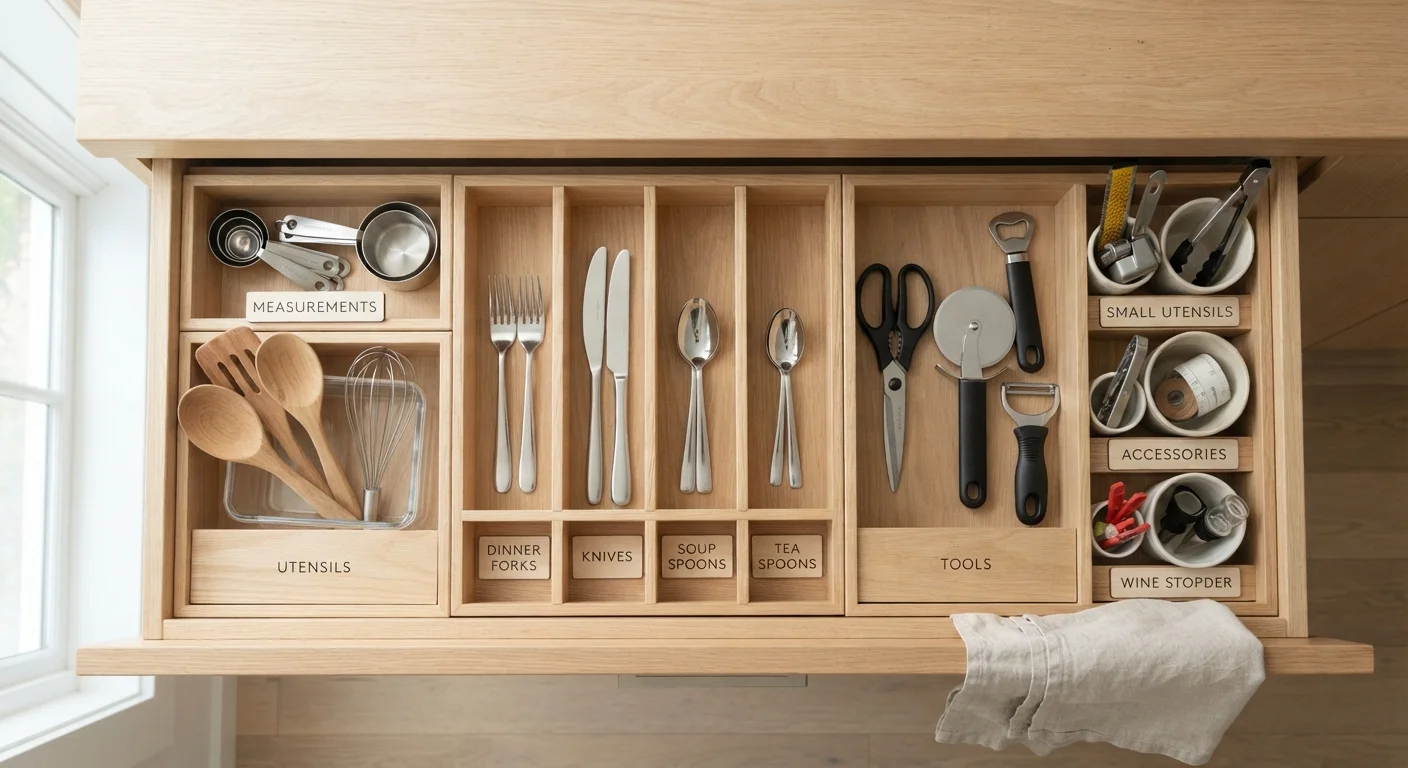
Photo: UnlockTopics.com | Unlocking Trending Content editorial
Key Takeaways
- A system is a structure with rules, not just an arrangement of containers.
- Every item in a system has a fixed, logical home it reliably returns to.
- Systems work by reducing friction, not by requiring more discipline.
- Buying storage products without a system first often creates more clutter.
- A working system is almost invisible - it just feels like a home that stays tidy.
Why the Word 'System' Gets Misused
Open any organizing guide and you'll see the word system applied to almost everything: a labeled bin, a folding method, a color-coded shelf. It's used so broadly that it's become nearly meaningless - and that's a problem, because confusing a system with a tactic is one of the main reasons tidy spaces stop staying tidy.
A tactic is a single action: folding shirts vertically, buying a drawer insert, clearing the kitchen counter before bed. These are useful. But a system is the structure that makes tactics stick. It's the answer to the question: what happens to this item every single time it's used?
If you've ever organized a space thoroughly, felt great about it, and watched it collapse within a few weeks, you likely had tactics without a system. You'll find that pattern explored in depth in why tidy homes keep unraveling.
80%
Of clutter attributed to disorganization, not lack of space
Organizing professionals commonly cite this figure when explaining that most households have adequate space but no reliable system for using it.
~30 min
Average daily time spent looking for misplaced items
Research cited in productivity and workplace-organization literature suggests adults lose significant time each day to locating items without fixed, consistent homes.
The Three Elements Every System Needs
Regardless of the space or the items involved, a functional organizing system requires three things working together:
- A fixed home for every item. Not a general zone - a specific, consistent location. "Somewhere in the junk drawer" is not a home. "Left side of the top drawer, next to the scissors" is.
- A return rule. A clear expectation, understood by everyone who uses the space, about when and how the item goes back. Without this, things get used and placed rather than returned.
- Low-friction access. The home must be at least as convenient as the nearest flat surface. If putting something away requires more steps than leaving it out, the system will lose every time.
These three elements are what separate a system from an aesthetic. A beautifully arranged shelf with no return rule is decor. A slightly imperfect setup that everyone reliably uses is a system.
Start With One Zone, Not the Whole Home
What a System Looks Like in Practice
Consider a home entryway. Without a system, bags, keys, mail, and shoes accumulate near the door because that's where people naturally stop. With a system, each of those item categories has a fixed home - a hook at a usable height, a small tray for keys, a surface-level slot for mail - positioned at exactly the point where people stop. The behavior doesn't change; the infrastructure meets it.
The same logic scales to any room. In a home office, a system means knowing where a document lives when it's active, where it goes when it's done, and when it leaves the space entirely. Keeping a home office functional under daily use is almost entirely a systems problem - not a storage problem.
Building a System Without Starting From Scratch
Most people don't need to overhaul their home to build better systems. They need to audit what's already there and add the missing element. A useful diagnostic: pick one space that keeps getting messy and ask three questions.
- Does every item in this space have a specific, named home?
- Is that home in the most logical, convenient location for how the item gets used?
- Does everyone who uses this space know the rule?
If any answer is no, you've found the gap. Fixing it rarely requires new products - it usually means making a decision (this goes here, always) and communicating it. For the terminology you'll encounter when working through this process, a plain-language reference for common organizing terms is a useful companion.
And if you're ready to apply this thinking across your whole home, an end-to-end framework built on first principles walks through exactly how to do that, room by room.
Frequently Asked Questions
The content on this site is for informational purposes only and is not a substitute for professional advice. Always consult a qualified professional for guidance specific to your situation.