
Home Organization From First Principles: An End-to-End Framework

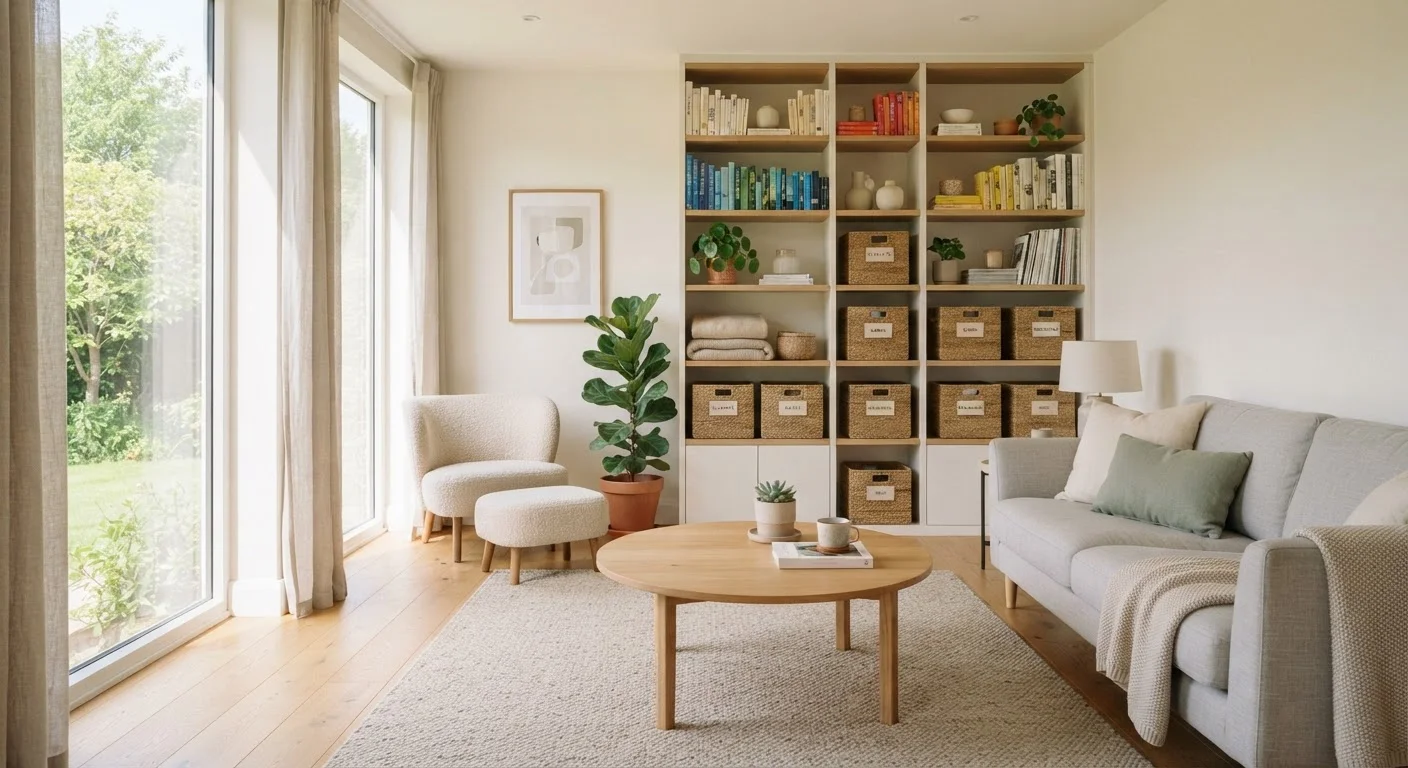
Photo: UnlockTopics.com | Unlocking Trending Content editorial
Key Takeaways
- Organization is a system you maintain, not a project you complete once.
- Every item needs a fixed, logical home before any container or label helps.
- Decluttering first - before buying storage - prevents wasted money and effort.
- Small daily resets outperform weekly deep-clean sessions for long-term tidiness.
- Shared households require explicit agreements, not assumed tidiness standards.
The Organizing Mindset: Systems Over Sessions
Most people approach home organization as an event - a Saturday blitz followed by a week of relief and a slow slide back to chaos. That cycle is frustrating precisely because it feels like failure, when really it's just the wrong model. As explored in why tidiness keeps unravelling, the issue is structural, not motivational.
A first-principles approach treats your home as a system of inputs, throughputs, and storage. Stuff enters your home constantly - groceries, mail, purchases, gifts. Without deliberate routing, it accumulates wherever gravity takes it. The organizing work is designing the routes, not repeatedly clearing the pile-up.
Start With One Category, Not One Room
Think of organization as infrastructure, not aesthetics. A shelf that looks beautiful but makes retrieval difficult will be abandoned within weeks. Prioritize function first; appearance follows naturally once systems work.
The First-Principles Audit: What You Own and Why
Before containers, labels, or drawer dividers enter the picture, the honest audit comes first. Go category by category - not room by room - and ask two questions about every item: Do I actually use this? and Would I replace it if it disappeared tomorrow?
Categories to audit systematically include: clothing, kitchen equipment, paper documents, hobby supplies, tools, and sentimental items. Mixing categories across rooms is exactly why most organization attempts stall - you end up moving things rather than deciding about them.
25%
Time spent looking for misplaced items
Studies on household productivity suggest adults lose a meaningful portion of daily time searching for items without fixed homes.
1 in 4
Homeowners who feel overwhelmed by clutter
Surveys consistently show that clutter is a significant source of household stress across US demographics.
80%
Of stored items rarely or never used
Professional organizers commonly observe that the majority of items in storage areas go untouched for years, suggesting over-accumulation rather than lack of space.
The audit phase will surface three categories of items: things to keep, things to donate or sell, and things to discard. Resist the urge to create a "maybe" pile - it becomes a permanent limbo zone. If it genuinely requires more thought, box it, date it, and schedule a 30-day decision.
Assigning Homes: The Core Rule of Organization
Every item that remains after the audit needs one fixed location - a home. This is the single most important rule in organization. When something has no designated place, it defaults to any flat surface nearby, which is how countertops and chairs become storage.
Assign homes based on three factors: frequency of use (daily items get the most accessible spots), point of use (items live where they're used, not where they fit), and category grouping (like items together so retrieval is intuitive).
When assigning item homes, test the placement for a full week before committing to storage hardware. If you keep naturally reaching somewhere else, that location is telling you something.
Label storage from the user's perspective, not the organizer's. A label that says 'charging cables' is more useful than one that says 'electronics accessories' - specificity reduces decision fatigue.
Only after homes are assigned does storage hardware become useful. Buying bins before knowing what they'll hold is one of the most common and costly organizing mistakes. Visit smart shopping guides for help evaluating storage options once your categories and quantities are confirmed.
Room-by-Room Priorities That Actually Matter
Rather than applying the same method everywhere, each room has a single high-leverage organizing priority:
- Kitchen: Countertop discipline. Every appliance on the counter should be used at least three times a week. Everything else belongs in a cabinet.
- Bedroom: The floor and chair. Clothes draped over furniture signal a missing step in the laundry-to-wardrobe loop. Fix the process, not just the pile.
- Bathroom: Expired products and duplicates. These consume prime cabinet space and make daily routines slower.
- Entryway: The dump zone. Mail, bags, and shoes cluster here because there's no system for routing them onward. Install a deliberate landing station - hooks, a tray, a shelf - so items have a home the moment they enter.
- Home office: Paper and cable management. See strategies for a functional home office for specific approaches that hold up under real daily use.
Don't Let Storage Areas Become Avoidance Zones
Avoid organizing the garage, attic, or storage areas last as a catch-all for unresolved decisions from other rooms. These spaces fill with avoidance, not genuine storage needs. Treat them with the same audit rigor as living areas - or clutter simply migrates rather than leaving your home.
Maintenance Habits That Keep the System Alive
An organized home without maintenance habits is just a delayed mess. The research-backed principle here is that friction determines behavior: the lower the effort required to maintain order, the more likely it continues. Design your systems so that putting something away is as easy as dropping it somewhere random.
Three habits that compound well over time:
- The two-minute reset: Before leaving any room, spend two minutes returning items to their homes. This prevents accumulation from ever becoming a project.
- The one-in-one-out rule: When something new enters the home, something old leaves. This caps total volume and forces ongoing evaluation.
- Weekly category checks: Pick one small category per week - a junk drawer, a shelf section - and spend five minutes resetting it. Small, frequent attention prevents the gradual drift that leads to full re-dos.
Organization Can Reveal Home Upgrade Opportunities
Home organization improvements can sometimes open up home upgrade opportunities - better storage built-ins, smarter furniture layouts, or more functional use of underutilized space. Organization and physical improvement often reinforce each other when sequenced well.
Shared Homes, Shared Standards
Systems designed by one person in a shared household are fragile. If a partner, housemate, or child doesn't understand where things belong or why, even well-designed systems collapse. The solution is co-design, not enforcement.
Involve everyone in deciding where category homes live. Explain the reasoning - not the rule. A person who understands why the scissors live in the kitchen drawer (because that's where they're always needed) is far more likely to return them there than one who's simply been told where they go.
Organizing a home you don't control alone requires adjusting expectations and finding systems that work at the lowest common denominator of effort - not imposing the highest standard of tidiness.
“The goal of organizing is not a perfect home - it's a home that functions well for the people who live in it. Systems that require constant enforcement are systems that have already failed.”
— Julie Morgenstern, Professional organizer and author of 'Organizing from the Inside Out'
The practical takeaway: start with the areas of the home you control individually, demonstrate what working systems look like, and invite rather than demand participation in shared spaces. Lasting household organization is a social agreement, not just a spatial one.
This article is for general informational and educational purposes only. Results will vary based on individual home size, household dynamics, and personal habits.
The content on this site is for informational purposes only and is not a substitute for professional advice. Always consult a qualified professional for guidance specific to your situation.