
What the Dashboard Warning Lights Are Actually Telling You

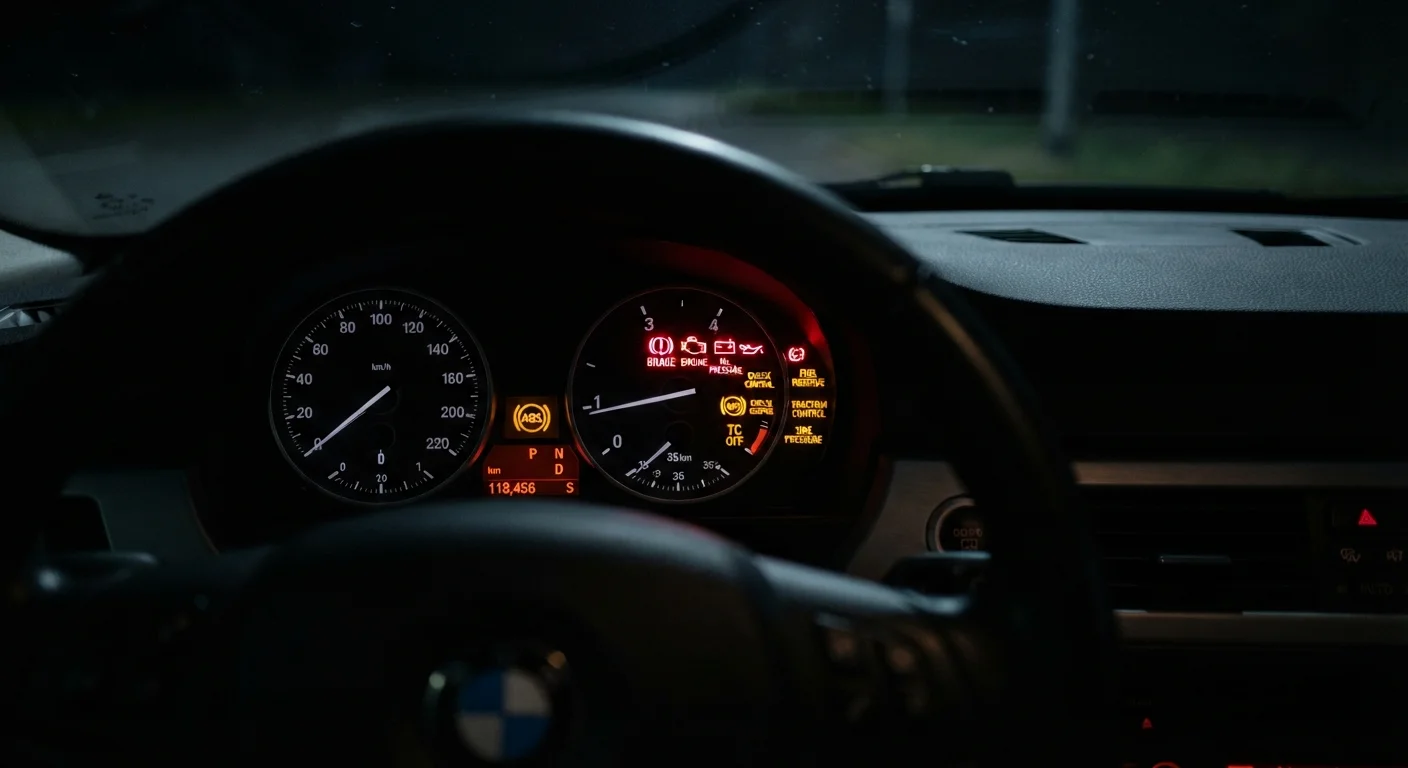
Photo: UnlockTopics.com | Unlocking Trending Content editorial
How the Warning Light System Works
Modern vehicles use an onboard diagnostics system (OBD) that continuously monitors dozens of sensors. When a reading falls outside acceptable parameters, the relevant warning light activates on your instrument cluster. Not all lights carry equal urgency - manufacturers use a color-coded hierarchy to help drivers prioritize their response.
| Red light meaning | Stop or act immediately - potential safety or damage risk |
| Amber/yellow light meaning | Service needed soon - not an immediate emergency in most cases |
| Flashing vs. steady check engine | Flashing = active fault requiring prompt attention; steady = schedule a scan |
| TPMS trigger threshold | Typically activates when a tire is 25% or more below recommended PSI (General industry standard; verify in owner's manual) |
| OBD-II standardization | Required on all US passenger vehicles sold from 1996 onward (U.S. Environmental Protection Agency) |
| Owner's manual role | The definitive reference for every symbol specific to your vehicle |
Red lights signal conditions that may require you to stop driving immediately or within a very short distance. Amber/yellow lights indicate something needs attention soon but is not necessarily an emergency. Green or blue lights are informational - they confirm a system is active, not that something is wrong.
Understanding this hierarchy is the first practical skill every driver should have. When in doubt, consult your owner's manual, which provides the exact meaning for every symbol specific to your vehicle's make and model.
The Most Common Warning Lights Decoded
OBD (Onboard Diagnostics)
A standardized system built into vehicles since the mid-1990s that monitors engine and emissions components. When a fault is detected, it stores a diagnostic trouble code (DTC) and triggers a warning light.
Check Engine Light
An amber warning that indicates the engine management system has detected a fault. The exact cause requires a diagnostic scan using an OBD-II reader to retrieve the stored trouble code.
TPMS (Tire Pressure Monitoring System)
A sensor-based system that alerts the driver when one or more tires drops significantly below the manufacturer-recommended pressure, typically by 25% or more.
Oil Pressure Warning
A red indicator that signals insufficient oil pressure reaching engine components. This is distinct from simply being low on oil - it can also indicate a pump failure or oil leak.
Stability Control
An active safety system that detects and reduces loss of traction by selectively applying brakes to individual wheels. A persistent warning light may mean the system is deactivated or has a fault.
Charging System Warning
Indicates the alternator is not properly recharging the battery while the engine runs. The vehicle will continue to drain battery power until the fault is corrected.
Beyond the definitions, here's how to interpret each light in real driving conditions:
- Check Engine (amber engine outline): Could range from a loose gas cap to a failing catalytic converter. A steady light usually means schedule a diagnostic scan soon. A flashing check engine light is more serious - typically indicating an active misfire that can damage the catalytic converter - and warrants pulling over when safe and avoiding high speeds until evaluated.
- Oil Pressure (red oil can): This is one of the most critical red lights. Low oil pressure can cause severe engine damage within minutes. Pull over safely, turn off the engine, and check the oil level before driving further. Do not ignore this light even briefly.
- Battery/Charging (red battery): Indicates the charging system isn't maintaining voltage. You may have limited driving time before the vehicle loses power entirely. Reduce electrical load and head directly to a service point. For deeper context, learn how car batteries fail and what accelerates the process.
- Brake Warning (red exclamation in circle): If your parking brake is off and this light is on, it may signal low brake fluid or a system fault. Do not ignore it - brake system failures rarely announce themselves clearly until damage is done.
- Tire Pressure (TPMS - amber horseshoe with exclamation): One or more tires is below the recommended pressure. Check and inflate all four tires at your earliest opportunity. Driving on underinflated tires reduces fuel efficiency and increases blowout risk.
- Engine Temperature (red thermometer in waves): The engine is overheating. Pull over safely, turn off the engine, and allow it to cool completely before checking coolant levels. Continuing to drive risks warping the cylinder head - an expensive repair.
- Traction Control / Stability (amber car with squiggly lines): The system is actively intervening to prevent wheel slip. If the light stays on, the system may be disabled or faulty - relevant in wet or icy conditions where you'd want it operational.
When a Light Comes On During a Drive
For tasks you can reasonably handle yourself versus those requiring professional evaluation, see this guide on knowing where the DIY line should be.
The content on this site is for informational purposes only and is not a substitute for professional advice. Always consult a qualified professional for guidance specific to your situation.