
Under the Bonnet: A Complete Guide to Understanding Your Car's Major Systems

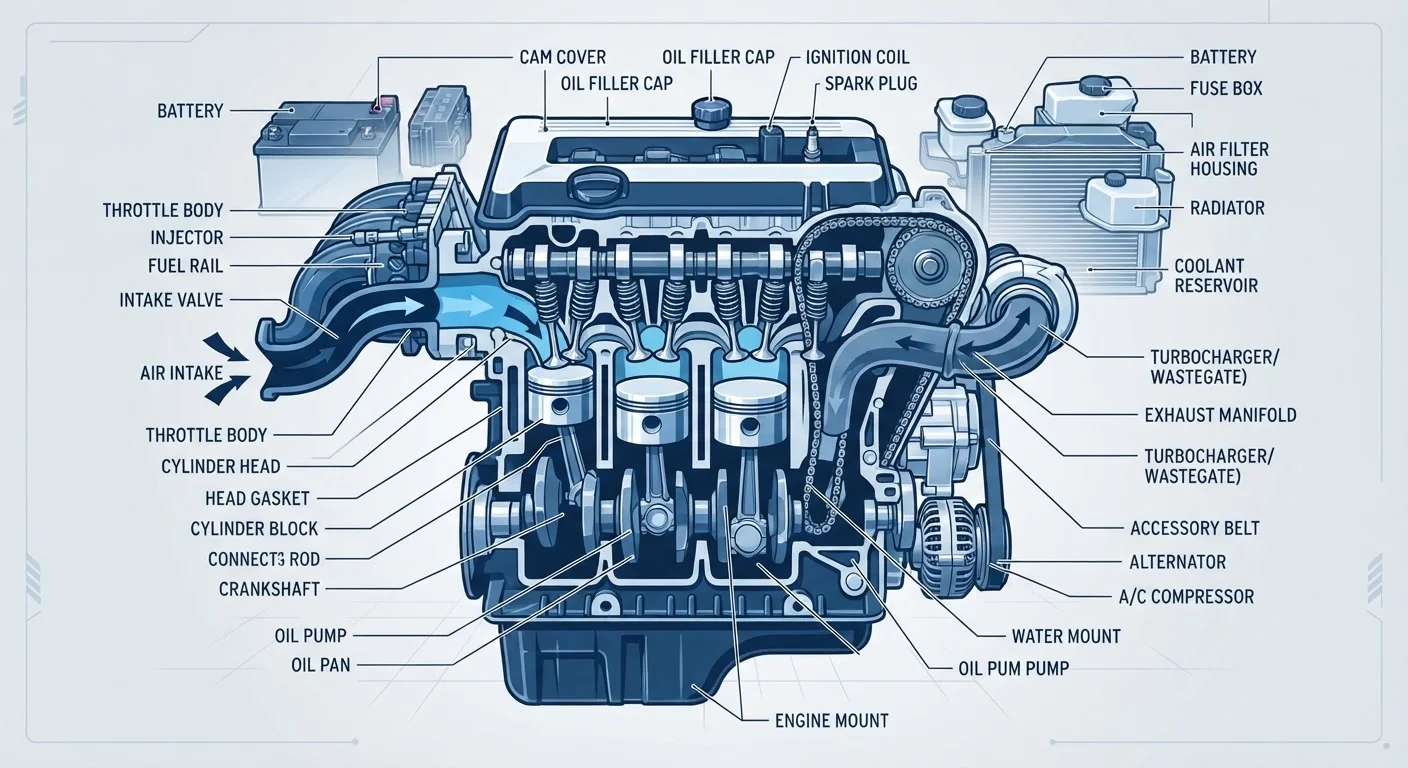
Photo: UnlockTopics.com | Unlocking Trending Content editorial
Key Takeaways
- Most expensive car repairs stem from ignored early warning signs in key systems.
- The engine, cooling, electrical, braking, and transmission systems are deeply interconnected.
- Drivers don't need mechanical expertise - just enough literacy to spot and report problems early.
- Regular fluid and visual checks can extend the life of almost every major system.
- Knowing what's normal for your car is the fastest way to catch what's abnormal.
Why Every Driver Should Understand Their Car
You don't need to be a mechanic to benefit from understanding how your vehicle works. In fact, a basic familiarity with your car's major systems is one of the most effective ways to avoid unexpected breakdowns and costly repair bills. When you know what normal looks and sounds like, you're far better equipped to recognize when something is wrong - and to communicate it clearly to a professional who can fix it.
This guide is written for drivers, not engineers. It walks through the five systems that govern almost everything your vehicle does: the engine, cooling, electrical, braking, and transmission systems. For each one, we explain what it does, what can go wrong, and what you can reasonably check yourself. For anything beyond visual inspection and fluid monitoring, a qualified mechanic should always be your first call.
Whether you're a seasoned driver or just starting out, understanding your vehicle pays dividends. See our car maintenance guide for new drivers for a practical companion to these concepts.
The Engine: Your Car's Power Source
The internal combustion engine converts fuel into mechanical motion through a sequence of precisely timed events: intake, compression, combustion, and exhaust - the four strokes that define most gasoline engines. Pistons move up and down inside cylinders, turning the crankshaft, which ultimately drives the wheels.
Engine oil is the system's lifeblood. It lubricates moving parts, reduces friction-generated heat, and carries microscopic debris to the oil filter. Low or degraded oil accelerates wear dramatically. Check your oil level monthly using the dipstick - the oil should sit between the minimum and maximum marks and appear amber to dark brown. Black, gritty oil signals it's overdue for a change.
When checking oil, wipe the dipstick clean, reinsert fully, then withdraw for an accurate reading - a single dip often gives a falsely low result due to oil splashed on the stick during driving.
If a dashboard warning light comes on and then disappears, don't assume the problem resolved itself - have the fault codes read at a shop, as intermittent faults are often the earliest stage of a developing failure.
Oil change intervals vary significantly by vehicle and oil type. Consult your owner's manual rather than defaulting to outdated rules. The common car maintenance myths article covers exactly why blanket interval advice can mislead modern drivers.
The Cooling System: Keeping Temperatures in Check
Combustion generates enormous heat - enough to destroy engine components within minutes if left unchecked. The cooling system manages this through a closed loop of coolant (also called antifreeze) that absorbs engine heat and releases it through the radiator via airflow.
Key components include the radiator, water pump, thermostat, coolant reservoir, and a network of hoses. The thermostat acts as a gatekeeper, only opening to allow coolant flow once the engine reaches operating temperature - which improves efficiency and reduces emissions during warm-up.
Never Open a Hot Radiator Cap
Check coolant level at the reservoir (never open a hot radiator cap) and inspect hoses visually for cracks, bulging, or soft spots. The system should be flushed and refilled according to your manufacturer's schedule. Overheating is one of the fastest ways to cause serious, expensive engine damage - if your temperature gauge climbs into the red, pull over safely and call for assistance rather than continuing to drive.
Cooling needs shift with the seasons. Our article on seasonal car maintenance explains how to prepare your cooling system for both winter freezes and summer heat.
The Electrical System: More Than Just the Battery
Modern vehicles rely on electrical systems for far more than starting the engine. The battery, alternator, and starter motor form the core, but dozens of sensors, control modules, and circuits govern everything from fuel injection timing to traction control.
The battery stores charge and provides the initial burst to start the engine. The alternator then takes over, generating electricity to power the vehicle's systems and recharge the battery while driving. A failing alternator can drain even a healthy battery within miles.
3-5 years
Typical car battery lifespan
Battery life varies by climate and usage; extreme heat shortens lifespan more than cold, according to automotive research.
~$2,500-$5,000
Average automatic transmission repair cost
Transmission work is among the costliest repairs; early detection of fluid or shifting issues can reduce severity significantly.
Every 2 years
Recommended brake fluid flush interval
Most vehicle manufacturers recommend this interval due to moisture absorption degrading brake fluid performance over time.
Symptoms of electrical trouble include slow engine cranking, dimming headlights, dashboard warning lights, or electronics that behave erratically. A battery load test - performed at most auto parts stores - can identify a weak battery before it fails completely. Most batteries last three to five years, though this varies by climate and usage.
Braking Systems: How Your Car Stops Safely
The braking system converts your vehicle's kinetic energy into heat through friction. When you press the brake pedal, hydraulic pressure travels through brake fluid lines to calipers (on disc brakes) or wheel cylinders (on drum brakes), pressing friction material against a rotating surface to slow the wheel.
Most modern vehicles use disc brakes on all four wheels, with brake pads pressing against rotors. Pads wear down over time and must be replaced before metal contacts metal - a failure point that damages rotors and significantly extends stopping distances.
Brake System Issues Require Immediate Attention
Listen for squealing or grinding when braking, feel for vibration through the pedal, or notice if the vehicle pulls to one side under braking - these are reliable indicators that the system needs professional inspection. Brake fluid is hygroscopic, meaning it absorbs moisture over time, which lowers its boiling point and can lead to brake fade under hard use. Most manufacturers recommend flushing brake fluid every two years.
Anti-lock braking systems (ABS) use wheel-speed sensors to prevent wheel lockup during emergency stops, allowing the driver to steer while braking hard. The ABS warning light should never be ignored.
The Transmission: Putting Power to the Road
The transmission manages how engine power is delivered to the drive wheels by selecting the appropriate gear ratio for your speed and load. Automatic transmissions do this continuously without driver input; manual transmissions put that control in the driver's hands via clutch and gear lever.
Transmission fluid lubricates gears and in automatics, also transfers power and controls hydraulic pressure. Burnt-smelling or dark transmission fluid, delayed engagement, slipping between gears, or unusual noises during gear changes are all signs worth investigating promptly. Transmission repairs rank among the most expensive in automotive maintenance - early intervention almost always costs less.
“The transmission is often the most neglected major system in a vehicle, simply because it tends to fail gradually rather than all at once. By the time most drivers notice something is wrong, significant internal damage has already occurred.”
— Automotive Engineering Editorial, Industry technical commentary on drivetrain maintenance
Follow your manufacturer's service intervals closely. Our guide to car service schedules demystifies what happens at each service interval and why skipping them compounds costs over time.
Warning Signs Every Driver Should Recognize
Across all five systems, certain warning signs appear repeatedly and reliably. Dashboard warning lights are the most direct signal - never ignore an illuminated check engine, oil pressure, battery, temperature, or ABS light. Each points to a specific system needing attention.
Beyond lights, pay attention to: unusual smells (burning, sweet, or sulfurous odors), sounds (knocking, squealing, grinding, hissing), and changes in how the vehicle feels (pulling, vibrating, sluggish acceleration, or soft braking). These sensory cues are your car communicating in its own language.
Developing the habit of brief visual checks - fluid levels, tire condition, lights - takes less than five minutes and can prevent the kind of cascading failures that sideline vehicles for days. For a structured approach to these habits, visit our Smarter Driving hub.
This article provides general educational information about vehicle systems and is not a substitute for professional mechanical advice. Always consult a qualified mechanic for diagnosis, repair, or any work involving your vehicle's safety systems.
The content on this site is for informational purposes only and is not a substitute for professional advice. Always consult a qualified professional for guidance specific to your situation.