
The Annual Beauty Calendar: Which Treatments and Routines Actually Belong to Which Season

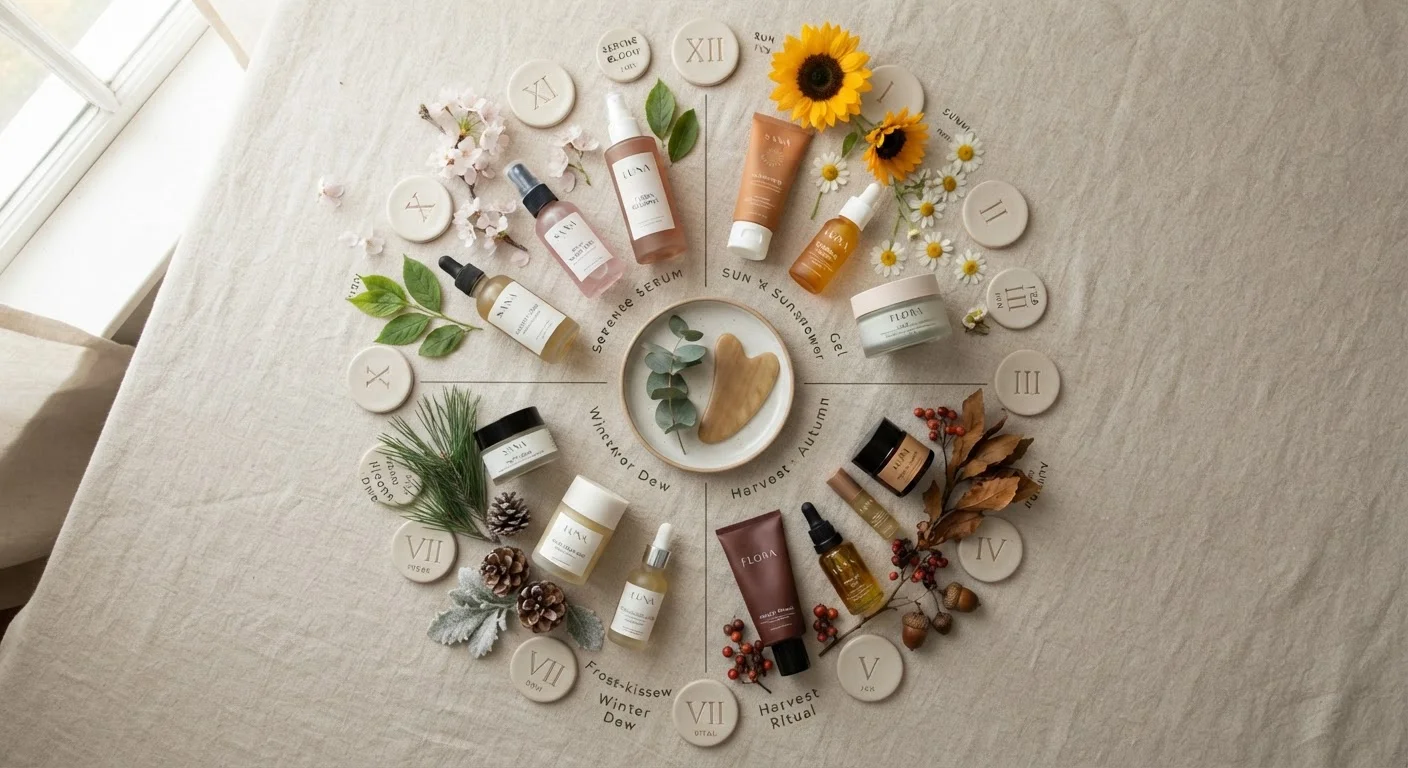
Photo: UnlockTopics.com | Unlocking Trending Content editorial
Why Your Routine Needs a Seasonal Reset
Your skin isn't static — it responds to shifts in humidity, temperature, UV index, and indoor heating. A routine built for August can quietly work against you by January. Treating your beauty calendar as a living document, not a set-it-and-forget-it checklist, is one of the most practical upgrades you can make. If you're unsure whether your current approach is keeping pace, a routine audit can help you identify gaps before the seasons turn.
The core principle is simple: your skin's needs change as its environment changes. Oil production, barrier integrity, and hydration levels all shift with the weather. Building a seasonal framework means you stop reacting to problems and start preventing them.
Spring: Reset and Lighten
March – May. As temperatures rise and humidity returns, skin that has been in winter survival mode starts producing more sebum. This is the time to transition away from heavy occlusive creams toward lighter gel-based or lotion-weight moisturizers. Exfoliation — whether chemical (AHAs, BHAs) or gentle physical — becomes more productive now that the barrier is less stressed.
Spring is also the right moment to reintroduce active ingredients like retinoids or vitamin C serums if you scaled back during winter. UV exposure climbs steadily through spring, so revisiting your SPF habit matters even on overcast days. And while you're refreshing your skin routine, seasonal resets apply beyond beauty — much like preparing your car for changing conditions, proactive adjustments prevent bigger problems later.
Summer: Protection and Oil Control
June – August. Broad-spectrum sun protection is the non-negotiable anchor of a summer routine. Dermatologists broadly recommend reapplication every two hours during extended outdoor exposure — this is not the season to rely on SPF in a foundation as your only layer.
Increased humidity and heat can push oily and combination skin into overdrive. Lightweight, non-comedogenic formulas help, and double-cleansing in the evening effectively removes sunscreen residue alongside daily buildup. Antioxidant serums (vitamin C, niacinamide) pair well with SPF to address UV-related oxidative stress. Hair and scalp care also deserve attention: UV exposure fades color-treated hair, and scalp oiliness typically peaks in warm months.
80%
Of UV rays penetrate cloud cover
According to the American Academy of Dermatology, up to 80% of UV rays can pass through clouds, reinforcing year-round SPF use.
2 hrs
Recommended SPF reapplication interval
Dermatologists broadly advise reapplying broad-spectrum sunscreen every two hours during sustained outdoor exposure.
~30%
Drop in skin hydration in winter months
Research in dermatology literature notes significant transepidermal water loss increases as indoor heating and cold outdoor air reduce ambient humidity.
Fall: Repair and Prepare
September – November. Consider fall your skin's recovery season. Summer sun exposure often leaves behind uneven tone, textural changes, and a compromised barrier. Targeted treatments — brightening ingredients like alpha-arbutin, or professional-grade chemical peels done in consultation with a licensed esthetician or dermatologist — are often best scheduled in fall when UV intensity is lower and healing isn't disrupted by constant sun exposure.
This is also the time to layer hydration back into the routine: adding a hyaluronic acid serum under your moisturizer helps skin begin to stockpile moisture before indoor heating season arrives. Fall color trends also naturally invite experimentation with deeper lip and eye looks — for guidance on making seasonal palettes work for your undertone, see how to adapt seasonal colour palettes to your complexion.
Winter: Barrier Repair and Deep Hydration
December – February. Cold air holds less moisture, and indoor heating strips what little remains. The result is a compromised skin barrier — prone to sensitivity, flaking, and redness. Winter calls for a shift toward richer emollient formulas: ceramide-rich creams, facial oils, and occlusive balms for targeted dry patches. Ingredients like panthenol and squalane reinforce the barrier without clogging pores.
The common assumption that SPF is optional in winter is one worth examining more critically. UVA rays penetrate clouds and glass year-round. Scale back on aggressive exfoliation if your skin is reactive, and prioritize fragrance-free formulas to reduce the risk of irritation. For a deeper look at foundational beauty essentials, year-round principles still apply — even when your product choices shift.
This article is for general informational and educational purposes only. It is not a substitute for personalized advice from a licensed dermatologist or esthetician. Consult a qualified professional for any specific skin concerns or conditions.
The content on this site is for informational purposes only and is not a substitute for professional advice. Always consult a qualified professional for guidance specific to your situation.