
The Capsule Wardrobe Explained: What It Is and Why It Works

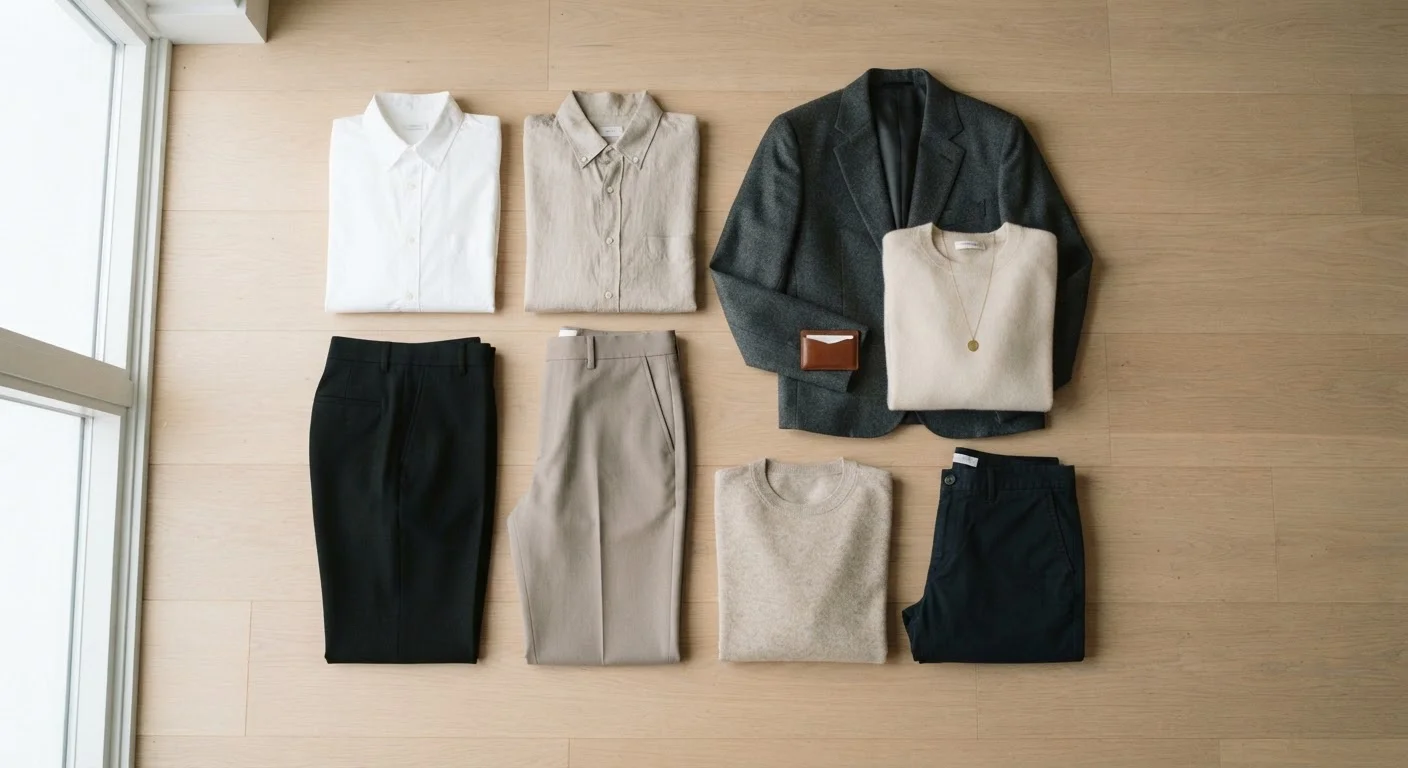
Photo: UnlockTopics.com | Unlocking Trending Content editorial
Key Takeaways
- A capsule wardrobe is defined by intentionality — every piece earns its place by working with others.
- The concept originated in 1970s London fashion retail, not modern minimalism trends.
- Fewer items can genuinely produce more outfit combinations when pieces are chosen strategically.
- Neutral color palettes are common in capsule wardrobes because they maximize mix-and-match potential.
- A capsule is personal — there's no universal item count or fixed list that works for everyone.
Where the Idea Came From
The capsule wardrobe concept has a specific origin: London boutique owner Susie Faux coined the term in the 1970s to describe a core set of wardrobe essentials that would never go out of fashion. The idea was practical — if you invested in a handful of well-made, timeless pieces, you'd spend less time and money chasing trends and more time actually getting dressed with confidence.
The concept gained wider cultural traction when designer Donna Karan launched her influential 'Seven Easy Pieces' collection in 1985, showing that a small, coordinated set of garments could carry a professional woman through virtually any situation. Since then, the phrase has been adopted, adapted, and occasionally diluted — but the underlying logic remains intact.
It's worth noting that the capsule wardrobe predates the modern minimalism movement by decades. It was never fundamentally about owning as little as possible; it was about owning strategically.
Why Fewer Pieces Can Mean More to Wear
The math behind a capsule wardrobe is genuinely counterintuitive. A closet packed with 80 items that don't coordinate well with each other can yield fewer real outfit options than a collection of 30 pieces specifically selected to work together.
Consider a simple example: if you own 5 tops, 4 bottoms, and 3 outer layers that all coordinate, that's potentially 60 different combinations — from a very small number of garments. Once you introduce items that only work in limited combinations, the practical wardrobe shrinks even as the physical one grows.
~20%
Clothes worn regularly from the average closet
Research into consumer wardrobe habits consistently suggests most people wear a small fraction of what they own on a regular basis, supporting the case for intentional curation over accumulation.
60+
Outfit combinations from 12 coordinated pieces
A frequently cited illustration in wardrobe planning: 5 tops, 4 bottoms, and 3 outer layers that all coordinate can produce over 60 distinct outfit combinations.
This is why the selection criteria for capsule pieces typically emphasizes versatility above almost everything else. A garment that works dressed up, dressed down, and across multiple seasons contributes far more to a functioning wardrobe than one that's reserved for a single occasion. Certain foundational items consistently appear across well-functioning wardrobes precisely because their versatility is proven.
The Role of Color and Cohesion
One of the most practical tools in building a capsule wardrobe is a deliberate color palette. This doesn't mean every piece has to be beige — it means the colors in your wardrobe should be able to coexist. When the palette is coherent, almost any combination you pull from the closet works.
Neutral anchors — navy, white, grey, camel, black — are popular because they sit beside almost any other color without clashing. But a capsule built around, say, rich jewel tones with a few neutral connectors can work just as well, provided the logic is consistent throughout.
Test Cohesion Before Committing
Texture and silhouette play a secondary but meaningful role. A wardrobe of similar-toned pieces can still feel flat if every item has the same weight and cut. Varying fabric textures — a smooth cotton shirt against a chunky knit, structured trousers against a fluid blouse — adds visual interest without requiring additional pieces or a more complex palette.
Making the Concept Work in Practice
The capsule wardrobe framework is most useful when it's treated as a personal system rather than a prescriptive list. Generic 'must-have' lists circulate widely, but they're built on assumptions about lifestyle, climate, and body that won't apply to everyone. The only capsule that actually works is one built around your real life — your climate, your daily contexts, your proportions.
Before purchasing anything to build a capsule, a wardrobe audit is the most rational starting point. Evaluating what you already own surfaces existing gaps and reveals which pieces you consistently reach for — information that's far more useful than any external checklist. From there, building deliberately around those anchors is more effective than overhauling everything at once.
It's also worth thinking about how a capsule adapts over time. Seasons and life circumstances shift, and a well-designed capsule should be able to rotate and evolve without requiring a complete rebuild. Rotating a capsule across seasons is its own skill — one that extends the usefulness of this approach well beyond a single wardrobe overhaul.
There Is No Universal Item Count
Ultimately, the capsule wardrobe is a thinking tool as much as it is a style prescription. Its value lies in prompting more intentional choices about what earns space in your closet — and why. For current seasonal context on what those choices might look like, the Trends & Seasons hub offers ongoing reference.
Frequently Asked Questions
The content on this site is for informational purposes only and is not a substitute for professional advice. Always consult a qualified professional for guidance specific to your situation.