
The Foundational Pieces That Show Up in Almost Every Functional Wardrobe

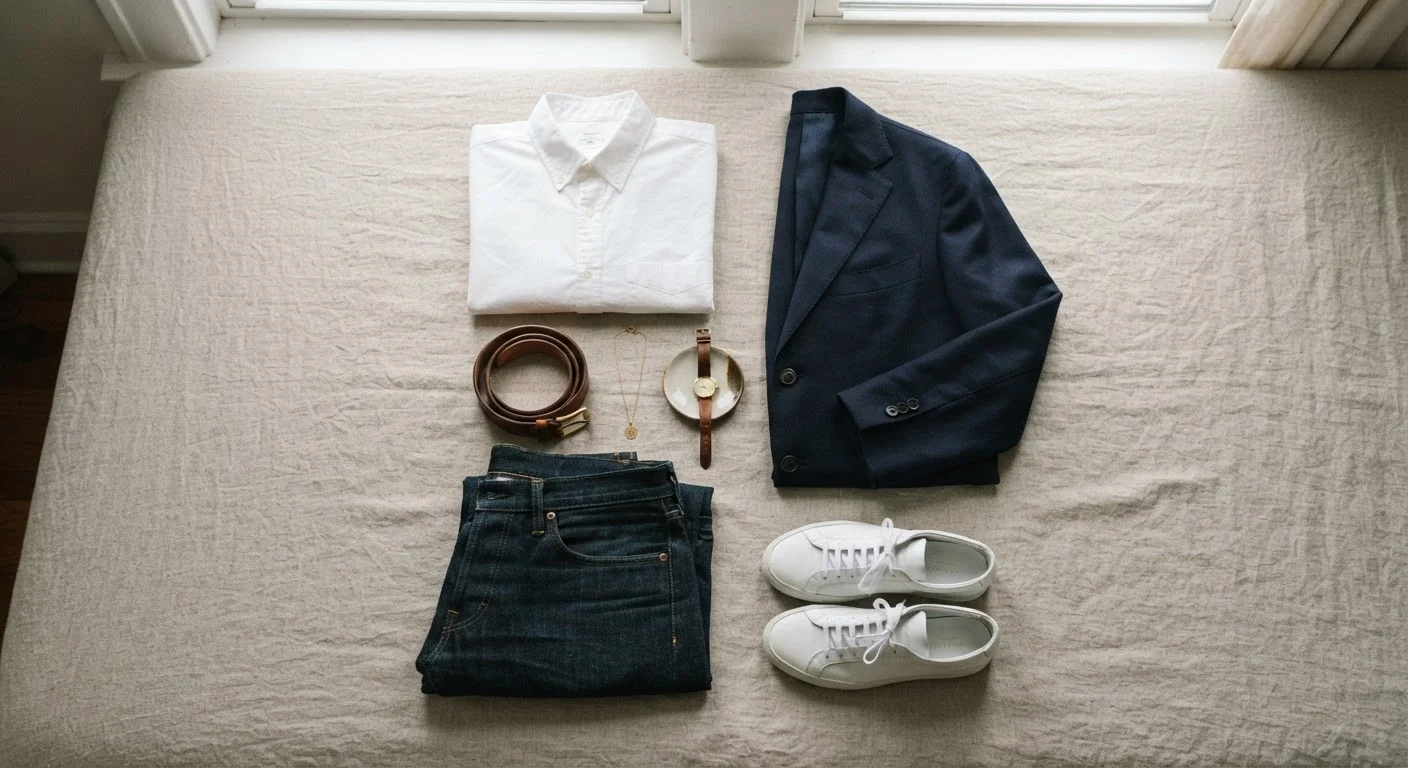
Photo: UnlockTopics.com | Unlocking Trending Content editorial
Key Takeaways
- Foundational wardrobe pieces earn their place by pairing well with almost everything else you own.
- Versatility, fit, and fabric quality are more reliable guides than trend cycles.
- A small number of well-chosen basics can generate more outfits than a large, unfocused wardrobe.
- These staples appear across different styles, budgets, and lifestyles for consistent, practical reasons.
- Understanding why each piece works helps you make smarter decisions before adding anything new.
Why Certain Pieces Keep Showing Up
Open almost any thoughtfully assembled wardrobe — regardless of personal style, budget, or lifestyle — and you'll find the same handful of items. That's not coincidence. These pieces persist because they solve the core challenge of getting dressed: they combine with a wide range of other items, they work across multiple settings, and they hold their visual weight whether paired with something relaxed or more refined.
This isn't about minimalism as a philosophy or following a specific aesthetic. It's about understanding what makes a garment genuinely functional. Before auditing what you already own, it helps to know what you're measuring against. These are the items that consistently earn their space.
A well-fitted white or light-colored shirt
The plain white shirt is arguably the single most cross-functional garment in existence. It layers under blazers, works tucked or untucked, reads as formal under a suit or casual with rolled sleeves and jeans. Its versatility comes directly from its visual neutrality — it doesn't compete with anything else. Fit is everything here: too boxy or too tight and the shirt loses its adaptability. Look for a shoulder seam that sits at the actual shoulder and enough room through the torso to move without pulling.
Visual neutrality is the white shirt's superpower — it competes with nothing and completes almost everything.
Dark, straight-cut denim
Dark denim occupies a rare space: it reads as casual enough for everyday wear but polished enough for settings where jeans would otherwise feel underdressed. A straight or slim-straight cut works across body types and avoids the style-specific associations of very skinny or very wide silhouettes. The darker the wash, the more formal the reading — which is precisely what gives this cut its range. Avoid heavy distressing if maximum versatility is the goal; clean denim pairs with more.
A clean, dark wash is the detail that lets denim move between casual and smart-casual contexts.
A tailored blazer in a neutral tone
The blazer's role is structural: it adds visual formality, frames the body, and instantly elevates whatever it's worn over. A neutral — navy, charcoal, camel, or stone — extends that utility by pairing with the widest range of other garments. Importantly, a blazer doesn't require a matching trouser; it works just as well over a plain tee and jeans. This is the piece that most reliably upgrades a simple outfit without requiring the rest of it to change. Neutral tones are the backbone of versatile dressing, and the blazer demonstrates that principle most clearly.
A neutral blazer is the single item most likely to elevate an outfit without changing anything else.
A plain, well-fitted T-shirt in at least two neutrals
The basic T-shirt tends to be underestimated precisely because it's everywhere. But a properly fitted tee in a neutral like white, grey, or black is the foundation of casual dressing and a reliable layering piece under open shirts, overshirts, and jackets. Fit matters more here than most people expect: a T-shirt that's too long or too wide collapses the proportions of anything layered over it. The fabric weight also affects how it drapes and holds its shape after washing — something worth paying attention to even at modest price points.
Proportion and fit in a basic tee determine whether everything layered over it looks intentional.
Trousers or pants in a non-denim fabric
A pair of trousers in a non-denim fabric — chino, twill, or a simple woven cotton — fills the gap between denim and formalwear. This is the piece that handles the widest range of smart-casual contexts, from office environments to evening settings where denim would feel too casual. Neutral and earth tones offer the most pairing range. The silhouette should be relatively clean and simple; structured enough to read as intentional, relaxed enough for extended wear.
Non-denim trousers cover the smart-casual territory that neither jeans nor formalwear can fully occupy.
A clean, simple leather or leather-look belt
A belt is rarely mentioned in wardrobe discussions but it performs a quiet structural role. It anchors the waist visually, connects the top and bottom halves of an outfit, and finishes a look that would otherwise feel incomplete. In black or tan, a simple belt in a complementary shade to your footwear creates visual cohesion without requiring deliberate outfit planning. It's one of the smaller investments that has a disproportionate effect on how put-together a look reads overall.
Matching belt and shoe tones is a low-effort detail that consistently raises the finish of an outfit.
Footwear that bridges casual and dressed
Every wardrobe benefits from at least one pair of shoes that sits comfortably between athletic and formal — clean leather shoes, loafers, or minimalist sneakers without prominent branding or heavy design details. These work under trousers as easily as over jeans and allow the rest of an outfit to dictate the register. The key quality is visual simplicity: shoes with loud detailing compete with the rest of a look rather than completing it. Runway trends filter down slowly, but clean footwear never falls out of use.
Footwear with minimal visual noise lets the rest of an outfit lead without distraction.
How to Use These Foundations
Knowing which pieces qualify as foundational is only part of the picture. How they're used matters just as much. Each of these items functions best as an anchor — something you build an outfit around rather than something you're trying to accommodate. That's the distinction between a wardrobe that consistently works and one that produces daily frustration.
Prioritize fit before anything else
If you're starting a wardrobe from the ground up, prioritizing these pieces first creates a stable base before any trend-led additions. For those already with a full closet, these are also the items most worth investing in when worn versions need replacing. And as you plan for seasonal transitions, a seasonal capsule rotation built around these staples gives your wardrobe structure without rigidity.
The content on this site is for informational purposes only and is not a substitute for professional advice. Always consult a qualified professional for guidance specific to your situation.