
Reading a Clothing Label Without Getting Lost in the Symbols

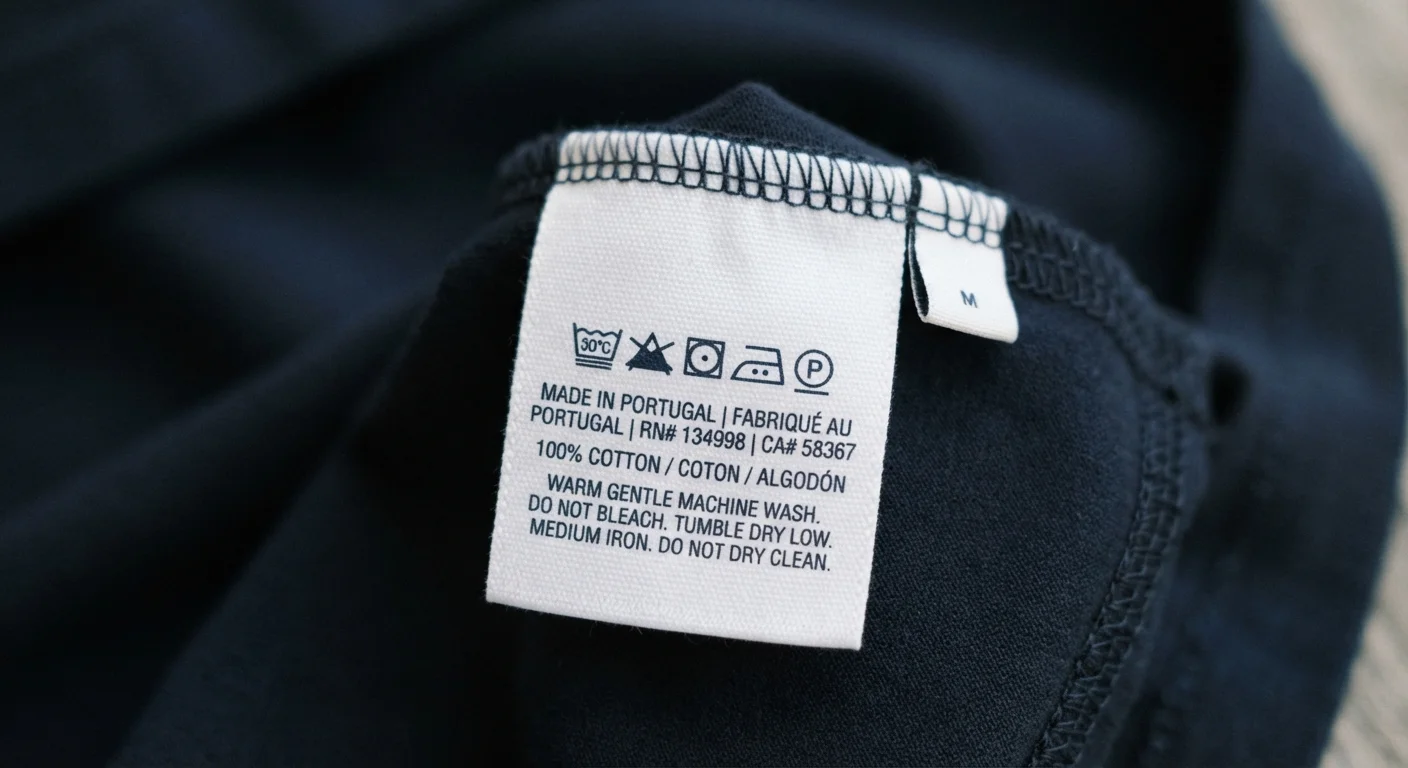
Photo: UnlockTopics.com | Unlocking Trending Content editorial
Why Care Labels Exist (and Why They're Worth a Glance)
The small label sewn into every garment is governed by a federal standard in the U.S. — the Federal Trade Commission requires manufacturers to attach permanent care instructions to most clothing items. That label is your first line of defense against a shrunken sweater or a faded dress shirt.
Most care labels combine two things: text instructions ("Dry clean only," "Tumble dry low") and a row of standardized symbols developed by the American Society for Testing and Materials (ASTM) and aligned internationally through the ISO system. Because the same symbols appear on garments made worldwide, learning them once pays off every time you do laundry. Understanding the fabric itself also helps — see our fabric glossary for how different materials behave under heat and moisture.
| Governing U.S. Standard | FTC Care Labeling Rule (16 CFR Part 423) (U.S. Federal Trade Commission) |
| Number of Symbol Categories | 5 (washing, bleaching, drying, ironing, dry cleaning) (ASTM / ISO care labeling standards) |
| X Over Any Symbol Means | Do not perform that care action |
| Dots Inside Symbols Indicate | Temperature or heat level (more dots = higher heat) |
| "Dry Clean Only" vs. "Dry Clean" | "Only" is a hard restriction; "Dry clean" alone may indicate a preference |
The Five Symbol Categories, Decoded
Care symbols fall into five distinct families, each represented by a base shape. A line or dot inside the shape adds detail; an X over the symbol means "do not."
1. Washing (Basin of Water)
A simple tub icon means the item is machine-washable. Dots inside the tub indicate water temperature: one dot for cold (up to 30°C/85°F), two dots for warm (up to 40°C/105°F), three for hot (up to 50°C/120°F), and so on. A hand dipping into the tub means hand-wash only. A crossed-out tub means no washing at all — that item needs dry cleaning or spot treatment.
2. Bleaching (Triangle)
An empty triangle means any bleach is safe. Lines inside the triangle (making it look striped) restrict you to non-chlorine bleach only, which is gentler. An X through the triangle means no bleach, period — a common instruction on dark or structured garments.
3. Drying (Square)
A square is the base shape for all drying instructions. A circle inside the square means tumble drying is permitted; dots inside the circle signal heat level (one dot = low, two = medium, three = high). A square with a horizontal line across the middle means dry flat — critical for wool and loosely knit fabrics that distort when hung. Vertical lines inside the square indicate hang drying; a curved line at the top edge means dry in the shade.
4. Ironing (Iron Silhouette)
Dots on the iron indicate temperature: one dot for low (synthetics), two for medium (wool, silk), three for high (cotton, linen). A crossed-out iron means heat will damage the fabric. An iron with an X over steam vents means ironing is okay but no steam — steam can water-spot delicate fabrics like silk.
5. Dry Cleaning (Circle)
A plain circle means professional dry cleaning is safe. Letters inside the circle (A, P, F) communicate which solvents the cleaner can use — this is primarily instructions for the dry cleaner, not the consumer. An X through the circle means dry cleaning is not suitable.
Care Label
A permanent label sewn into a garment that provides washing, drying, ironing, bleaching, and dry-cleaning instructions. In the U.S., most clothing is required by FTC regulation to carry one.
ISO Care Symbols
A set of standardized pictograms used internationally to communicate garment care instructions, reducing reliance on language-specific text.
Non-Chlorine Bleach
An oxygen-based bleaching agent that is gentler than chlorine bleach. It brightens colors and whites without the harsh degrading effect chlorine has on many fibers and dyes.
Dry Flat
A drying method where a garment is laid horizontally on a clean surface rather than hung or tumble-dried. Used to prevent stretching or distortion in knits and delicate fabrics.
Tumble Dry
Machine drying in a rotating drum dryer. Heat level (low, medium, high) affects how much shrinkage or damage can occur, especially in natural fibers.
Dry Cleaning Solvent
A chemical solvent used by professional dry cleaners to remove soil from garments without water. Letters on care labels (P, F) indicate which solvent types are safe for that item.
Common Label Pitfalls and How to Avoid Them
When the Label and Common Sense Conflict
Even once you understand the symbols, a few real-world traps catch people regularly:
- "Dry clean only" vs. "Dry clean" — "Only" is a hard restriction. A label that just says "Dry clean" (without "only") often indicates a preference, and gentle hand-washing may be acceptable. When in doubt, test an inconspicuous area.
- Ignoring multiple symbols — Labels sometimes carry both a washing symbol and a drying symbol. Both matter. A garment might be machine-washable on cold but must be dried flat — skipping the second instruction undoes the first.
- Faded or worn labels — If a label is unreadable, search for the garment's brand, style number, or product name online; manufacturers often publish care guides on their websites.
- Conflicting instructions on blended fabrics — A cotton-polyester blend may carry the strictest instruction for either fiber. When fabrics are blended, the care label defaults to protecting the most sensitive component. Our textile guide explains how individual fibers behave, which makes blended-fabric labels easier to interpret.
Reading care labels is one of those foundational habits — like understanding garment fit — that quietly extends the life of everything in your closet.
The content on this site is for informational purposes only and is not a substitute for professional advice. Always consult a qualified professional for guidance specific to your situation.