
Reading a Pet Food Label Without Getting Lost in the Jargon

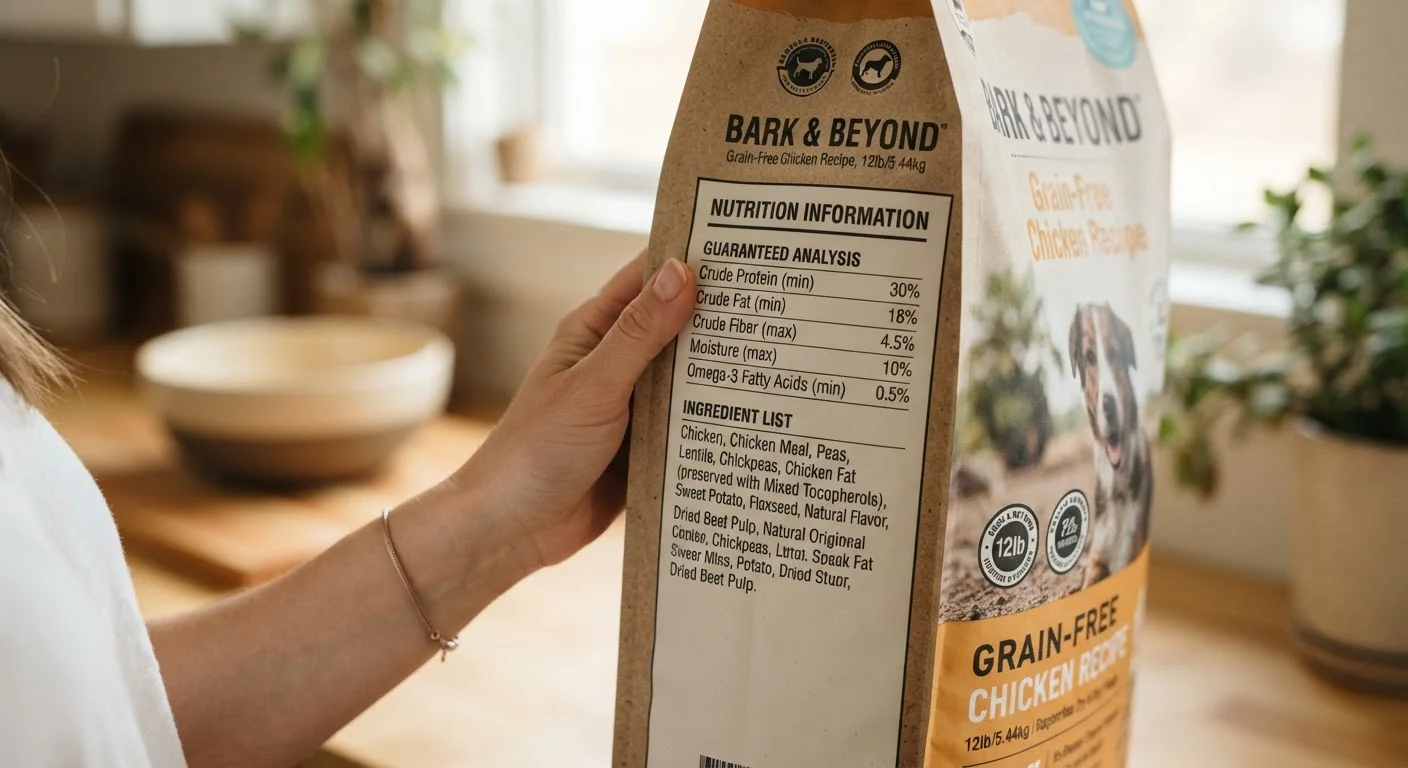
Photo: UnlockTopics.com | Unlocking Trending Content editorial
Key Takeaways
- Ingredients are listed by weight before cooking, so moisture content affects their ranking.
- The AAFCO nutritional adequacy statement tells you whether a food is complete and balanced.
- The guaranteed analysis shows minimums and maximums, not exact nutrient levels.
- Marketing terms like 'natural' and 'holistic' have limited or no regulatory definitions.
- Feeding guidelines on labels are starting points, not one-size-fits-all prescriptions.
Why Pet Food Labels Are Worth Decoding
Pet food packaging is designed partly to inform and partly to sell. The front of the bag is marketing territory — the back and sides are where the regulated, standardized information lives. Learning to distinguish the two gives you a much clearer picture of what you're actually putting in your pet's bowl.
In the US, pet food labeling is primarily governed by AAFCO model regulations, which individual states adopt (with some variation). The FDA also has oversight authority over pet food safety. Together, these frameworks establish what must appear on a label and what claims are permissible. Understanding this structure helps you know which parts of a label carry regulatory weight — and which are essentially advertising.
Labels Are Education, Not Diagnosis
For a useful parallel, the way ingredient lists work on pet food labels shares some logic with human food labeling — though the standards and nutrients differ. Our article on reading human nutrition labels offers context on how these systems compare.
Working Through the Label: A Step-by-Step Approach
The five steps below walk you through each regulated section of a pet food label in the order most useful for evaluation. Start with the product name, move through the AAFCO statement and ingredient list, and finish with the guaranteed analysis and feeding guidelines.
What you will need
Find and read the product name carefully
The product name is regulated by the Association of American Feed Control Officials (AAFCO) and tells you more than you might expect. Specific naming rules govern how prominently an ingredient can be featured:
- The 95% rule: If a product is called 'Salmon Cat Food,' at least 95% of its total weight (excluding water) must be that ingredient.
- The 25% or 'dinner' rule: Words like 'dinner,' 'entrée,' or 'formula' signal that the named ingredient makes up only 25–95% of the product.
- The 3% or 'with' rule: 'Cat Food with Salmon' means salmon makes up at least 3% — a much smaller proportion than it sounds.
- The 'flavor' rule: 'Salmon Flavor' requires no specific percentage of actual salmon — just enough to be detectable.
Recognizing these distinctions helps you set realistic expectations before you ever flip the bag over.
Locate and interpret the AAFCO nutritional adequacy statement
This is arguably the most important sentence on the entire label. Look for a statement that reads something like: '[Product name] is formulated to meet the nutritional levels established by the AAFCO Dog Food Nutrient Profiles for adult maintenance.'
This statement tells you two critical things:
- Completeness: Whether the food is intended as a complete and balanced diet or only as a supplement or treat.
- Life stage: Whether it's appropriate for growth (puppies/kittens), adult maintenance, reproduction, or 'all life stages.'
Also note how nutritional adequacy was established. 'Formulated to meet' means the recipe was calculated to hit AAFCO nutrient minimums. 'Substantiated by feeding trials' means the food was tested on real animals — generally considered a higher bar, though both are valid.
Read the ingredient list with realistic expectations
Ingredients are listed in descending order by weight before processing. This matters because many ingredients, particularly fresh meats, contain a lot of water. A fresh chicken listed first may contribute less actual protein after cooking than a chicken meal listed third.
A few terms worth knowing:
- Meat meal (e.g., chicken meal): Rendered, dried protein concentrate — a high-protein ingredient despite its unglamorous name.
- By-products: Non-muscle-meat animal parts such as organs and bone. These are not inherently poor-quality — organ meats are nutrient-dense — but quality can vary by source and processing.
- Ingredient splitting: When a less desirable ingredient (e.g., corn) appears multiple times under different names (corn flour, corn gluten meal), the combined total may be higher than any single entry suggests.
No single ingredient placement makes a food good or bad. The overall nutrient profile and AAFCO statement matter more than ingredient rank alone. For a deeper look at how these claims stack up against popular beliefs, see our guide on pet nutrition myths.
Understand the guaranteed analysis panel
The guaranteed analysis lists four required nutrients at minimum:
- Crude protein (minimum percentage)
- Crude fat (minimum percentage)
- Crude fiber (maximum percentage)
- Moisture (maximum percentage)
These are legal guarantees of a floor (or ceiling), not exact values. Actual nutrient content may be higher than the minimums shown. The word 'crude' refers to the measurement method, not quality — crude protein measures total nitrogen, which is a proxy for protein content.
Some labels voluntarily include additional nutrients like calcium, phosphorus, omega fatty acids, or taurine. These can be useful data points, especially for pets with specific health considerations.
Check feeding guidelines and calorie content
Feeding guidelines give suggested daily amounts based on body weight. Treat them as starting points, not precise prescriptions — individual pets vary in metabolism, activity level, and health status.
Calorie content (expressed as kilocalories per kilogram, or kcal/kg) is required on labels under AAFCO guidelines. This number is essential for comparing portion sizes across different foods and for managing a pet's weight. A denser food may require a smaller serving than a lighter one to deliver the same calories.
If your pet is gaining or losing weight unexpectedly on the suggested portion, adjust gradually and consult your veterinarian. For a broader look at pet care basics, including nutrition fundamentals, explore our dedicated hub.
Marketing Words Can Mislead
Compare Foods on a Dry-Matter Basis
For a plain-language reference that goes deeper on specific ingredients and label terminology, see our pet nutrition labels decoder. And if you've encountered strong opinions about grain-free diets, raw feeding, or specific protein sources, our nutrition myths guide separates evidence-based guidance from popular misconception.
The content on this site is for informational purposes only and is not a substitute for professional advice. Always consult a qualified professional for guidance specific to your situation.