
Pet Nutrition Labels Decoded: What Those Ingredient Lists Actually Mean

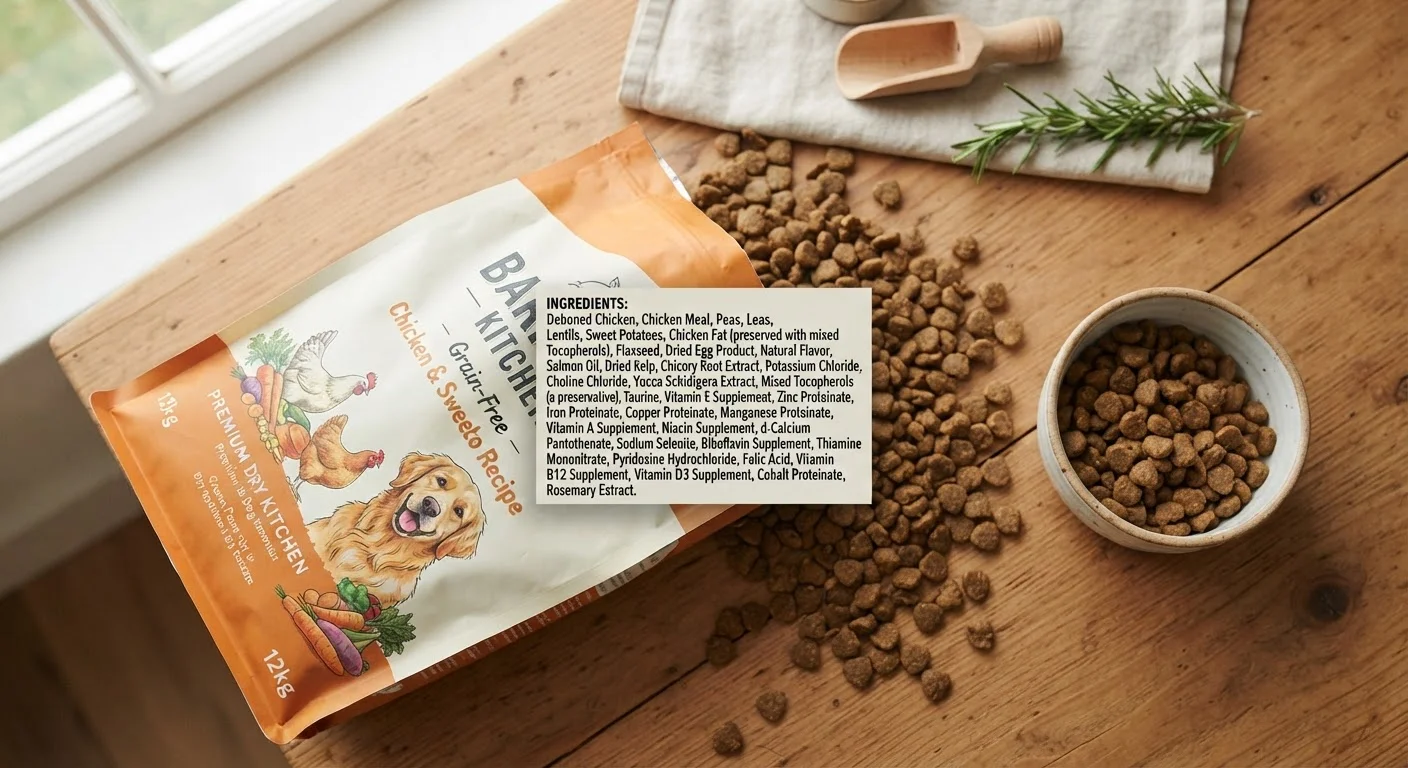
Photo: UnlockTopics.com | Unlocking Trending Content editorial
How Ingredient Lists Are Structured
Pet food ingredient lists follow the same basic rule as human food: ingredients are listed in descending order by weight before cooking. That means the first ingredient is present in the largest quantity by weight — but there's an important catch.
Raw meat contains significant water weight. Once cooked or rendered, a chicken listed first may shrink considerably, meaning a grain or protein meal listed lower could actually contribute more dry-matter nutrition. This is sometimes called ingredient splitting when manufacturers separate a single ingredient (say, corn) into multiple forms — corn flour, corn gluten meal, corn starch — so each appears lower on the list individually, even though combined they rank higher than anything else.
For a broader look at how ingredient lists work across product categories, see how nutrition labels are decoded for human foods — the logic transfers directly.
Crude Protein
A measure of total nitrogen-containing compounds in pet food, expressed as a percentage. It estimates protein content but does not indicate digestibility or amino acid quality.
Dry-Matter Basis
A method of comparing nutrient levels across foods with different moisture content by mathematically removing water from the equation. Used to make valid apples-to-apples comparisons between wet and dry pet foods.
AAFCO
The Association of American Feed Control Officials — a voluntary membership organization that establishes model regulations and nutrient profiles used as the basis for pet food nutritional standards in the United States.
Ingredient Splitting
A labeling practice where a single ingredient is listed in multiple forms so that each individual form appears lower on the ingredient list, even though the combined total of that ingredient may rank above others.
Rendered Meal
An ingredient produced by cooking animal tissue at high temperatures to remove moisture and fat, resulting in a concentrated dry protein powder. Examples include chicken meal and fish meal.
Life Stage
A designation on the AAFCO nutritional adequacy statement indicating which phase of an animal's life the food is formulated for — such as growth, adult maintenance, or all life stages.
The Guaranteed Analysis Panel Explained
Below the ingredient list, you'll find the Guaranteed Analysis — a panel showing minimum percentages of crude protein and crude fat, and maximum percentages of crude fiber and moisture. These are regulatory minimums and maximums, not precise measurements of what's actually in the bag.
One complication: comparing wet and dry foods directly using these numbers is misleading because moisture content is so different. To make a fair comparison, you need to convert both to a dry-matter basis by removing moisture from the equation. Divide each nutrient percentage by the dry-matter percentage (100 minus moisture %) to get comparable numbers.
| Ingredient list order | By weight before processing (heaviest first) (AAFCO Model Regulations) |
| Guaranteed Analysis shows | Min. protein & fat; max. fiber & moisture (AAFCO Model Regulations) |
| AAFCO substantiation methods | Formulation or feeding trial (AAFCO Pet Food Label Guide) |
| "Natural" definition | Defined by AAFCO; does not indicate quality (AAFCO Model Regulations) |
| "Holistic" / "Premium" | No regulatory definition in pet food (FDA Pet Food Labeling Overview) |
| Moisture content (dry kibble) | Typically ≤10–12% (General industry standard) |
The guaranteed analysis won't tell you about ingredient quality, digestibility, or the bioavailability of nutrients — only that minimum levels are present. That's why it's most useful as a starting point, not a complete picture.
AAFCO Statements and What They Mean
Look for the AAFCO nutritional adequacy statement — a sentence that tells you whether a food is intended to be nutritionally complete or just a supplement or treat. The Association of American Feed Control Officials (AAFCO) sets the nutrient profiles that formulated pet foods must meet.
There are two methods manufacturers can use to substantiate this claim: formulation (the recipe meets AAFCO nutrient profiles on paper) or feeding trials (the food was actually fed to animals and monitored). Feeding trials are generally considered the stronger standard.
The statement will also specify a life stage — adult maintenance, growth and reproduction, or all life stages. A food labeled for adult maintenance may not provide adequate nutrition for puppies, kittens, or pregnant animals. Always match the label's life stage to your pet's actual stage.
For context on how pet nutrition claims compare with common misconceptions, explore the evidence behind popular pet nutrition myths.
Marketing Terms That Aren't Regulated the Same Way
Words like natural, holistic, and premium carry little regulatory weight on pet food labels. AAFCO does define natural — it means the ingredient wasn't produced by chemical synthesis — but it says nothing about nutritional quality or sourcing standards. Holistic and premium have no formal definitions in pet food regulation at all.
Ingredient names, on the other hand, are more tightly defined. Chicken means clean flesh from slaughtered chickens. Chicken meal is rendered, dried chicken with most moisture removed — a concentrated protein source. Chicken by-product meal includes organs, necks, and other parts excluding feathers — nutritionally viable but less familiar to consumers.
"Grain-Free" Is Not Automatically Nutritionally Superior
If you encounter label claims that feel unfamiliar or questionable, reviewing common pet health myths can help you separate marketing from meaningful information.
This article is for general informational purposes only and is not a substitute for personalized veterinary nutrition advice. Consult your veterinarian before making significant changes to your pet's diet, especially for animals with health conditions.
The content on this site is for informational purposes only and is not a substitute for professional advice. Always consult a qualified professional for guidance specific to your situation.