
Dry Food vs. Wet Food for Cats and Dogs

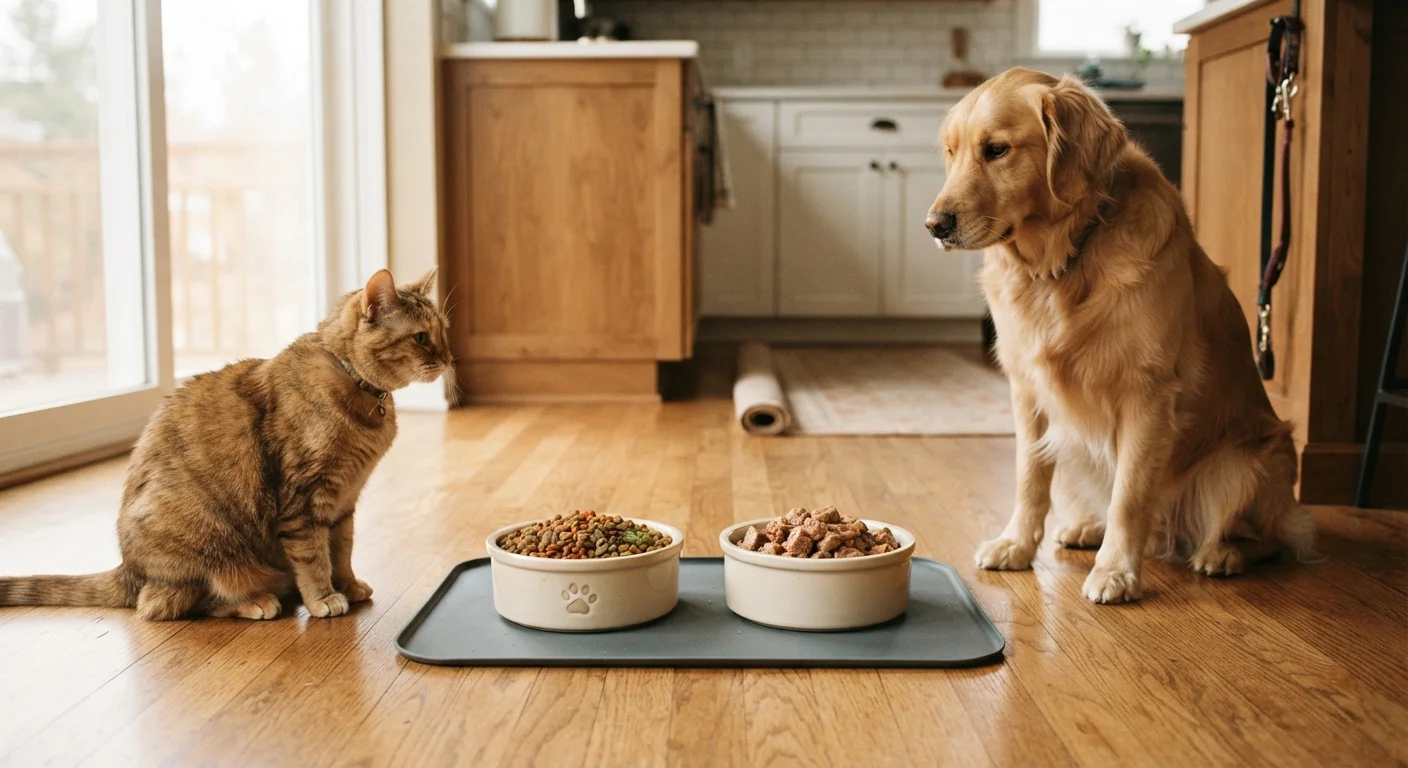
Photo: UnlockTopics.com | Unlocking Trending Content editorial
Key Takeaways
- Wet food provides significantly more moisture, which can benefit urinary and kidney health in cats and dogs.
- Dry kibble is generally more cost-effective and convenient for long-term storage and free-feeding.
- Neither format is universally superior — life stage, health status, and individual preference all matter.
- Many veterinarians support a mixed feeding approach to balance hydration, palatability, and cost.
- Always look for an AAFCO nutritional adequacy statement on any food you choose.
What Sets Dry and Wet Food Apart
The most fundamental difference between dry kibble and canned wet food is moisture content. Dry food typically contains around 6–10% moisture, while wet food clocks in at 70–80%. That gap has real downstream effects on digestion, hydration, caloric density, and even how appealing the food smells to your pet.
Beyond water content, the two formats differ in how they're manufactured. Kibble is cooked under high heat and pressure, which can affect the bioavailability of certain nutrients. Wet food is sealed and cooked inside the can, preserving more of the natural texture and often making it more palatable — especially for cats, who are famously selective eaters.
Both formats can meet your pet's complete nutritional needs when properly formulated. The key signal to look for on any package is an AAFCO nutritional adequacy statement, which confirms the food meets established standards for a given life stage. For a deeper dive on decoding packaging, see reading a pet food label.
| Dry Food (Kibble) | Wet Food (Canned) | |
|---|---|---|
| Moisture content | 6–10% | 70–80% |
| Cost per serving | Generally lower | Generally higher |
| Shelf life (opened) | Weeks, if sealed | 1–2 days refrigerated |
| Palatability | Moderate | High — stronger aroma |
| Hydration support | Minimal | Significant |
| Dental benefit (mechanical) | Some evidence | Minimal |
| Suitable for free-feeding | Yes | No |
| Ease of eating (dental/jaw issues) | May be difficult | Easier to chew |
Hydration, Digestion, and Health Implications
Cats evolved as desert animals and have a naturally low thirst drive, which means many cats drinking only from a bowl consume less water than is ideal. This makes wet food a meaningful tool for supporting urinary tract health — a category where cats are disproportionately vulnerable to conditions like FLUTD and kidney disease. Dogs, while better at self-regulating water intake, can similarly benefit from the added moisture, particularly older animals or those with kidney concerns.
Wet food is also easier to chew, making it a practical choice for senior pets with dental pain, animals recovering from oral surgery, or breeds with flat faces (brachycephalic pets) that struggle with hard kibble.
On the other hand, dry food's firm texture has long been associated with dental health benefits — the mechanical action of chewing kibble can reduce plaque buildup, though it's not a substitute for regular teeth cleaning. Research on this point is mixed, so it's worth discussing with your veterinarian rather than assuming either format fully protects dental health.
Try a Transition Period When Switching Formats
Cost, Storage, and Day-to-Day Practicality
For most households, cost is a real factor. Dry food generally runs significantly less per meal than wet food, particularly for larger dogs where portions are substantial. A bag of kibble also keeps well once opened — typically several weeks if stored in an airtight container away from heat — whereas opened canned food must be refrigerated and used within a day or two.
Free-feeding (leaving food out throughout the day) is only practical with dry kibble; wet food left at room temperature spoils quickly and can become a food safety concern. This makes dry food more suitable for households where pets eat on their own schedule or where owners are away during the day.
Wet food does score points on portion control: the caloric content per can is fixed, which can help prevent overeating in pets prone to weight gain. Because wet food is less calorie-dense by weight, pets may also feel more satisfied for fewer calories — though this depends on the individual food's formulation. Always check the feeding guidelines on the label and adjust for your pet's weight and activity level. For perspective on how nutrition myths can complicate these decisions, see common pet nutrition myths.
Don't Rely on Food Format for Weight Management Alone
Finding the Right Balance for Your Pet
There's no single correct answer to the dry-versus-wet debate. Many veterinarians suggest a mixed approach: using a quality dry food as the dietary base and supplementing with wet food for hydration benefits and palatability. This can also help prevent food boredom, which is more common in cats than dogs.
Life stage matters too. Kittens and puppies have higher protein and energy needs, and many owners find wet food easier to transition young animals onto. Senior pets often do better on moisture-rich diets. Animals with specific health conditions — kidney disease, diabetes, dental disease, or obesity — may have strong format preferences as part of a management plan, always guided by a veterinarian.
For a more detailed look at how each format affects long-term health outcomes, the long-term health effects of wet vs. dry food resource covers hydration, digestion, and dental health side-by-side. And for broader context on daily pet care decisions, the Pet Care Basics hub is a helpful starting point.
This article is for general informational and educational purposes only and is not a substitute for professional veterinary advice. Always consult a licensed veterinarian for guidance specific to your pet's health needs.
The content on this site is for informational purposes only and is not a substitute for professional advice. Always consult a qualified professional for guidance specific to your situation.