
Wet Food vs. Dry Food: How Each Affects Your Pet's Health Over Time

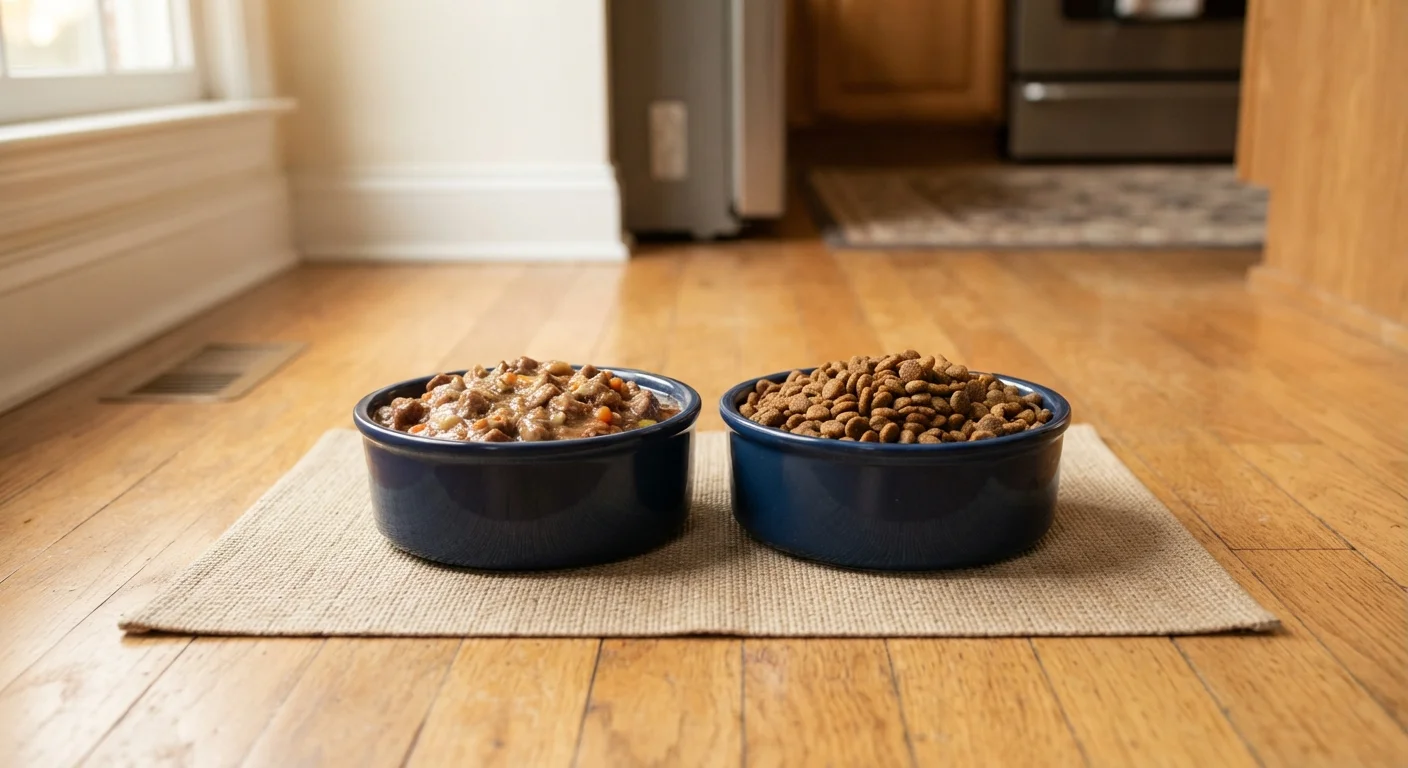
Photo: UnlockTopics.com | Unlocking Trending Content editorial
Key Takeaways
- Wet food provides significantly more moisture, supporting urinary and kidney health especially in cats.
- Dry kibble's abrasive texture may offer some mechanical teeth-cleaning benefit, though it is not a substitute for dental care.
- Both formats can be nutritionally complete - the label matters more than the texture.
- A mixed feeding approach suits many pets and can balance the strengths of each format.
- Life stage, medical history, and species should guide food format decisions alongside veterinary input.
- No single format is universally superior; individual pet needs determine the better fit.
How Food Format Affects Hydration and Kidney Health
One of the most meaningful differences between wet and dry pet food is water content. Wet food typically contains 70-80% moisture, while dry kibble contains roughly 10% or less. For cats in particular - who evolved as desert animals with a naturally low thirst drive - this difference can be significant over months and years.
Veterinary research consistently suggests that cats consuming primarily dry food may have chronically lower fluid intake than those eating wet food, which can place additional strain on the kidneys and urinary tract over time. For dogs, the risk is generally lower since they tend to drink more freely, but any pet prone to kidney disease, urinary crystals, or bladder issues may benefit from the extra moisture wet food provides.
For a deeper look at how fluid intake shapes your pet's overall wellbeing, see our guide on hydration and pet health.
70-80%
Moisture content in typical wet pet food
Compared to roughly 10% in dry kibble, this difference in water content can meaningfully affect daily fluid intake, particularly for cats.
~3x
More water consumed via wet food vs. kibble
Studies in feline nutrition have found cats eating wet food consume approximately three times more total water daily than those eating exclusively dry food.
50%+
Cats showing dental disease by age 3
According to veterinary dental estimates, the majority of cats show early signs of dental disease regardless of food format, underscoring the need for active dental care.
Dental Health: What the Evidence Actually Says
Dry kibble is often credited with cleaning teeth through its abrasive chewing action - and there is some basis for this. The mechanical friction of crunching hard pellets can help reduce plaque accumulation on the tooth surface. However, this effect is modest and varies considerably depending on kibble size, shape, and how the animal chews.
Wet food, by contrast, doesn't provide this friction and can leave more residue on tooth surfaces if oral hygiene isn't maintained. That said, neither format eliminates the need for active dental care. Veterinary dental guidelines generally recommend regular tooth brushing and professional cleanings regardless of diet type.
The takeaway: kibble may offer a minor dental advantage, but it should not be relied upon as a dental care strategy on its own. To check common assumptions about pet diets against what evidence supports, our article on pet health myths is a useful reference.
AAFCO Labeling and What It Means
Nutritional Completeness, Digestion, and Long-Term Considerations
Both wet and dry pet foods can be formulated to meet established nutritional standards - the format itself does not determine quality. What matters is whether the food carries a complete and balanced designation from a recognized standards body such as the Association of American Feed Control Officials (AAFCO). Reading the label is more informative than assuming one texture is inherently superior.
From a digestibility standpoint, wet food is often slightly more digestible for some animals, particularly those with sensitive stomachs or gastrointestinal conditions. The higher protein and fat content in many wet formulations can also benefit cats, who are obligate carnivores with higher protein requirements. Dry food, however, is easier to portion precisely and works well with puzzle feeders - which can slow eating and support healthy digestion.
Structured mealtimes matter too, regardless of which format you choose. Our article on consistent feeding schedules explains how routine affects digestion and weight management across species.
| Criterion | Wet Food | Dry Food (Kibble) |
|---|---|---|
| Moisture content | 70-80% | ~10% |
| Urinary tract support | Strong - boosts fluid intake | Weaker - requires active drinking |
| Dental benefit | Minimal mechanical action | Modest plaque-reducing friction |
| Shelf life (opened) | 1-2 days refrigerated | Weeks in a sealed container |
| Typical cost per serving | Generally higher | Generally lower |
| Palatability | Often higher - stronger aroma | Variable by formula |
| Digestibility | Often slightly higher | Good for most healthy pets |
| Portion control | Can be less precise | Easy to measure accurately |
Making the Right Choice for Your Pet
No single food format is right for every animal. Life stage, species, existing health conditions, activity level, and even individual preference all factor in. Kittens and senior cats often do better with wet food; active adult dogs with no health concerns may thrive on kibble. Many owners find that a mixed approach - wet food for one meal, dry for another - balances palatability, hydration, and convenience effectively.
What this decision should not rely on is marketing language alone. Terms like "natural," "grain-free," or "premium" don't guarantee nutritional adequacy. Your veterinarian is your best resource for matching food format to your individual pet's health history and needs. For additional context on how pet food formats compare across common species, see our overview at dry food vs. wet food for cats and dogs.
This article is for general informational purposes only and is not a substitute for personalized veterinary advice. Always consult a licensed veterinarian before making significant changes to your pet's diet, especially if your animal has an existing health condition.
The content on this site is for informational purposes only and is not a substitute for professional advice. Always consult a qualified professional for guidance specific to your situation.