
What a Personal Budget Actually Does (And Why Most People Misunderstand It)

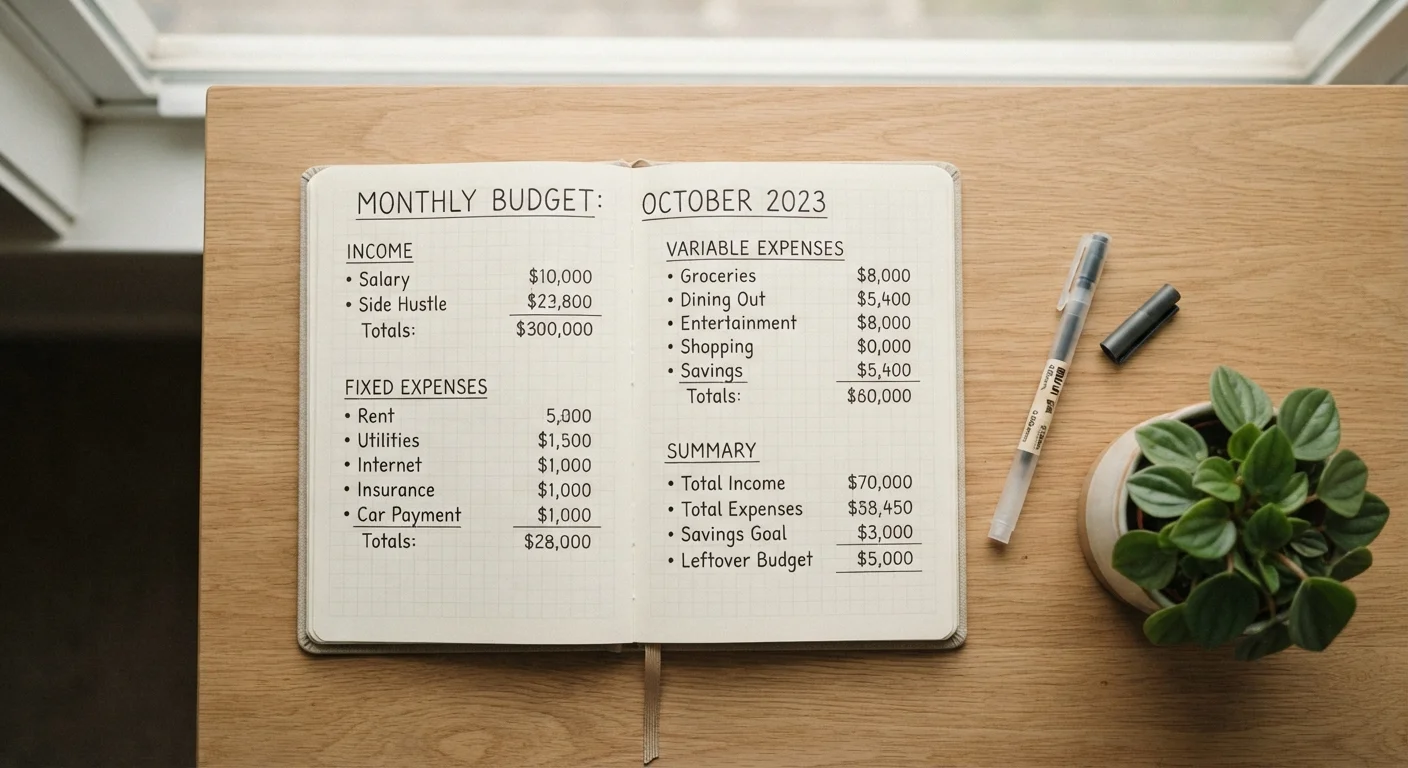
Photo: UnlockTopics.com | Unlocking Trending Content editorial
Key Takeaways
- A budget is a forward-looking plan, not just a record of past spending.
- Most people misunderstand budgets as restrictions rather than decision-making tools.
- You don't need a perfect income or zero debt to start budgeting - anyone can begin.
- A budget works best when it reflects your actual life, not an idealized version of it.
- Consistent review matters more than having a flawless budget from day one.
The Real Definition - And the Common Misconception
Ask most people what a budget is, and they'll describe something close to a financial diet: a list of things they're not allowed to buy. That framing isn't just discouraging - it's inaccurate, and it's the main reason so many people never bother to build one.
A budget is a spending plan. It starts with your income - the money actually coming into your household - and distributes it across categories: housing, food, transportation, savings, and everything else. The plan doesn't eliminate choices; it makes them explicit. You decide in advance what matters, rather than finding out after the fact that the money ran out before the month did.
This distinction matters. A restriction takes something away. A plan gives you a framework for getting what you actually want. Those are fundamentally different ideas, even if they both involve saying no to some things. For a deeper look at how common misbeliefs hold people back, see budgeting myths that keep people from starting.
A Budget Is a Plan, Not a Promise
What a Budget Actually Does, Step by Step
At its core, a budget performs three functions:
- It surfaces reality. Most people dramatically underestimate how much they spend in certain categories - especially variable ones like dining out, subscriptions, or personal care. Writing down the numbers creates an honest baseline.
- It creates intentionality. Once you see where money is going, you can decide whether that allocation reflects your priorities. If you're spending more on streaming services than on savings, that's a choice - but a budget makes it a visible choice.
- It connects daily decisions to long-term goals. Want to build an emergency fund, pay off a credit card, or save for a trip? A budget carves out space for those goals alongside everyday expenses rather than hoping leftover money appears at the end of the month.
None of this requires a spreadsheet or specialized software. A notebook, a basic app, or even a simple list on your phone can do the job. What matters is that the system is honest, current, and checked regularly.
~1 in 3
Americans who follow a detailed household budget
Surveys by Gallup have found that fewer than one-third of U.S. households maintain a detailed long-term budget, despite widespread awareness that budgeting is financially beneficial.
74%
People who feel anxious about their financial situation
A 2023 American Psychological Association survey found that money remains the top source of stress for a significant majority of American adults.
Why It Works Better Than Willpower Alone
Financial behavior research consistently shows that people who rely on willpower - intending to spend less without a structured plan - tend to overspend compared to those with written or tracked budgets. This isn't a character flaw; it's just how decision fatigue works. Every unplanned spending moment becomes a fresh negotiation with yourself, and you don't always win.
A budget removes that friction in categories that matter. When you've already decided that $200 goes toward groceries this month, the question at the store isn't "can I afford this?" - it's simply "does this fit what I've planned?" That small cognitive shift adds up.
“A budget is telling your money where to go instead of wondering where it went.”
— John C. Maxwell, Author and speaker on leadership and personal development
Different people find different budgeting structures useful. Some prefer a zero-based approach where every dollar is assigned a job; others work better with percentage-based guidelines. You can compare how those two frameworks operate in zero-based vs. percentage-based budgeting.
Starting a Budget That Fits Your Real Life
The biggest mistake first-time budgeters make is building an aspirational budget instead of a realistic one. They cut categories down to what they wish they spent, then abandon the whole thing when actual life doesn't cooperate.
A more durable approach: track one full month of actual spending first, without changing anything. Use that data as your starting point. Then ask yourself which categories could be adjusted - not which ones you feel guilty about. Guilt-driven budgets rarely last. Values-driven ones do.
A few practical starting points:
- Use your net income (take-home pay after taxes), not your gross salary.
- Separate fixed expenses (rent, loan payments, insurance) from variable ones (groceries, gas, entertainment).
- Build in a small buffer for irregular expenses - car registration, vet visits, birthday gifts - that often derail otherwise solid plans.
If you've never built a budget before, a practical starting guide for your first budget can walk you through the core structure. And if you want plain-English definitions for terms like discretionary spending or sinking fund, a glossary of everyday budgeting terms is a useful reference.
This article is for general informational and educational purposes only and does not constitute personalized financial advice. Consider consulting a qualified financial professional for guidance tailored to your specific situation.
Frequently Asked Questions
The content on this site is for informational purposes only and is not a substitute for professional advice. Always consult a qualified professional for guidance specific to your situation.