
Evaluating Durability Before You Buy: What to Look For in Everyday Home Goods

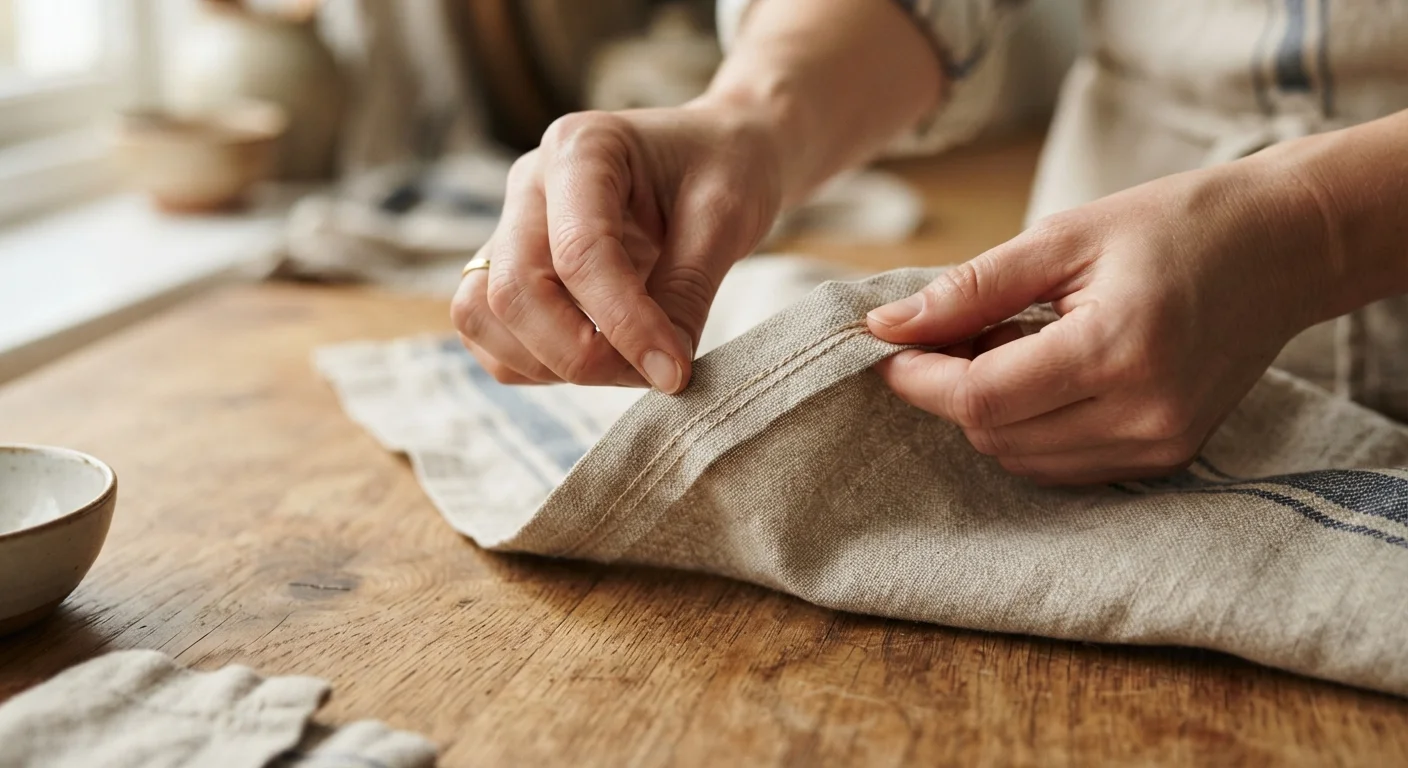
Photo: UnlockTopics.com | Unlocking Trending Content editorial
Key Takeaways
- Material grade and construction quality are stronger durability indicators than price or brand name.
- Examining seams, joints, and finishes in person before buying reveals flaws that product photos hide.
- Cookware, textiles, and storage goods each have category-specific signals worth learning before you shop.
- Warranties and certifications add useful context, but they don't replace hands-on physical evaluation.
- Replacing low-durability goods repeatedly often costs more over time than buying quality once.
Why Durability Evaluation Is a Learnable Skill
Most household goods fail in predictable ways - a pot handle loosens, a storage lid warps, a sheet pills after a dozen washes. These aren't random events. They're the result of specific material choices and construction shortcuts that are visible before purchase, if you know where to look.
Developing a consistent evaluation habit saves money not by finding the cheapest item, but by avoiding products that will need replacing sooner than expected. It also sidesteps the frustration of a product that technically works but degrades quickly in daily use. This is part of a broader household buying strategy that prioritizes informed, sustainable decisions over impulse or price alone.
The practices below apply across three everyday product categories - cookware, textiles, and storage goods - with concrete things to check at the point of purchase.
Cookware: What to Inspect Beyond the Surface
With cookware, the visible finish is often the least useful durability signal. Instead, focus on weight distribution, handle attachment, and material consistency.
Check handle attachment on cookware by applying firm lateral pressure before buying.
Inspect the base of pots and pans for flatness by placing them on a level surface.
Examine the interior coating of nonstick pans for even application and absence of thin spots.
Verify that lid fits are snug on cookware without requiring force to seat or remove.
For nonstick surfaces specifically, look for even, unscratched coating on display models. Bubbling, pitting, or uneven sheen on a floor sample suggests the coating won't hold up to normal use. For cast iron or stainless, heft the piece - uneven weight can indicate inconsistent metal thickness, which affects both cooking performance and long-term warp resistance.
If you're evaluating cookware alongside other major purchases, the questions to ask before any large home purchase apply well here too.
Textiles: Reading Construction Before You Wash Anything
Bed linens, towels, and upholstery fabrics all degrade at the seams and edges first. Run your fingers along the hem of a sheet or towel - tightly stitched, uniform seams resist fraying far better than wide, loose ones. Hold the fabric up to light: if the weave looks inconsistent or see-through in patches, thread count claims on the label may not reflect actual material quality.
Feel Fabric Before You Read the Label
Thread count alone is a poor durability indicator for sheets. A 400-count sheet in a single-ply, long-staple cotton will typically outlast a 600-count sheet made from shorter, multi-ply fibers that inflate the count artificially. Feel for smoothness and weight rather than relying on the number.
For towels, a quick tug on a looped pile tells you a lot: if loops pull out easily, the terry weave is loose and the towel will thin out quickly. Heavier GSM (grams per square meter) ratings generally correlate with more durable, absorbent construction - but only if the fiber quality supports it. As a complementary check, our guide on certifications and standards on home products explains which textile labels are worth paying attention to.
Storage Goods: Stress-Testing Before Committing
Bins, shelving units, drawer organizers, and food containers share a common failure mode: they work fine when empty and fail when loaded. At the store, apply gentle pressure to corners and lids. Plastic containers should resist flexing without cracking sounds; if a lid pops off with light lateral pressure, it won't seal reliably in daily use.
For shelving and drawer units, check that corners are joined - not just pressed together - and that any locking tabs engage fully. Metal shelving should feel rigid when you push diagonally; visible wobble under your own hand pressure suggests the gauge of metal is too thin for real storage loads.
It's also worth thinking about longevity relative to material. Our article on reusable versus disposable household supplies can help you decide whether a durable storage investment is the right call versus a lower-commitment option for your situation.
Warranty Coverage for Storage Products
Once you've evaluated physical quality, check the warranty terms. Most storage products carry limited manufacturer warranties that exclude everyday cracking or warping. Our guide on reading a warranty without getting lost in the fine print walks through the clauses that matter most.
Applying These Checks Consistently
The goal isn't to become a materials expert before every shopping trip. It's to build a short, repeatable checklist: check construction at stress points, assess material weight and consistency, and look past surface finish to underlying structure. These habits take about two minutes per item and get faster with practice.
Price is not a reliable proxy for durability in most home goods categories - a point covered in depth in our piece on why premium doesn't always mean better quality. What reliable durability evaluation gives you is the ability to make confident decisions independent of price signals or marketing language.
2-3×
Replacement cycles for low-durability household goods
Consumer research consistently shows that low-construction household goods are replaced two to three times more frequently than well-constructed equivalents over a five-year period.
~60%
Of textile failures begin at seams or hems
Industry textile testing data indicates that the majority of early fabric failures originate at seams, hems, or edge stitching rather than in the body of the material itself.
The content on this site is for informational purposes only and is not a substitute for professional advice. Always consult a qualified professional for guidance specific to your situation.